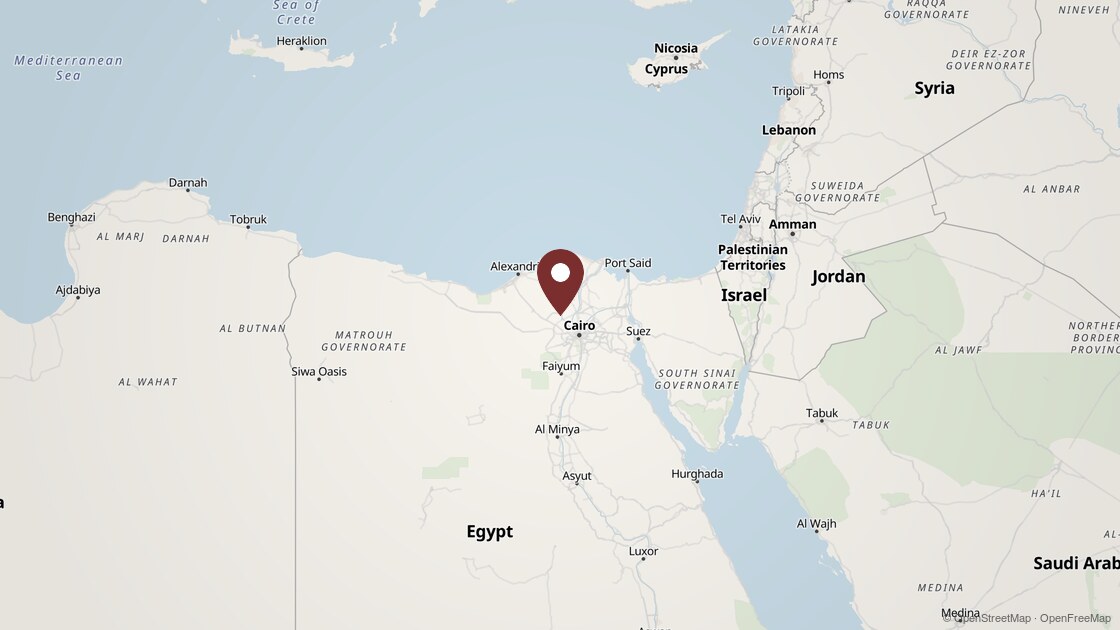
Egypt’s Ministry of Tourism and Antiquities announced on Wednesday that a Supreme Council of Antiquities excavation at Kom Abu Billo in Menoufia province has uncovered a cemetery holding hundreds of coffins. The site, also called Tarrana and once the ancient city of Terenouthis, lies about 43 miles northwest of Cairo at the eastern entrance to Wadi el-Natrun. Officials describe the find as the first of its kind for the unusually large number of burials and sarcophagi in an open burial courtyard. The ministry dates the contents from the end of the Late Period through the Ptolemaic era and into the early Roman period.
Researchers report stone and pottery sarcophagi, remnants of wooden coffins, and poorly preserved human remains with traces of mummification materials. Finds include faience ushabti figurines, amulets, scarabs, small sphinx and Horus figures, limestone statue heads, terracotta figurines of Isis-Aphrodite, two offering tables and two falcon burials. Gold jewelry, gold foils and gold tongue-shaped pieces placed in or over the mouths of the dead were also recovered. For readers of religious history, the assemblage brings Egyptian funerary objects and the figure of Isis-Aphrodite together, close to a valley historically known for the natron salt used in mummification.
The original report: al-monitor.com ☞