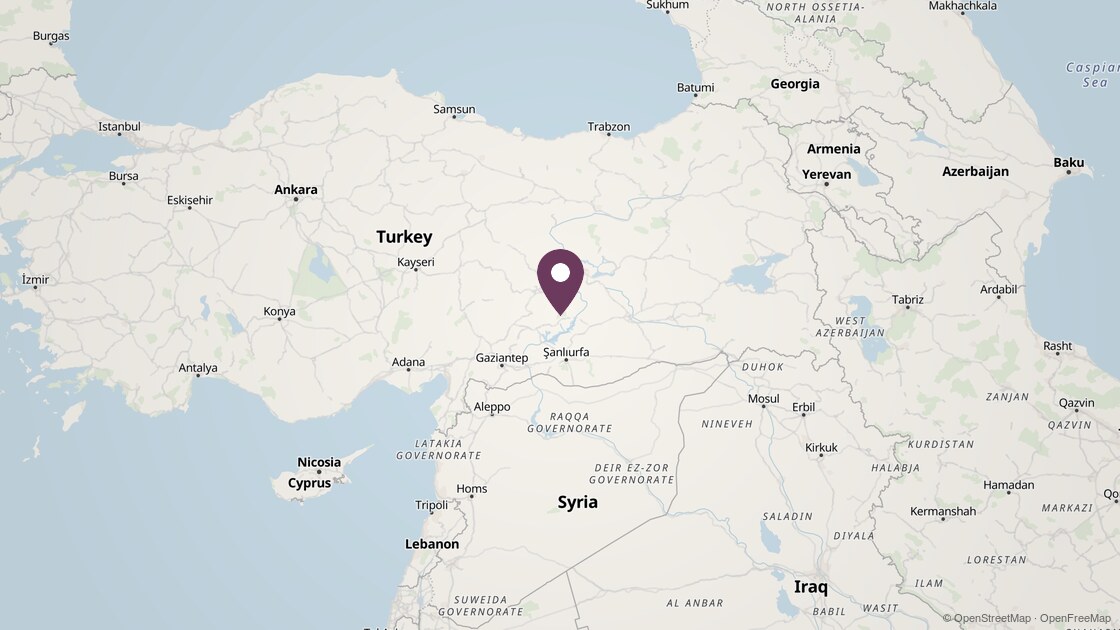
Researchers report a new reading of a stone staircase tunnel at Arsameia on the Nymphaios, a shrine in the ancient kingdom of Commagene, in today’s Turkey. Cut into a steep cliff, the tunnel descends 158.1 meters into the rock and then simply stops. In a study published in the Journal of Roman Archaeology on November 19, 2026, Lennart Wouter Kruijer of Leiden University sets aside the question of what the builders wanted and asks instead what the tunnel did to the people who walked down its steps. The place perhaps began as a fort under King Mithridates I Kallinikos, and his son Antiochos I, who ruled from 69 to 36 BCE, made the hilltop the center of a royal cult.
Inscriptions say Antiochos ordered several festivals every month and hoped to draw visitors from far beyond his borders. Kruijer pictures two pilgrims from Doliche around 40 BCE walking about seven days to reach the cliff, then facing a horseshoe-shaped opening 2 meters tall and 1.5 meters wide, framed by the Great Cult Inscription. Such tunnels are not unique: Von Gall listed 51 across Turkey in 1967, and Ahmet Emirhan Bulut has added 39 in the Pontic region. Almost half of the 30 Pontic tunnels Bulut studied end at groundwater, while other scholars point to cult finds such as a marble statue of Kybele at the Kurul Fortress tunnel and dozens of wall niches.
The original report: archaeologymag.com ☞