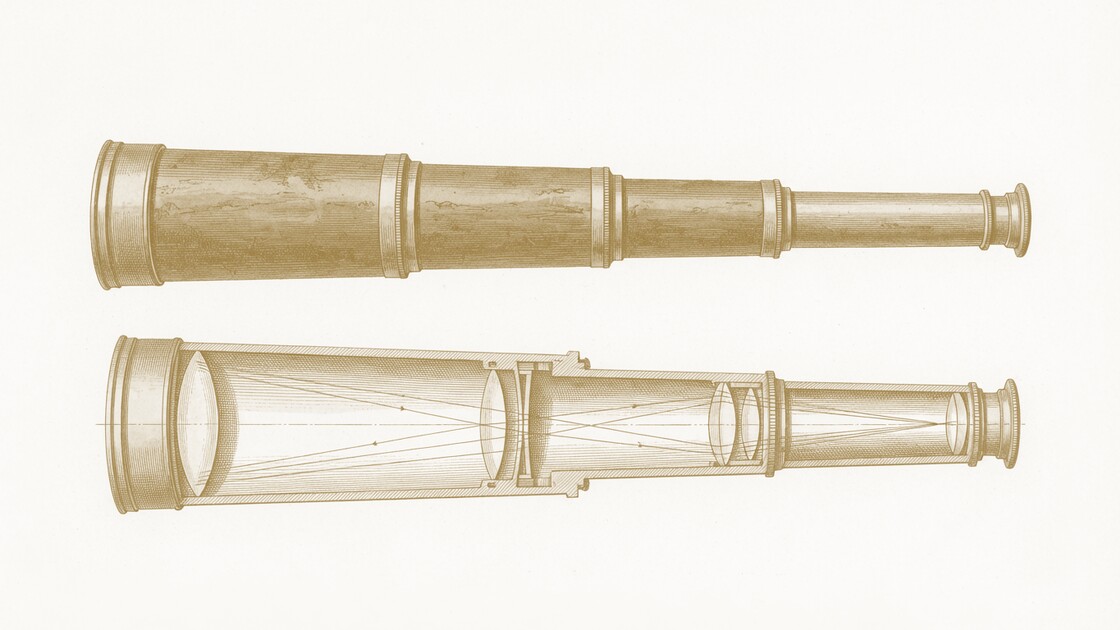
Researchers report that Dr. José María Moreno Madrid, of the University of Limerick’s School of History and Geography, identified an unusual account while examining a manuscript by the Dominican friar Ignacio Muñoz. The text, titled De Tellescopiis Stellarum and dated 1666, describes a telescope that Muñoz labelled with the Latin phrase “fabricatum a Galilaeo,” meaning “manufactured by Galileo.” According to the report, the instrument had four lenses, a reverse-tapered body, an erecting eyepiece, and convex lenses separated by twice their focal lengths. The manuscript also includes diagrams and drawings illustrating how it was built.
The researchers conclude that the document suggests Galileo may have built a telescope design more advanced than historians previously believed possible for his time. The evidence is a written attribution and a set of drawings, not a surviving instrument, and the researchers present it as a possibility rather than a settled fact. For readers drawn to the history of religion and learning, it is notable that this technical record survives in the hand of a Dominican friar, a reminder that manuscripts from religious orders can still change how familiar stories in the history of science are told.
The original report: scitechdaily.com ☞