
In 467 or 466 BC a large stone fell out of the daytime sky at Aigospotamoi, a small river in what is now northwest Turkey. Later Greek writers say that the philosopher Anaxagoras had predicted it. No ancient author explains how he could have known. The likeliest answer is simpler: he taught that the stars are heavy stones that can break loose, and then one fell.
In the sixteenth century an alchemy book used the fallen rock to argue that a glass flask had to mirror the cosmos to make gold, and it claimed that the stone fell after the philosopher died.
What do we know about the meteorite of Aigospotamoi and Anaxagoras’ prediction?
The crash took place at Aigospotamoi, a Greek name meaning “goat rivers”. It was a stream with a small settlement on the European shore of the Dardanelles, opposite ancient Asia Minor.
Ancient records date the fall to 467 or 466 BC, during the Aegean summer.
The stone came down in daylight, and a comet blazed in the nights around it. The philosopher Aristotle places that comet in the western sky. In his view a wind had lifted the stone into the air before it fell.

Anaxagoras came from Clazomenae, a Greek town on the coast of Asia Minor. He was born around 500 BC, so he was about 33 when the stone fell. He taught in Athens for many years.
He held that the sun was a mass of red-hot metal larger than the Peloponnese, the southern half of Greece. That view helped bring him to trial for impiety. He left Athens and died at Lampsacus in 428/427 BC. Lampsacus lay on the Asian shore, across the water from Aigospotamoi.
What did Pliny the Elder and Plutarch actually write about the Aigospotamoi stone?
Several ancient writers tell the story with varying details. Pliny, writing in the first century AD, gives the fullest account. He notes that the Greeks boasted Anaxagoras had predicted the day a stone would drop from the sun, reading the signs in the sky.
The stone fell in daytime at the Aegos river in Thrace. People still showed it in Pliny’s day. It was the size of a wagonload and had a scorched colour.
Pliny did not believe the prediction. He argued that if Anaxagoras had really foreseen the exact day, that foresight would be a far greater miracle than the stone itself. Nature would be thrown into chaos if the fiery sun held loose rocks. Yet Pliny conceded the physical fact in plain words: stones really do fall from the sky.
He backs it with another example: a small sacred stone kept across the strait, which Anaxagoras had allegedly foretold would fall in the middle of the earth. Pliny also noted seeing a fallen stone himself in southern France, freshly brought in from the fields.
The Greek biographer Plutarch, writing around AD 100, tells the story in his Life of Lysander. Lysander was the Spartan admiral who destroyed the Athenian fleet at Aigospotamoi in 405 BC. He seized 170 ships and all but ended the long war between Athens and Sparta. Some people read the fallen stone as an omen of that disaster. The people of the peninsula still showed the stone and held it sacred.
Anaxagoras had a reputation for reading the weather too. At the Olympic festival he once sat down wrapped in a sheepskin cloak, as if rain were coming. The rain came.
In Anaxagoras’ picture of the sky, the stars are heavy rocks held aloft by a whirling motion. If something slips or shakes in the celestial rotation, one of them breaks loose and plunges to earth.
One early chronicler gave the crash a dramatic prelude: a fiery cloud drifted across the sky for seventy-five days, showering sparks like shooting stars before dropping the rock. Plutarch dryly remarked that this chronicler asked a lot of his readers.
Later storytellers added even more drama. Some claimed the stone had fallen straight from the sun, leading the poet Euripides to call the sun a “golden clod”. Another claimed the philosopher foretold that day would turn to night as rocks rained down.
Did Anaxagoras really predict the meteorite?
No surviving text records what Anaxagoras said before the stone fell. Every written account dates from centuries later.
A modern classical scholar offered a modest answer in 1960. A great comet, he suggested, could have convinced Anaxagoras that “some of the furniture of heaven was slipping”. The philosopher then predicted that a stone would fall, and one did. In that reading Anaxagoras predicted the general phenomenon, not this particular rock.
A pioneer of meteoritics, writing in 1819, read the ancient report the same way. The prediction “can only be understood”, he argued, as Anaxagoras having taught in general that stones can fall from the sky. The writer compared his own experience: he had also claimed rocks fall from the heavens before witnessed falls convinced the public, and skeptics had doubted him too.
The same scholar pointed out how easy vague prophecy could be. Nostradamus had once written that stones would rain in Tuscany. Without a specific date attached, such a prophecy cost nothing.
The stone itself brings a modern puzzle. A rock the size of a wagonload should have left a crater, and none has ever been found. A classicist who studied the case in 2024 thinks the stone people showed visitors was probably not the meteorite of 467/466 BC.
Iron meteorites often rust and crumble before anyone finds them. Ancient towns also liked to show visitors local boulders with a myth attached, and one neighbouring town displayed two wagon-sized rocks as leftover clay from the creation of mankind. If the original meteorite shattered or rusted away, the locals may have picked an impressive stone with a burnt look in its place, by honest mistake or not.
Researchers still disagree about what kind of stone it was. Some suggest it broke off Halley’s comet in 466 BC, although most meteorites are fragments of rocky asteroids. Others point to the scorched dark surface and suspect a dense iron meteorite that rusted away in damp soil over the centuries.
Why did an alchemy book under Paracelsus’ name cite the Aigospotamoi meteorite?
In the Renaissance alchemists looked to the sky to justify their laboratory tools. A Latin treatise titled The Aurora of the Philosophers dedicated an entire chapter to designing the ideal flask for transforming metals. Inside this vessel, practitioners tried to create the philosophers’ stone, a mythical substance thought to transform base metals into gold. The author insisted that the flask’s geometric shape made the difference between triumph and disaster.
The argument runs like this. The stars rule the work, so the vessel must let “the matter in it … be governed by the heavenly bodies”. Then comes the stone. In the 1894 English translation by Arthur Edward Waite, the passage reads:
“By this Anaxagoras knew the powers of the whole firmament, and foretold that a great stone would descend from heaven to earth, which actually happened after his death.”
The vessel must follow “a truly geometrical proportion and measure”, so that the sun and the planets can work on the matter inside. If it is too narrow or too low, the fire will shatter it “into a thousand pieces”, and the alchemist’s life is in danger. One too large wastes the work.
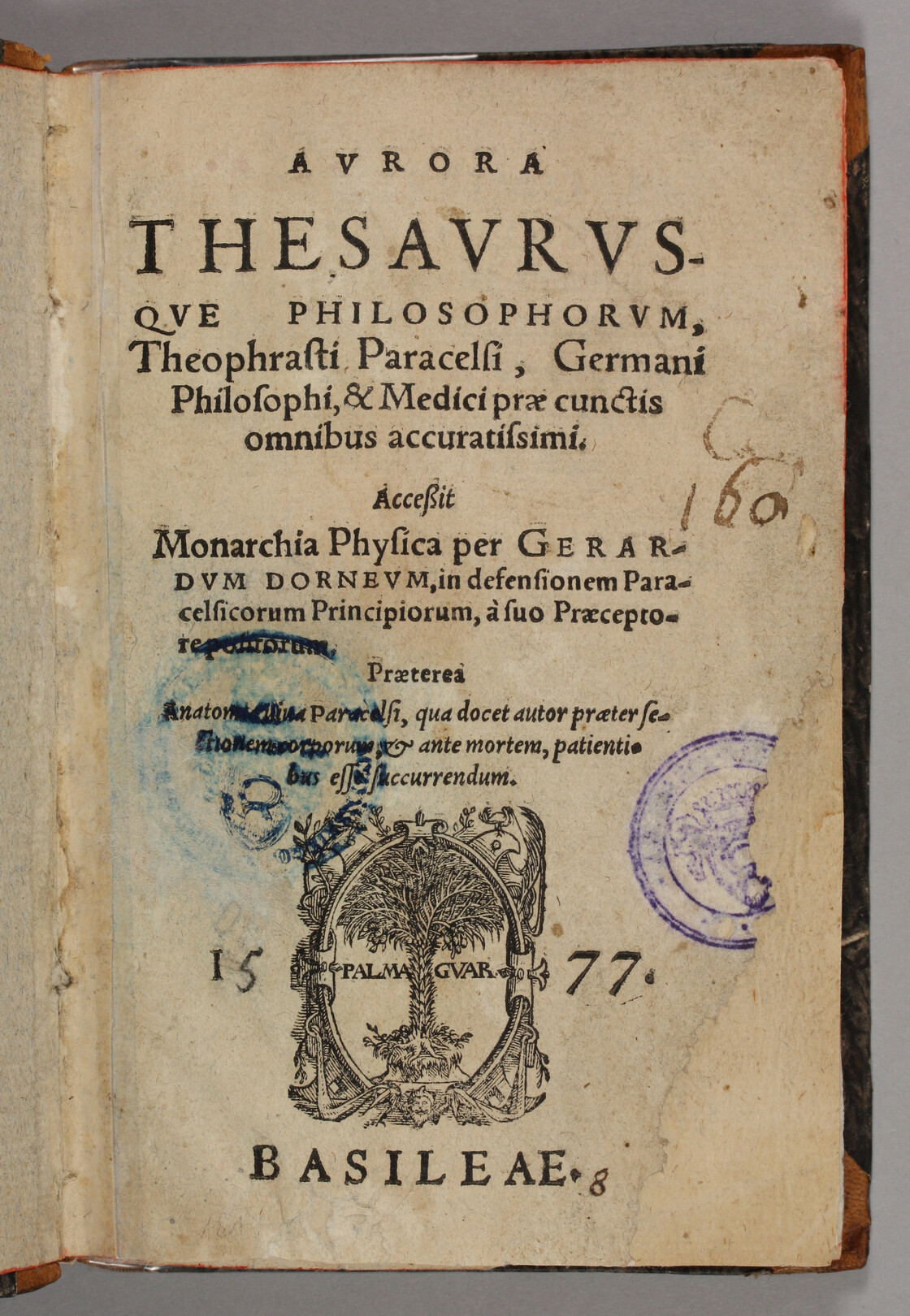
The true author is unknown. Paracelsus died in 1541, two decades before the text was written. A collector later put the famous physician’s name on the title page and printed it in 1577, though later scholars quickly rejected it as a forgery.
The Latin print of 1577 already states that the crash happened post mortem eius (after his death). The ancient dates say otherwise: Anaxagoras lived for nearly four decades after the rock struck the ground.
The slip may come from Plutarch’s link between the stone and the naval battle of 405 BC, which came more than twenty years after Anaxagoras died. Merge the omen with the battle and the stone lands after his death. Even Chladni in 1819 placed the fall “around the time when Lysander defeated the Athenians”.
The Aurora has its own picture of Anaxagoras. Earlier chapters list him among Greeks who learned some secrets from the Egyptians but never the true art. His wisdom shows, in the book’s words, in “his discussions on the subject of Sol and its Stone”.
In alchemy, the Latin word Sol stood for both the sun and gold. An alchemical reader encountering Pliny’s old phrase about a “stone from the sun” could easily read it as code for making gold from heaven. That reading is an interpretation, but it fits the imagery of the time.
How did the Aigospotamoi fall shape early meteoritics from Anaxagoras to Chladni?
The ancient stone entered modern science through a German physicist named Ernst Chladni. In 1794 he published a pioneering book claiming that strange lumps of natural iron came from deep space. Fireballs in the night sky, he argued, were cosmic rocks plunging through the atmosphere rather than weather phenomena.
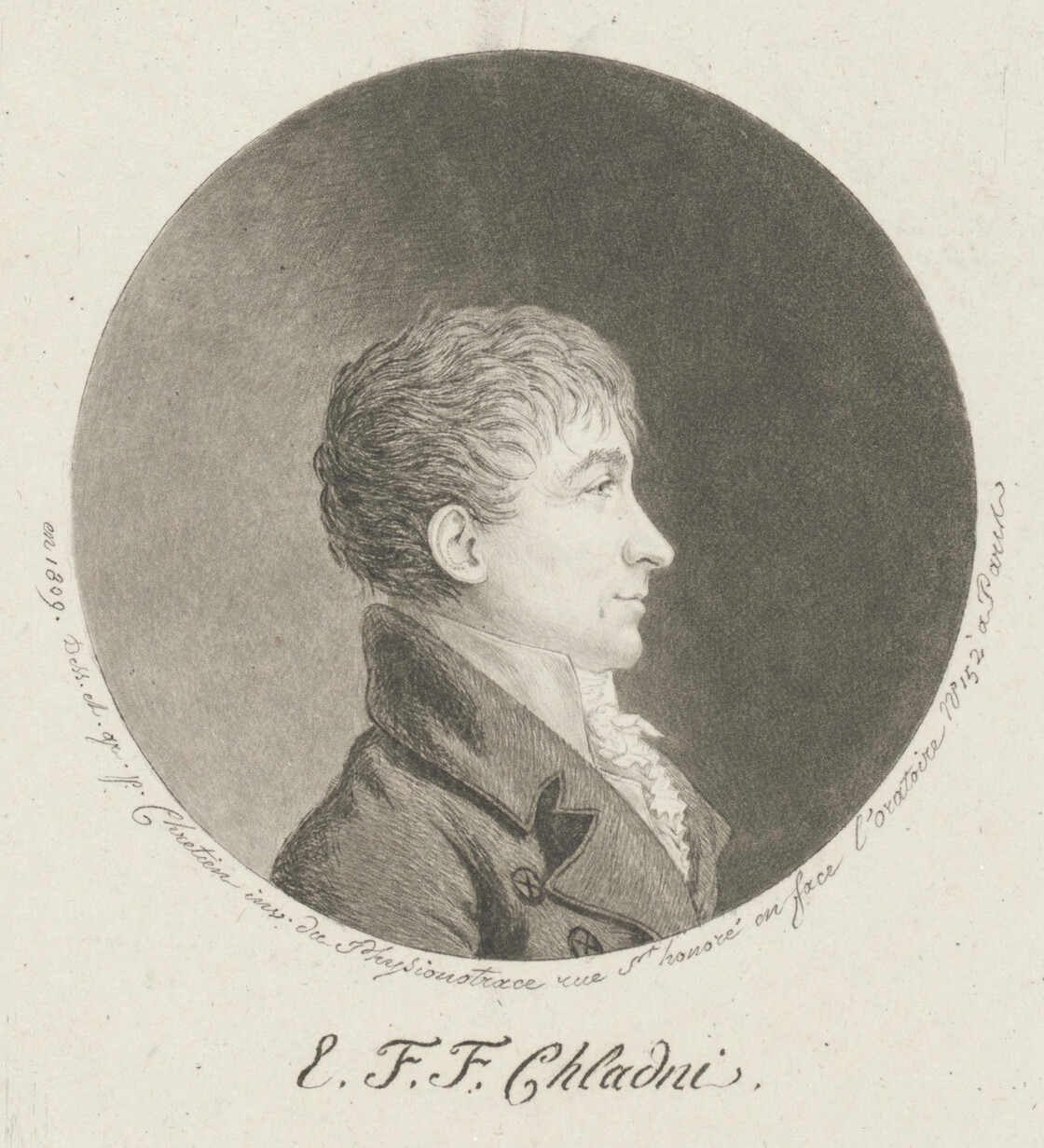
The idea met scorn. Chladni quotes an assistant at the imperial natural history collection in Vienna, who was writing about an old report of iron falling from the sky. “In our times,” that man wrote, “it would be unforgivable to find such fairy tales even probable.”
Chladni gathered historical reports to back up his controversial claim. He cited ancient Roman iron falls, medieval meteorites, and a famous 1492 fall in Alsace preserved on a chain inside a church. The stone of Aigospotamoi, however, was still missing from this first list.
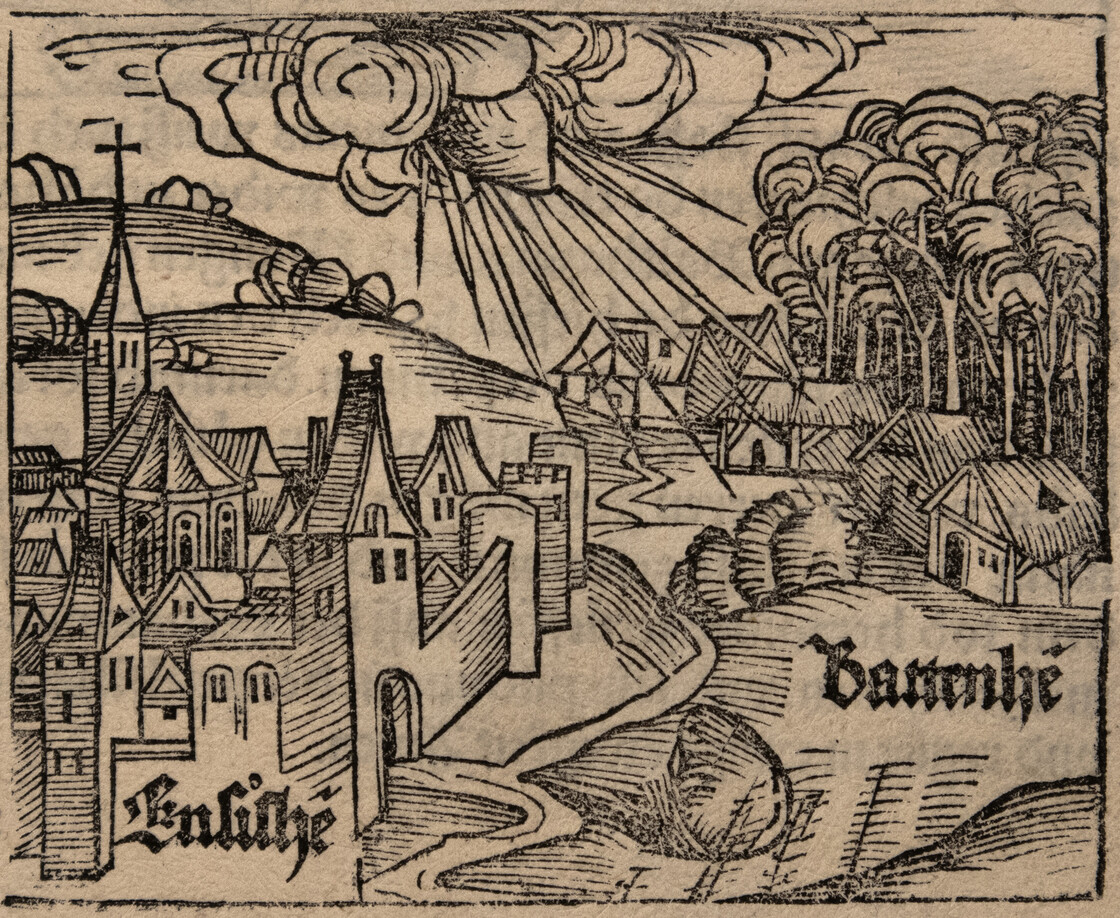
It arrives in his big catalogue of 1819, On Fire-Meteors. The list of falls before Christ there includes “465, a large stone at Aegos-Potamos.”
Chladni treats the ancient report as evidence. He reads Pliny’s “burnt colour” as the black crust found on other meteorite stones. The 75 days of fire were probably a comet that people confused with the meteor. A stone much smaller than the blaze above it was no surprise to him. In his experience that happens in every fall of meteorite stones.
Chladni also rejected one tidy idea. An earlier scholar had guessed that the Abydos stone was the stone from Aigospotamoi. Chladni pointed out the size mismatch: Pliny calls one modest and the other a wagonload. Both, he allows, might have come down with the same meteor, since the two towns lie close together.
The Abydos stone is lost too. The astronomers who went looking in 2002 learned that Sultan Selim III used stone from the ancient city to build the walls of Nara Castle in 1807. The sports ground where the stone once stood was apparently destroyed then.
In June 2002 three astronomers visited the modern Turkish farming village on the site to hunt for traces. The local farmers knew nothing about a stone falling from the sky. The visitors found no trace of the ancient town either.
River mouths silt up fast, they wrote, so the stone may lie buried under mud, or it weathered away long ago.


