In a Saxon peasant room, Wilhelm von Kügelgen wrote in his memoirs, the space between the big stove and the wall was filled “as in all Saxon peasant rooms” by a raised platform about three feet (90 centimetres) high, and that platform was called “die Hölle”: hell. The name was much older than Kügelgen and much more widespread. The Deutsches Wörterbuch, the great dictionary of the German language begun by the brothers Jacob and Wilhelm Grimm, finds it in a source of the 1480s. It quotes a comic tale by the sixteenth-century storyteller Jörg Wickram in which one man “lay behind the stove in the hell and was too lazy to get up”. In Carinthia, in the Austrian Alps, the same name went to the free space behind the stove where wood shavings were dried and kept.
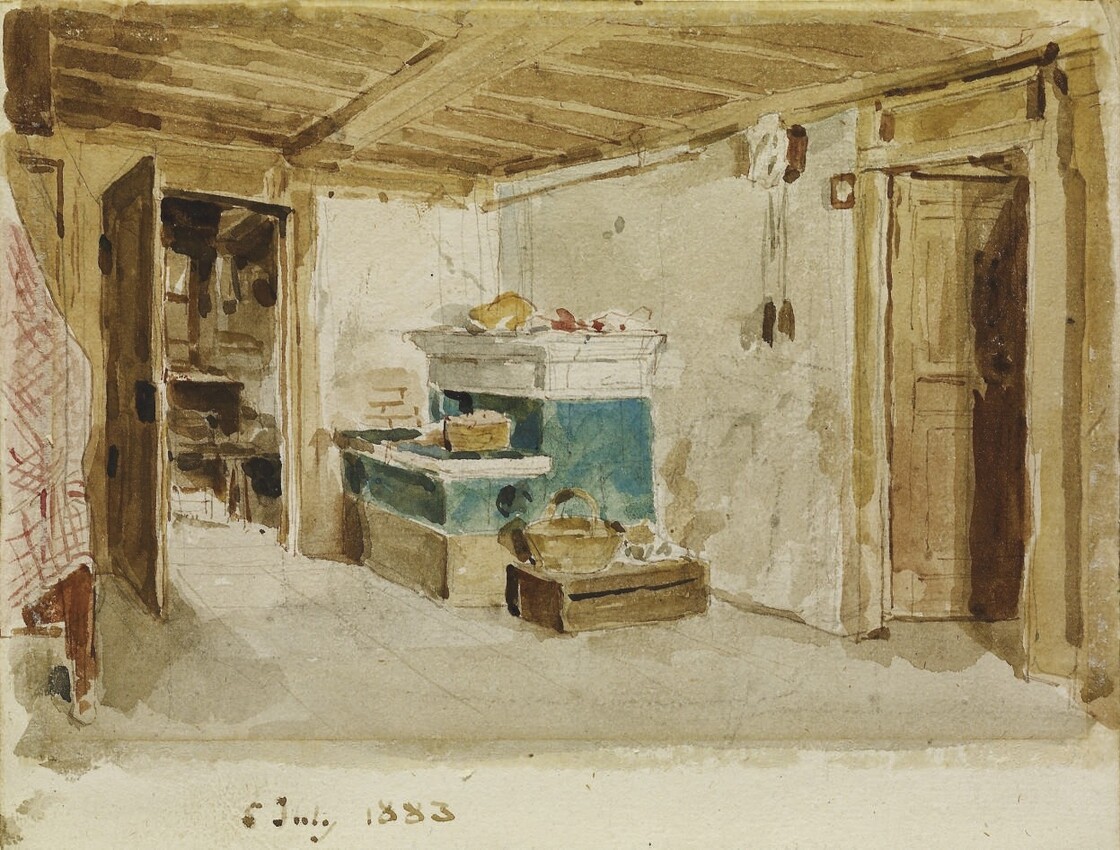
So the warmest and most comfortable corner of the house carried the name of the place of eternal torment. In the nineteenth century a dictionary and a folklorist gave two very different reasons for it.
What did the dictionary say?
The volume of the Grimms’ Deutsches Wörterbuch that contains the word Hölle appeared in 1877. Its explanation of the corner behind the stove is short and careful: the name is “perhaps nothing but a folk-witty transfer” of the word hell “to a narrow and hot space”. In other words a joke: the corner was tight and it was hot, so people called it hell. The same entry lists other cramped places called hell: a space under the tailor’s table and a hold in the forepart of a ship.
In 1898 a scholar from Leipzig gave a very different explanation.
Who said the dead lay behind the stove?
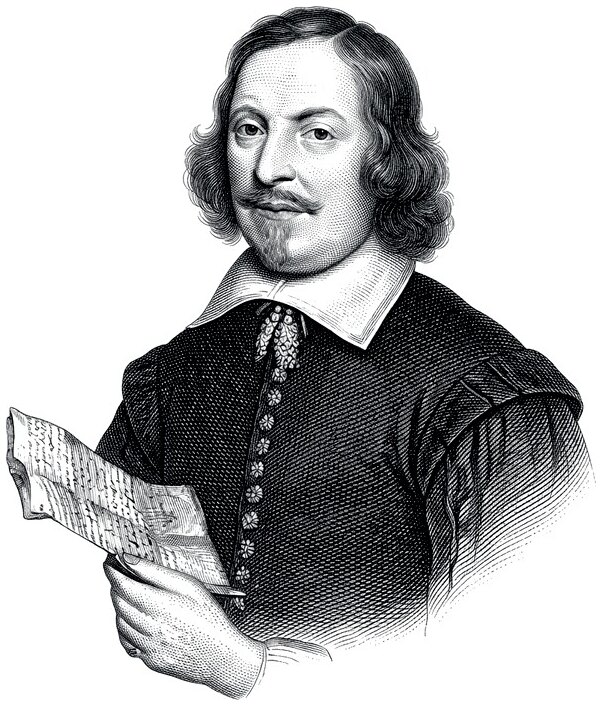
Rudolf Kleinpaul (1845–1918) was a philologist, a scholar of language, who had studied in Leipzig and Berlin, travelled in Italy, Greece, Egypt and Palestine, and from 1878 lived as a freelance writer in Gohlis near Leipzig. He wrote books on the names of peoples, on the riddles of language and on human sacrifice. In 1898 he published Die Lebendigen und die Toten in Volksglauben, Religion und Sage, “The Living and the Dead in Folk Belief, Religion and Legend”, a study of how people imagined their dead and how, in their imagination, the dead stayed among them.
In the chapter on the house and its spirits he comes to the corner behind the stove. “That is by no means a jest,” he writes. “It is by no means as hot here as in hell. No, it is a remnant of the immemorial conception that the old people are buried here under the stove.” The dead, he goes on, lie “in hell, that is, in the underworld”, and they want their rest. By “the old people” he means the family’s ancestors. In the earliest times, he believed, a family buried its dead at the hearth, the open fire at the centre of the old house, so the hearth was also the family grave. When the hearth moved into the inner room and the stove took its place, the spirits of the dead moved with it.
He offers four pieces of evidence on a single page. The first is a wedding custom. Among the old Germans, he says, the bride had to be led to the hearth and three times round it, and there formally handed over to the Lares and Penates of her bridegroom. These were the household gods of ancient Rome, and Kleinpaul borrows their names for the spirits of a German family’s dead. “In Lower Saxony this was called the Helleiten, the leading round the Hel or the Hölle.” Kleinpaul took Hel to be an old form of Hölle, hell in the sense of the underworld, so the bride was led round the place of the dead. Every new member of the household, the hired farmhand too, had to be led round the Hel in the same way.
The second is a saying. When a visitor drops in, asks a question and wants to leave again without sitting down, people say: “Pray, sit down, or you will carry off our rest with you!” Kleinpaul’s reading is that the rest in question belongs to the dead, who are disturbed by the coming and going and the slamming of doors.
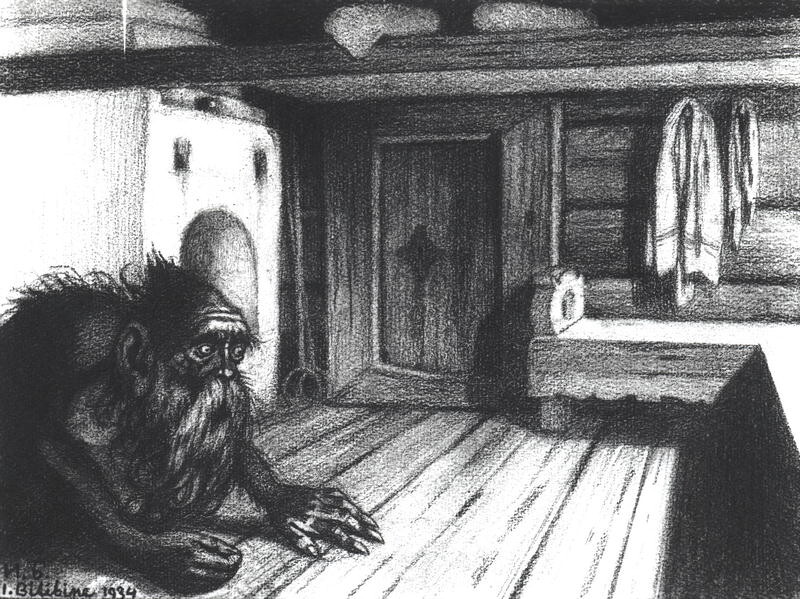
The third is food. Behind the stove, he writes of the house spirits, “food is set before them; here milk and rolls are offered to them day by day.” The fourth comes from Russia: the domovoi, the house spirit of Russian peasants, called “the old man”, lives behind or under the stove.
The first piece carries the most weight, because it is the only one that ties together the hearth, the word Hel and the dead.
What was the “Helleiten” really?
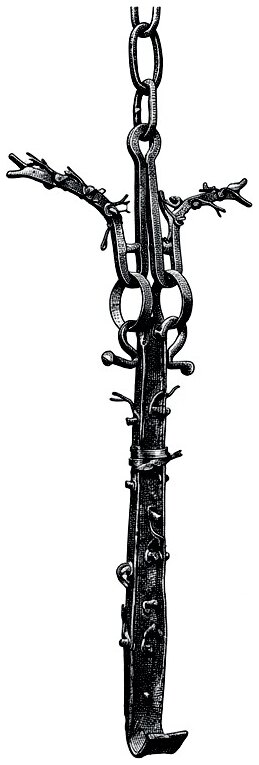
The custom was real, and it centred on a piece of kitchen iron. Over the open hearth of a farmhouse hung a pot-hook, an iron hook on a chain or a notched bar, which held the cooking pot and could be set higher or lower over the fire. The Handwörterbuch des deutschen Aberglaubens, the large German dictionary of folk belief, collected the reports in a volume of the early 1930s. In the Eifel, the Rhineland, Westphalia, the Mark Brandenburg and Transylvania, the young wife was led three times round the hook over the hearth after the wedding, or her bridegroom carried her round, or, where the hearth stood against the wall, the hook was swung three times around her. In Brackel near Dortmund, the historian Karl Weinhold reported, the fire was lit at this moment and the hook pulled forward over it. Servants went through the same rite when they started work. At Meiderich on the Lower Rhine a new maid had to stand bent forward while the others circled her with the hook, singing a song.

In the dialects of north-western Germany this hook was called the Hal, Hel or Hol. The handbook derives the word from Old High German, the German of the early Middle Ages, where hâhila meant “the hanger”, from the verb hâhan, to hang, and it adds that scholars had once wrongly connected it with the underworld. Grimm’s dictionary agrees and lists hel among the dialect names of the kettle hook.
The connection with the underworld had been made a decade before Kleinpaul. In 1886 and 1887 the cultural historian Julius Lippert wrote that in Lower Saxony the old name Hel had survived for the hearth as a place of worship, that it pointed to the gods of the underworld, and that, “corrupted to Hölle”, changed over the centuries into the word for hell, it still named the place behind the stove. Lippert called the bride’s walk round the hearth “the Helleiten” and added the farmhand who was “led round the Hel”. Kleinpaul’s chain follows Lippert’s link for link, and in his preface Kleinpaul names the source of his whole approach: it was “particularly since I became acquainted with the cultural history of Julius Lippert”, he writes, that he became certain the spirits of folk belief go back to the images of the dead.
Did the saying have anything to do with the dead?
Kleinpaul’s polite saying is real too. Karl Friedrich Wilhelm Wander’s Deutsches Sprichwörter-Lexikon, the great collection of German proverbs and sayings, records it in 1873 from Franconia, “I don’t want to take the rest away with me”, and from Silesia, “Sit down a little, so that you don’t take my rest away with you”. Wander explains it in one line, “So one says when one does not leave someone’s house without having sat down”, and says nothing about the dead, so the ghosts in the saying are Kleinpaul’s own addition.
His food offerings stand on firmer ground. Jacob Grimm’s Deutsche Mythologie describes servants who set aside a small bowl of food for the house spirit, and notes that the spirit is content “with a bowl of groats, a piece of cake, a glass of beer”. The dictionary of folk belief records offerings at the stove as a common custom, with flour, salt and crumbs. The daily milk and rolls are a detail that, so far, only Kleinpaul gives.
Kleinpaul thought the red caps and red hair of German house spirits came from the hearth fire. In his book the pointed red hat of a kobold, the German house goblin, is a small image of the chimney, and the grey coat is the colour of the ash.
Did the dead ever live in the house?
On this larger question Kleinpaul is far from alone. Around AD 400 Servius, a Roman grammarian who wrote a commentary on the Aeneid of the poet Virgil, explained why the Romans honoured the Lares inside their houses: “among our ancestors all were buried in their own houses, and from this arose the custom that the Lares were worshipped in the houses.” He adds that this is why the Romans called the ghosts of the dead larvae. Modern scholars still argue over the Lares. One view, put forward by the scholar Ernst Samter in 1901, sees them as the deified souls of ancestors; another sees them as guardians of fields and roads. The Encyclopedia of Religion of 2005 prefers the ancestors and calls the old quarrel between the two camps, over whether the cult began inside or outside the house, “probably a false problem”. The Romans’ other household gods, the Penates, were the gods of the storeroom and the hearth, and they went wherever the family went.
In Russia the English folklorist W. R. S. Ralston found the same ideas alive in 1872. The stove, he wrote, had become “the special haunt of the Domovoy, or house-spirit”, and the spirit’s standing among the people was “looked upon as a trace of the ancestor worship of olden days”. When a Russian family moved house, the fire was raked out of the old stove into a jar and carried to the new one, and when it arrived the family said: “Welcome, grandfather, to the new home!” In the province of Nizhny Novgorod, he reported, it was still forbidden to break up the smouldering wood in the stove with a poker, because that might make one’s “ancestors” fall through into hell. In the bathhouse, Ralston noted, the same spirit went by the name of bannik, the bathhouse spirit.
Archaeology adds real graves under real houses, although far from Germany and far earlier. At Çatalhöyük in Anatolia, in today’s Turkey, a settlement of closely packed houses lived in between about 7100 and 6000 BC, the dead were buried beneath the floors and the raised platforms of the houses, from none in some buildings to as many as 62 in one. The excavator Ian Hodder has suggested that these houses may have created links to the ancestors buried beneath their floors, and he warns against reading too much into it. For the Germanic peoples whose hearth Kleinpaul had in mind, no burials under the hearth are known. Kleinpaul himself introduced his picture with the words “one must imagine”: in grey prehistory, before there were churches and churchyards, the dead father stayed in the house, buried at his own fireplace.
Among the Catholics of the Upper Palatinate in Bavaria, Kleinpaul reports, it was believed that the poor souls were allowed to come back from purgatory, the place where Catholic teaching has souls cleansed before heaven, to their old house on Saturdays, and that they sat under the door hinges.
What were the dead doing at night?
From the dead under the hearth Kleinpaul draws his boldest conclusion, about the noises in old houses. He knows the sober explanations, and he tells one himself. In the house of the superintendent, the senior Protestant pastor of the district, at Tilsit in East Prussia, an old discarded piano in the lumber room had several times been heard playing in the evening. When it played a whole scale, the family wondered whether the late great-great-aunt who had owned it was practising again. The son of the house, a senior pupil at the grammar school, took a knotted stick, went up to the piano and lifted the lid, and a little mouse ran across the keys. Kleinpaul closes the story with irony: “Fiddlesticks! It was the ghost of the old aunt.”
Then he goes on: “enlightenment does not banish all specters from the world at a stroke; one must also take pains to fathom their nature.” The spirits that knock and rumble in old houses, he says, are busy rather than noisy, and “one might just as well say that the carpenter makes a racket”. For Kleinpaul the poltergeists, the “noisy ghosts” of German folklore, are house spirits, the souls of the old men “who built the house and founded the hearth”, and “they rest beneath the hearth, in the so-called Hölle, and do not leave the house until it has burned down.” They check their property like landlords. “When the wall gets a crack, the kobold grows very restless; when a wall has settled, he drums up the whole house; when a pillar threatens to collapse, he rings the alarm.” The people who notice the noise most, he adds, are strangers sleeping in an old house for the first time, whose faces the spirits do not yet know, and who sometimes find the blanket pulled off them in the night.
The same idea runs through Kleinpaul’s other house spirits: the Petermännchen of Schwerin, who was said to appear when misfortune threatened the house, and the Drummer of Tedworth, the invisible drummer who beat on the walls of an English magistrate’s house for two years from 1661. His chapter on house spirits “bred by art”, made on purpose by walling a person into a new building so that it would have a guardian, cites the child’s skeleton found in the old town hall of Glarus.
German house spirits, Kleinpaul noticed, carried the names of old men: Heinzelmann, Petermann, Wolterken for Walter, Chiemke for Joachim. For him that was one more sign that they had once been the grandfathers of the house.
What remained of the rite?
Whether the corner behind the stove was named in jest or in memory of the dead, no document can now decide. The rite at the hearth, however, was still being performed when the folklorists wrote it down, by people who called the hook by its old name. In Alten-Hunden in Westphalia, the dictionary of folk belief records, the maids started their service at Martinmas, the feast of Saint Martin in November. When a new maid moved into a house, the young lads came and led her to the Hal, the hook over the fire, and afterwards she treated them.