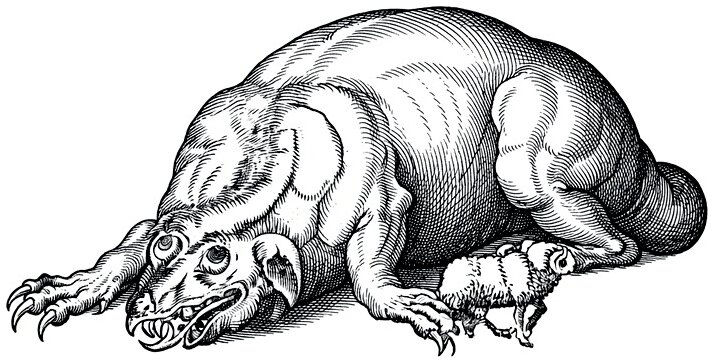
The dragon of Kraków, Poland’s best-known mythical beast, first shows up in writing around 1200. A Latin chronicle tells of a monster lurking below the castle hill until two princes feed it cattle hides stuffed with burning sulphur, which it swallows greedily and chokes on.
The same trick turns up centuries earlier and far to the east. In one old tale a famous conqueror kills a dragon with two oxhides full of sulphur, and an old Jewish law book tells of a giant snake killed with bags of straw and glowing coals. How the trick reached Kraków is still an open question.
What is the origin of the Wawel Dragon legend?
The chronicle’s author was Wincenty Kadłubek, a scholar who later became bishop of Kraków. He wrote it around 1200 for the local duke and gave his opening book to the legendary beginnings of Poland and its founding ruler, King Krak.
His dragon lives “in the windings of a certain rock” and is owed a fixed number of cattle every week, counted by the days. If the people fail to deliver these “victims”, it takes as many human lives instead. Krak cannot bear the loss, so he calls his two sons in secret and sends them against it, though he calls them “half of our life”.
They fight it openly many times and fail, and so they turn to cunning. In the usual place, instead of the cattle, they set out cattle hides full of lit sulphur. The beast swallows them with great greed and suffocates “from the flames breathing out inside”.
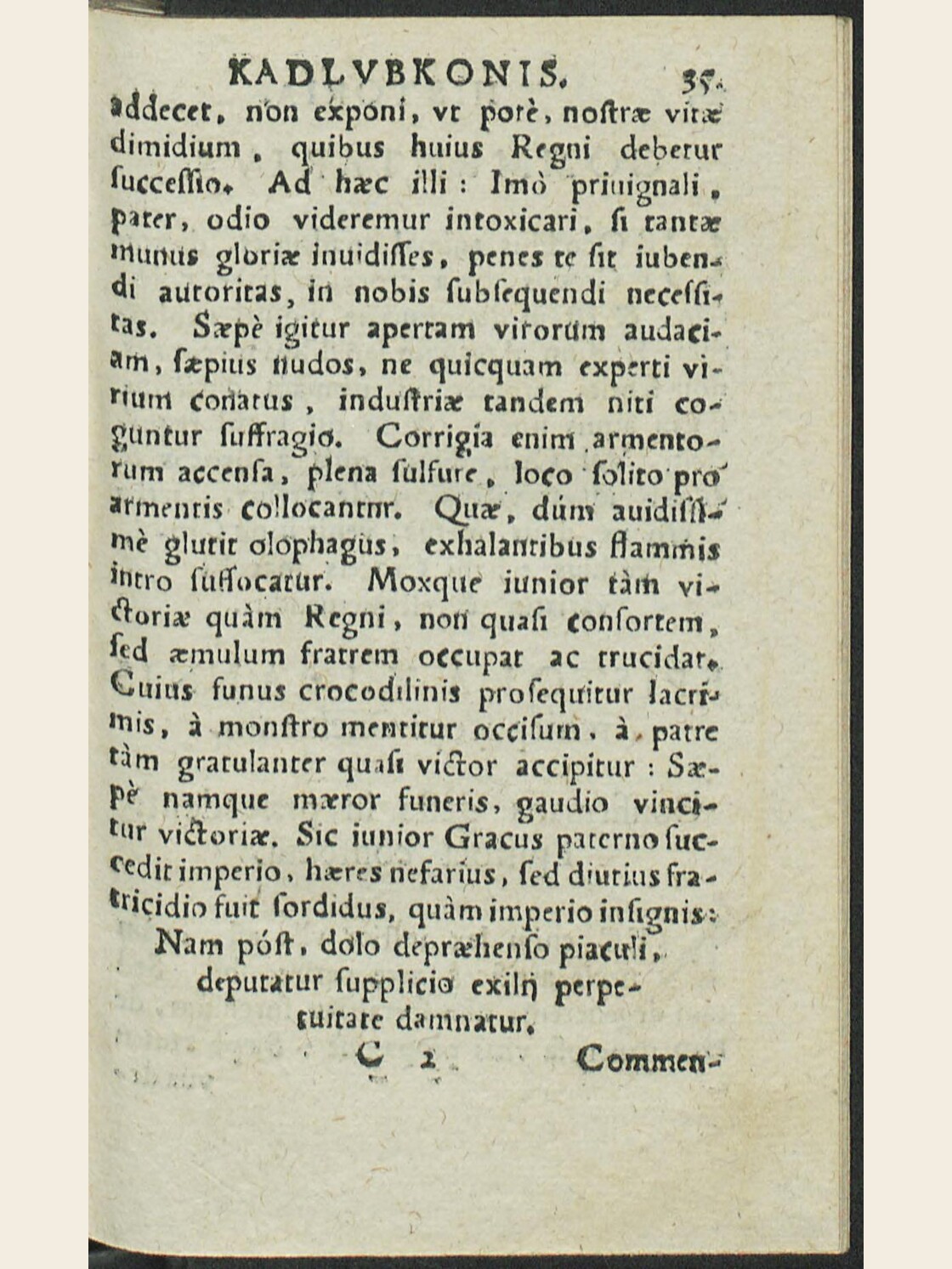
The victory ends in murder. The younger son kills his elder brother, his partner in the fight, because he sees a rival for the throne, then follows the body home weeping “crocodile tears” and blames the monster. The father welcomes him as the victor. When the crime comes out, the son goes into exile for life, and Krak’s daughter Wanda takes the throne.
The city rises “on the rock of the holophagus” and takes the name Gracchovia, after Krak. Kadłubek adds a second story about the name: some called the city Cracovia from the croaking of the ravens that came down to the monster’s carcass.
The bishop places the lair only “in the windings of a certain rock”. Wawel Hill and its famous cave enter the story much later.
Why is the Wawel Dragon called a holophagus?
Kadłubek made up his own name for the monster, holophagus, Greek for “one who swallows whole”. He kept that word for pure evil and used the ordinary Latin word for dragon when he wanted to praise noble rulers.
The common Polish word for dragon, smok, came much later. Like Kadłubek’s Greek coinage, it goes back to an everyday verb meaning to suck or swallow whole.
Who killed a dragon with stuffed oxhides before Kraków?
The oldest stuffed-hide story belongs to Alexander the Great. It comes from the Alexander Romance, a largely invented life of the Macedonian king, and the episode survives in a Syriac translation made in the Middle East around the sixth or seventh century.
In it, mountain people warn Alexander about a god in the shape of a dragon that can “swallow an elephant by drawing in his breath”, and they feed it two oxen every day. Alexander decides that it is “not a god but a phantasy of wicked demons” and gives it two small calves so that it grows hungrier.
Then he orders “two oxen of huge bulk” killed, skinned and emptied of their flesh. The hides are filled “with gypsum and pitch and lead and sulphur” and laid where the oxen usually lay. The beast draws both skins into its mouth and swallows them, and its head falls to the ground. Alexander has a smith’s bellows brought, and brass balls are heated in the fire and thrown into the open jaws. After the fifth ball the dragon shuts its mouth and dies.
A similar tale appears around the year 1000 in the Persian national epic, the Shahnameh, where Alexander stuffs five oxhides with poison and naphtha before throwing them to a dragon.
How the trick got to Poland is the puzzle. The Greek and Latin versions of the Alexander legend that medieval European scholars read do not have the bait at all. Eastern manuscripts kept it, and historians still wonder how it crossed into Central Europe.
What does the Jerusalem Talmud have to do with the Dragon of Kraków?
The earliest fire inside the bait turns up in Jewish tradition. The Jerusalem Talmud, compiled in late antiquity around the year 400, keeps the detail in a legal debate over exaggerated vows. The rabbis ask whether a snake “as thick as the beam of an olive press” is really impossible and answer with an old court tale:
Did not the snake of king Sapor swallow camels and carts? When they wanted to kill it, they filled camel bags with straw and put glowing coals inside; it swallowed them and died.
King Sapor was a Persian emperor. Put the texts side by side and the timing of the fire differs. In the Syriac Alexander story nothing in the hides is burning yet, and the heat comes later with the glowing metal balls. In the Talmud the coals are already burning when the monster gulps the bait, just as Kadłubek’s sulphur is already lit. That makes the Jewish text the closest match for the burning trap.
Historians of medieval myth have suggested that the Talmud story may have been the bridge. A Jewish community had lived in Kraków since at least the early eleventh century, and Kadłubek’s own chronicle records a legal case that protected a local Jew. The trick may have entered Polish lore through Jewish storytellers in the city, though no written record of such an exchange survives.
Was Daniel’s dragon the model?
A third road runs through the Bible every medieval cleric knew. In the story of Bel and the Dragon, printed in the Latin Bible as chapter 14 of Daniel, the Babylonians worship a living dragon. Daniel promises to kill it “without sword or staff”, boils pitch, fat and hair together into lumps and puts them in its mouth, “and so the dragon burst in sunder”.
A Franciscan friar in Kraków saw the likeness early. Around 1300 he retold Kadłubek’s story in his own chronicle and added that Krak’s sons killed the beast “as Daniel killed the dragon of Babylon”.
Kadłubek’s wording points the same way, since he calls the cattle sacrificial offerings, and in scripture sulphur is the usual weapon against monsters and evil. A well-read bishop probably did not copy any single book. He could have drawn on Bible stories and the Alexander romance, along with the legends of Saint George.
A rival theory looks to local folklore instead. On this view the people of Kraków already told a tale about a clever craftsman who outwits a monster, and the bishop put it into Latin for the court. Trickery alone kills the monster, with no saint and no miracle.
How did a shoemaker get the credit?
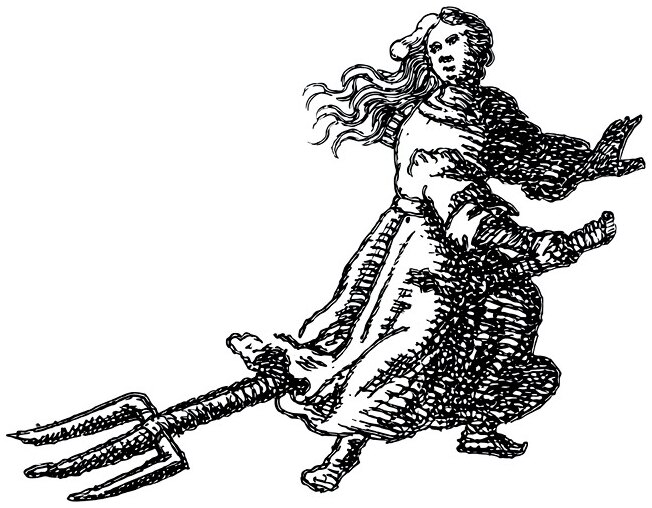
The clever shoemaker of today’s retellings arrived in the sixteenth century, and each retelling before him moved the story a step closer to the version told now.
In the fifteenth century Jan Długosz put the dragon’s lair in a cave under Wawel Hill. A century later Sebastian Münster’s world geography carried the Kraków story across Europe, together with a printed woodcut of the beast.
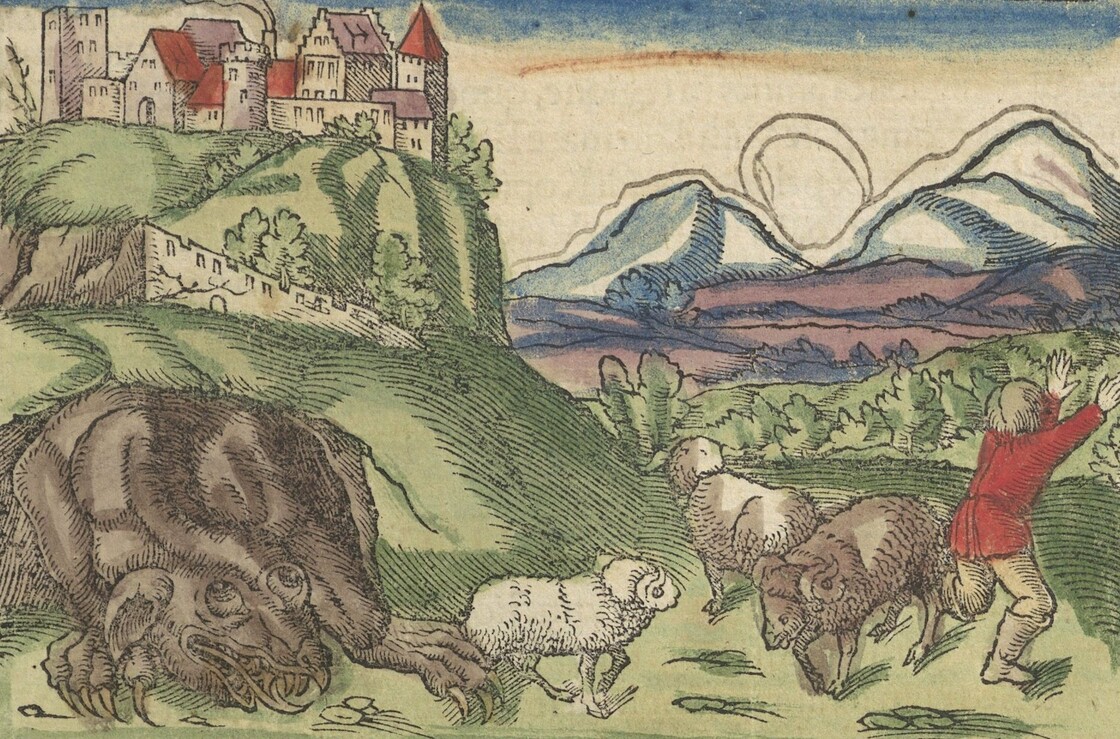
The shoemaker first appears in print in 1597, in a Polish chronicle edited by Joachim Bielski. There the bait is a calfskin stuffed with sulphur, laid outside the lair on the advice of a shoemaker named Skub. The dragon gulps it down, catches fire inside and drinks river water until it bursts. The text notes that people still called the cave below the castle Smocza Jama, the Dragon’s Den.
Twentieth-century scholars used this late date against the folk theory. A genuine oral tale, they argued, was unlikely to stay hidden for four centuries while educated chroniclers kept repeating Kadłubek’s version, and Alexander the Great, the great chivalric hero of the Middle Ages, had already used the same ruse.
In Polish children’s books the shoemaker is often called Dratewka, from dratwa, shoemaker’s twine. The name goes back to a 1935 play for children by Maria Kownacka.
What is left of the dragon on Wawel Hill?
The cave, Smocza Jama, is a natural limestone cavern below the castle walls. Since 1972 a bronze dragon by the sculptor Bronisław Chromy has stood at its entrance and breathes fire from a gas nozzle every few minutes.
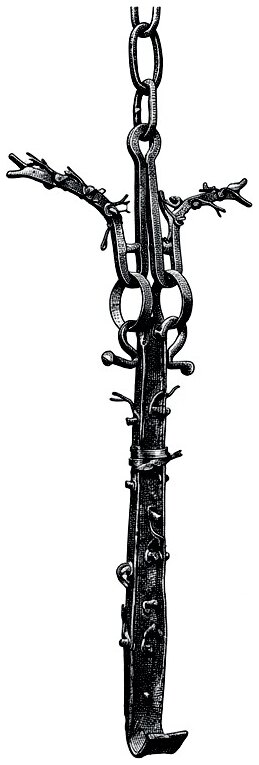
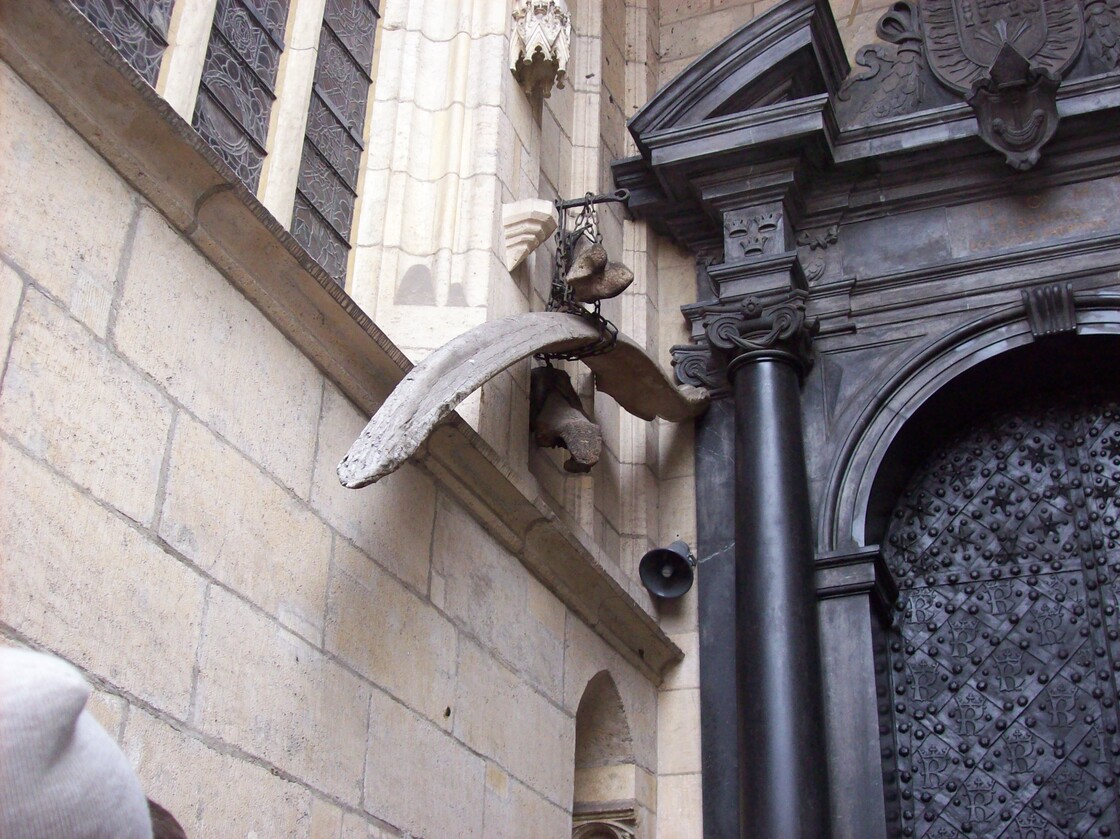
Up the hill, beside the main door of Wawel Cathedral, large bones hang on a chain and are shown as the dragon’s. Nineteenth-century anatomists who examined them identified a mammoth bone, the skull of a woolly rhinoceros and half the lower jaw of a whale. Fossil mammoth and rhinoceros bones have been dug up in Kraków itself.
The first writer to doubt the dragon was the Polish historian Marcin Kromer. In 1555 he retold the story in his Latin history of Poland, with the holophagus, the cave and Krak’s burning carcasses of pitch, sulphur and tinder, and then added, “I do not know whether it is a fable.”
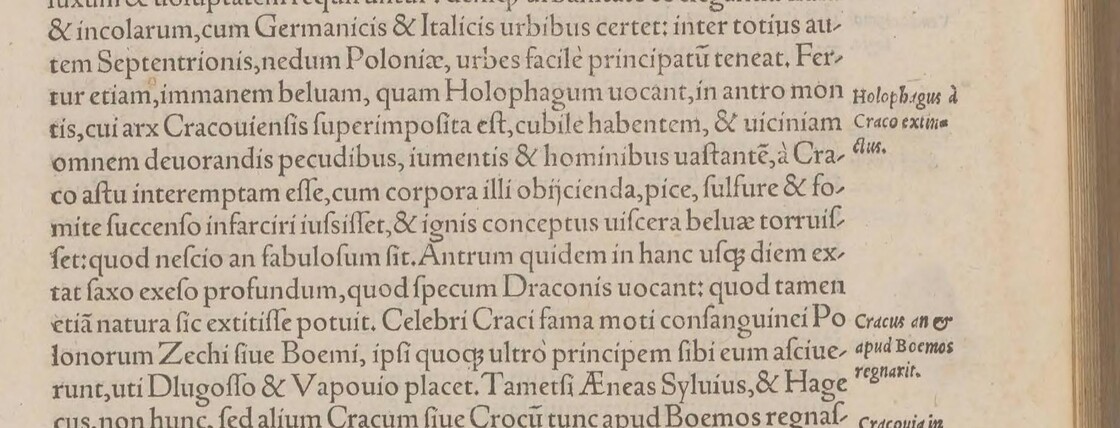
The cave at least, he wrote, “still exists to this day, deep in the hollowed rock, and they call it the Dragon’s Cave. Yet nature too could have made it so.”