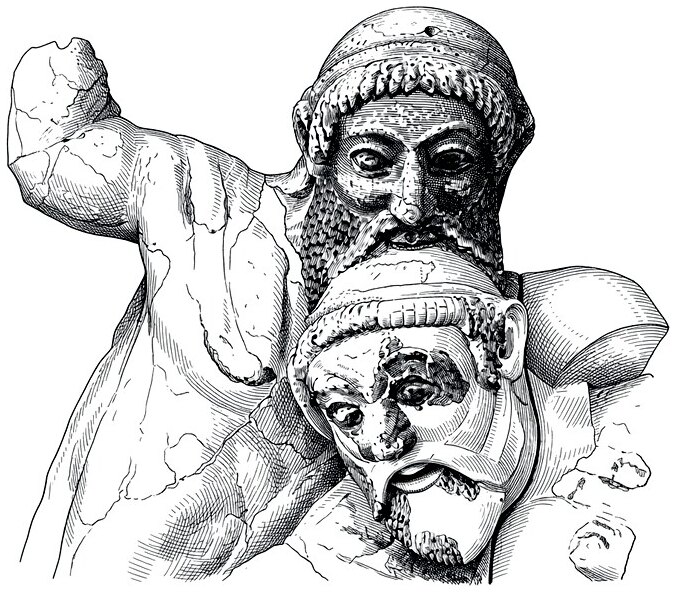
Athena was flying down to a battlefield with a medicine from her father, the king of the gods. It would have made the dying hero Tydeus immortal. Before she reached him, Tydeus split open the severed head of the enemy who had wounded him and swallowed the brain. The goddess saw it, turned around and took the gift back to heaven.
The scene belongs to the siege of Thebes, when seven champions attacked the city’s seven gates. Tydeus was one of the seven, and the goddess’s favourite among them. Greek and Roman writers retold his last hour for more than five hundred years.
What happened between Tydeus and Athena’s immortality potion at Thebes?
A defender of the city, Melanippus, speared Tydeus in the belly. Tydeus struck back with his last strength and killed him.
As Tydeus lay half dead, Athena came with a medicine “which she had begged of Zeus, and by which she intended to make him immortal.” The words come from the Library, a Greek handbook of myths written in the first or second century AD.
Then a man from his own army stepped in. Amphiaraus was a seer who rode with the seven. He hated Tydeus, who had talked the army into marching on Thebes against his advice. When he saw what the goddess meant to do, he cut off the head of Melanippus and handed it to Tydeus.
“And Tydeus split open the head and gulped up the brains,” the handbook goes on. “But when Athena saw that, in disgust she grudged and withheld the intended benefit.”
Who was Tydeus?
Tydeus was a small man with a short temper. In the Iliad, Homer’s great poem of the Trojan War, Athena herself sums him up: “Tydeus was small in stature, but a warrior.”
He killed his cousins and had to flee his home. He found shelter in Argos and married the king’s daughter. Later he joined the march on Thebes.
Before the war he went to Thebes alone as an envoy. Fifty young Thebans lay in wait for him on the road. He killed all of them except one, Maeon, whom he let go because the gods sent him a sign.
Ancient commentators gave Tydeus grim nicknames: “the head-eater” and “man-eating Tydeus”.
Why did Amphiaraus hand him the head?
The two men had quarrelled long before the battle. In Aeschylus’s play Seven Against Thebes, Tydeus stands at one of the city gates, eager to attack. Amphiaraus holds him back because the omens are bad. Tydeus shouts “like a serpent hissing at high noon” and mocks the seer as a coward.
The Theban who guards that gate is Melanippus. The play already sets the two men who will kill each other face to face.
The ancient versions disagree about the head. In the handbook, Amphiaraus cuts it off to ruin Tydeus. Ancient scholars also left notes in the margins of old Greek manuscripts. In these margin notes, the seer kills Melanippus himself, or Tydeus begs him to bring the head.
How does Statius tell the scene?
The Roman poet Statius gives the longest and bloodiest version, in his epic Thebaid. Here Tydeus asks for the head himself. Dying at the edge of the field, he tells his friends he cares nothing for his bones or his funeral. “Thy head, thy head, O Melanippus, could one but bring me that!”
A comrade runs off and comes back with Melanippus over his shoulder, still breathing. Tydeus orders the head cut off. He holds it in his left hand and stares at it. He is glad to see it “still warm in life and the wrathful eyes still flickering ere they closed”. Then one of the Furies, the goddesses of revenge, “demands yet more”.
At that moment Athena arrives, bringing “immortal lustre” from her father. She finds Tydeus “befouled with the shattered brains’ corruption and his jaws polluted with living blood”. His comrades cannot pull the head away from him.
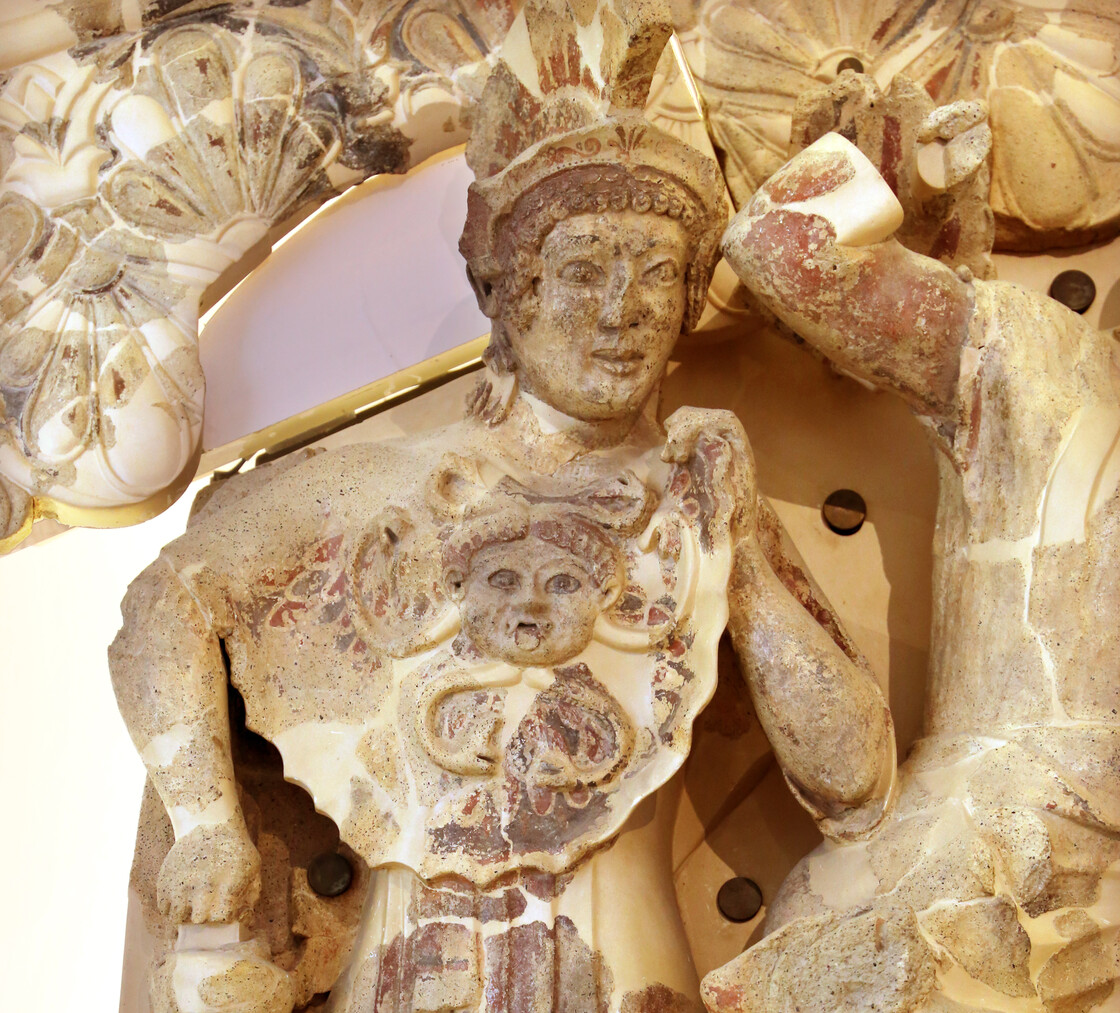
Athena’s breastplate carries the face of the Gorgon, a monster with snakes for hair. Now its snakes rear up and screen the goddess’s face. Athena flees with her eyes turned away. Before she may enter heaven again, sacred fire and river water must wash the sight clean.
Why was eating the brain unforgivable?
Tydeus had made himself unclean. To the Greeks, blood and the dead carried a stain they called mysos, pollution, and the gods kept well away from it. The handbook’s word for Athena’s disgust grows from that same Greek root. A margin note on the Iliad gives pollution as her reason in plain words. In Statius she washes her eyes before she goes home.
Centuries later, the philosopher Sextus Empiricus used the scene in an argument about taboos. Why talk about foreign peoples who eat human flesh, he asked, when the Greek hero Tydeus was said to have eaten his enemy’s brain?
The margin notes give Tydeus one motive: rage. The classicist James Frazer read more into it in a note to his 1921 translation of the handbook. He thought the story might remember an old custom of eating part of an enemy to gain his courage.
What was in Athena’s flask?
Athena’s flask held immortality itself. The handbook’s Greek word for the gift is pharmakon, a medicine or a drug, and in Statius it is “immortal lustre”. In the margin note on the Iliad, Athena is “bringing some immortal medicine to him from heaven”. The Greek word there is athanasia: immortality.
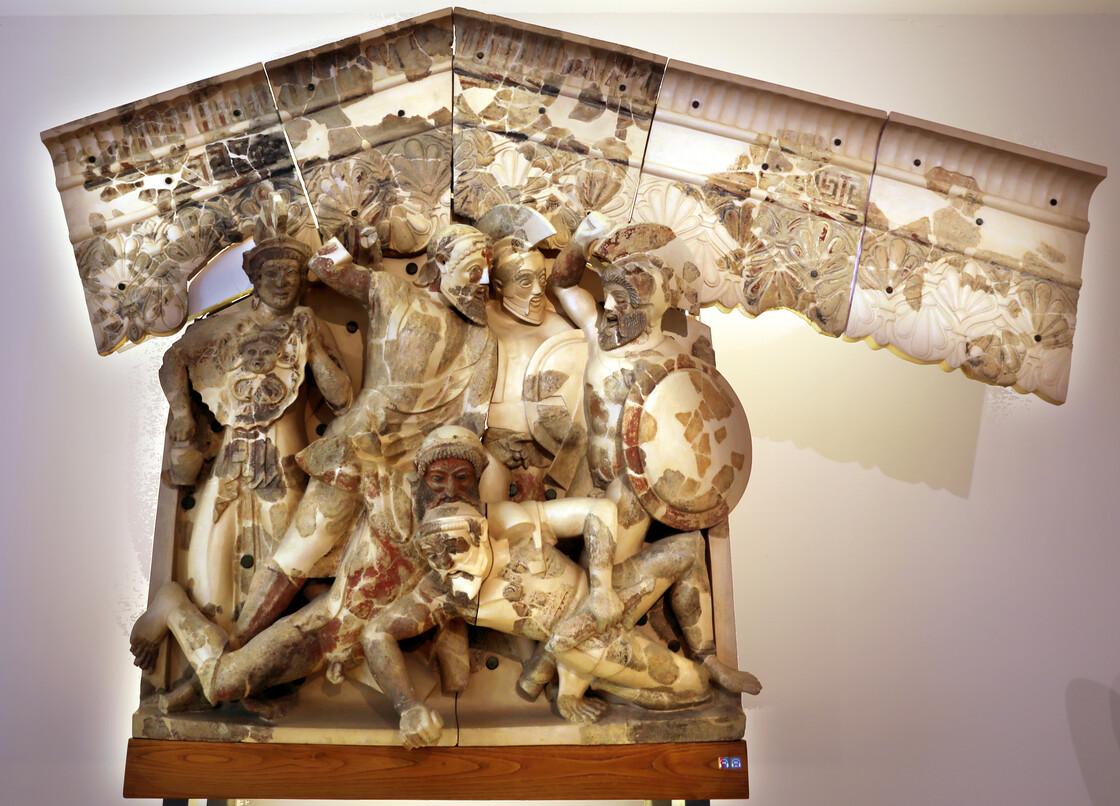
Etruscan artists gave the gift a shape. On the temple relief at Pyrgi, Athena recoils from the dying hero and hides a small flask of immortality from him.
The seer Amphiaraus, who set up the whole disaster, got the reward Tydeus lost. In the same passage of the handbook he flees, Zeus splits the earth with a thunderbolt, Amphiaraus vanishes into it with his chariot, “and Zeus made him immortal.”
What happened to Tydeus’s son Diomedes?
The immortality Tydeus lost went to his son. In the margin note on the Iliad, the dying man sees Athena turn away and asks her to give the gift to his son instead.
That son was Diomedes, one of the foremost Greek fighters at Troy. In the Iliad, Athena tells him: “I have set in your heart the spirit of your knightly father Tydeus.” With her help he wounds the goddess Aphrodite and even Ares, the god of war.
The poet Pindar wrote that the goddess made Diomedes “an immortal god”. Two Greek cities in southern Italy, Thurii and Metapontum, worshipped him as one, and he was honoured as a god on an island in the Adriatic. The margin notes add that no historian recorded his death.
Where does the story turn up later?
The story spread early and far. Around 470 to 460 BC, the Etruscans, a people of central Italy, put it on a temple at Pyrgi on their coast. In the same years the Athenian writer Pherecydes told it in Greek.
A farmer’s plough hit the buried relief and brought it to light. Restorers put it back together in 1996 from more than 2,000 pieces. In the middle of the lower scene, Tydeus has his teeth in the top of Melanippus’s head.
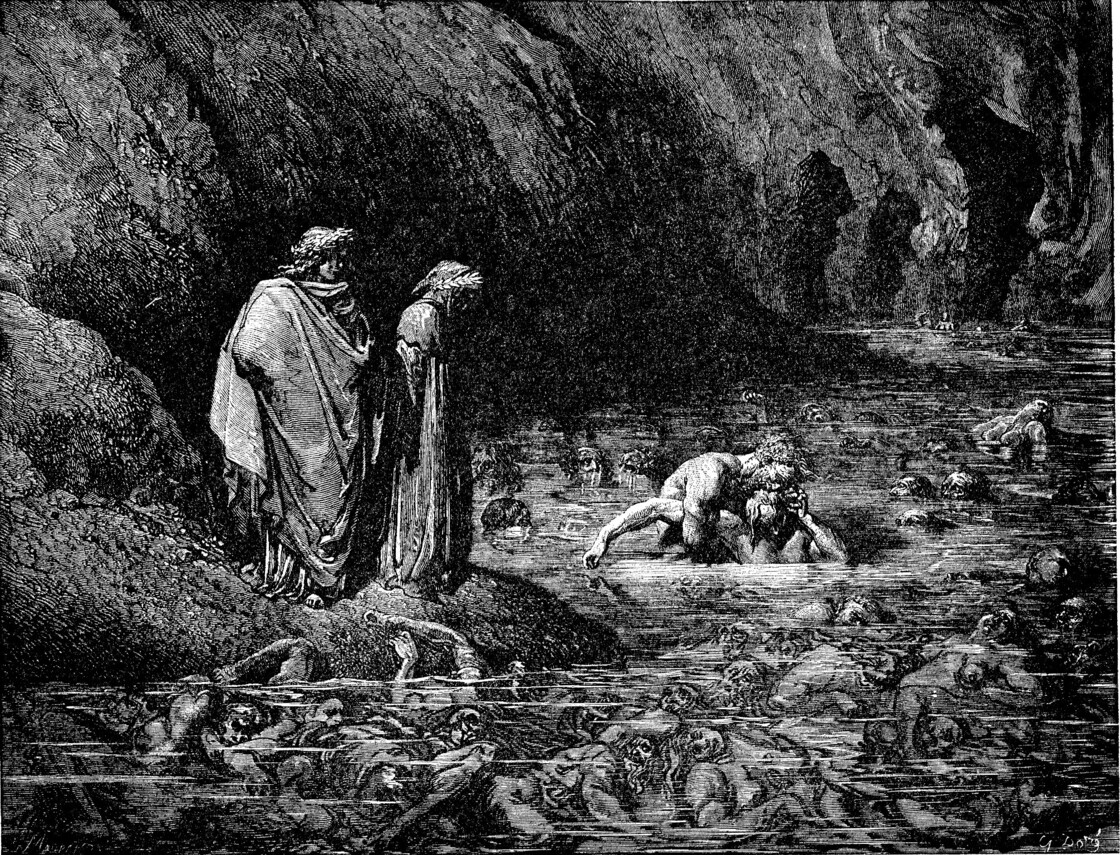
Dante borrowed the scene for the frozen bottom of his hell. In the Inferno, a sinner locked in the ice gnaws another man’s skull. Dante compares him to Tydeus: “Not in another fashion Tydeus gnawed / The temples of Menalippus in disdain.” He took the image from Statius.
Where was Tydeus buried?
Tydeus lies outside Thebes, by the road north to Chalcis. Centuries later, the local experts in Thebes showed travellers his grave: three rough stones, close beside the tomb of Melanippus. By their account, Maeon buried him, the one man Tydeus had spared on the road years before. The hero who ate the brain and the man whose brain he ate lie a few steps apart.