Nemontemi were the five days left over at the end of the Aztec solar year, after eighteen months of twenty days each. They belonged to no god, and people tried to do nothing on them: they avoided quarrels, and no court heard a case. A child born on these days got a name meaning “worth nothing.”
Popular accounts often claim that the Aztecs put out every fire and smashed all their pottery during these five days. The sixteenth-century records describe a quieter custom. The darkness and the broken pots belonged to a separate ritual, held only once every fifty-two years.
What were the Nemontemi, the Aztec five empty days?
The Aztecs ran a solar year of 365 days and split it into eighteen “months” of twenty days, which gives 360. Each month had its own feast and its own god; one of them honoured the dead, as told in The Aztec Feast of the Little Dead. The five days that remained stood outside the months.
The Spanish friar Bernardino de Sahagún, who spent decades interviewing Aztec elders, translated their name as “días baldíos”, idle or barren days. They had no patron deity and counted as surplus, and in Nahuatl the name nemontemi means “they fill up in vain.” Sahagún matched them with the end of January and the first day of February.
In the capital’s twin city of Tlatelolco, the month right before the empty days ended with a feast around fire braziers. Elders roasted game offerings and drank agave beer before the silent days began.
What did people avoid during the Nemontemi?
For five days ordinary life stood still. Families did not sweep their floors, and judges heard no cases.
Quarrels worried people most, because whoever quarrelled on these days would keep the habit for good. The same rule covered small accidents. People tried not to stumble or fall, or even nap during the day, since whatever happened to you now would go on happening afterwards.
Illness followed the same logic. Nobody expected a person who fell sick on the nemontemi to get well, so nobody gave him medicine, and if he recovered anyway, people said God had shown him mercy.
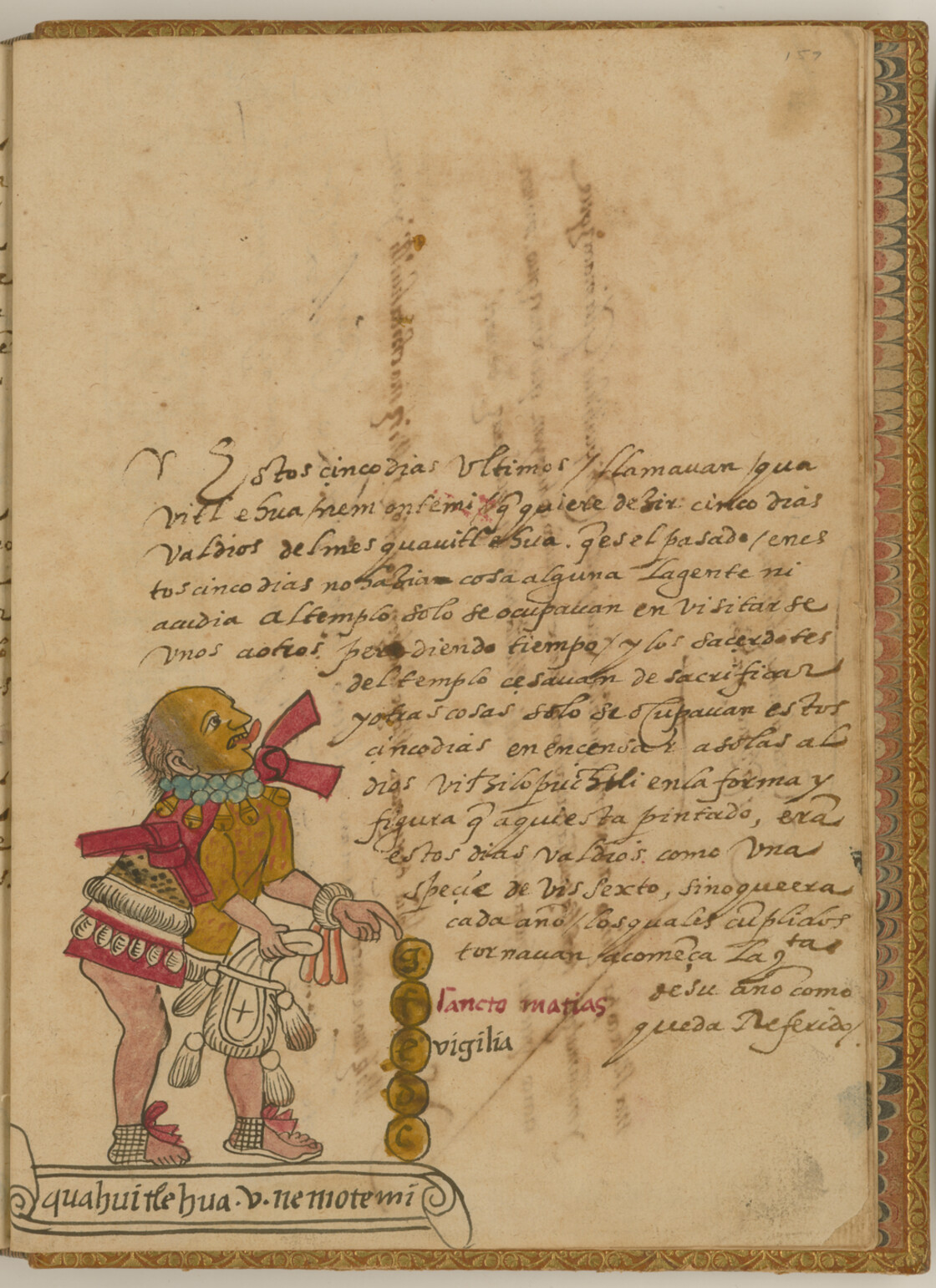
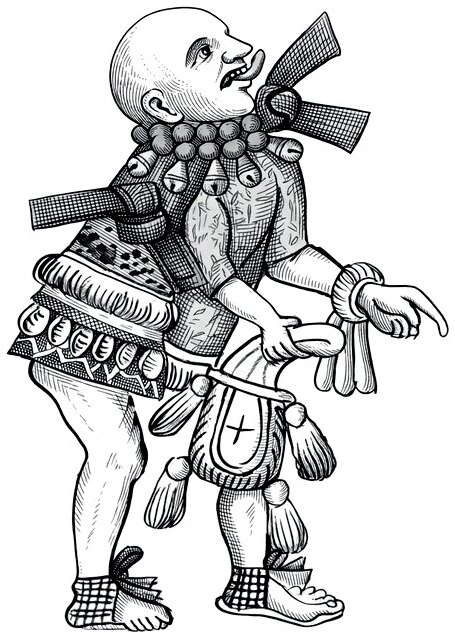
Another early manuscript, the Codex Tovar, describes a quieter routine. People stayed away from the public temples and spent their hours visiting neighbours, while priests stopped animal sacrifices and burned only tree resin as incense before the war god Huitzilopochtli, who appears on the painted page in ritual dress.
What happened to children born during Nemontemi?
A baby born on these days was thought to be unlucky for life. Such people “would have bad results in all their affairs” and would be poor and miserable. They received no day-sign, although in the Aztec count every day had a sign and a child’s sign shaped its fate.
The names carried the misfortune. A boy born on these days was called Nenoquich, “worth nothing,” and a girl Nencihuatl, “woman for nothing.” Both begin with nen-, which means futile or in vain.
Real people bore these names. A central Mexican tax census from 1560 lists a living taxpayer called Nenoquich, drawn with his own picture sign, and several of his neighbours had names with the same prefix. An empty birthday, it seems, followed a person into adult life.
Where does the story of the dark houses come from?
The dark houses belong to the New Fire, a ceremony held only once every fifty-two years. The Aztec calendar named each year by combining thirteen numbers with four signs, so a year name came round again only after fifty-two years.
Priests called the end of that cycle “the binding of the years.” It closed with a year named 1-Rabbit, and the new cycle began with a year named 2-Reed.
Before that night, every household in Mexico threw its house idols into the canals and the lake, along with the hearthstones used for cooking and the stones for grinding chili. People cleaned their houses and then put out every fire, in every town and every house.
If no spark could be drawn, they believed, the night would last for ever. The sun would never rise again, and terrible sky monsters would come down from heaven to devour all mankind.
Families waited on their flat roofs. Pregnant women had masks of maguey leaf put on their faces and were locked in the granaries, because people feared they would turn into beasts, and children were kept awake so they would not turn into mice.
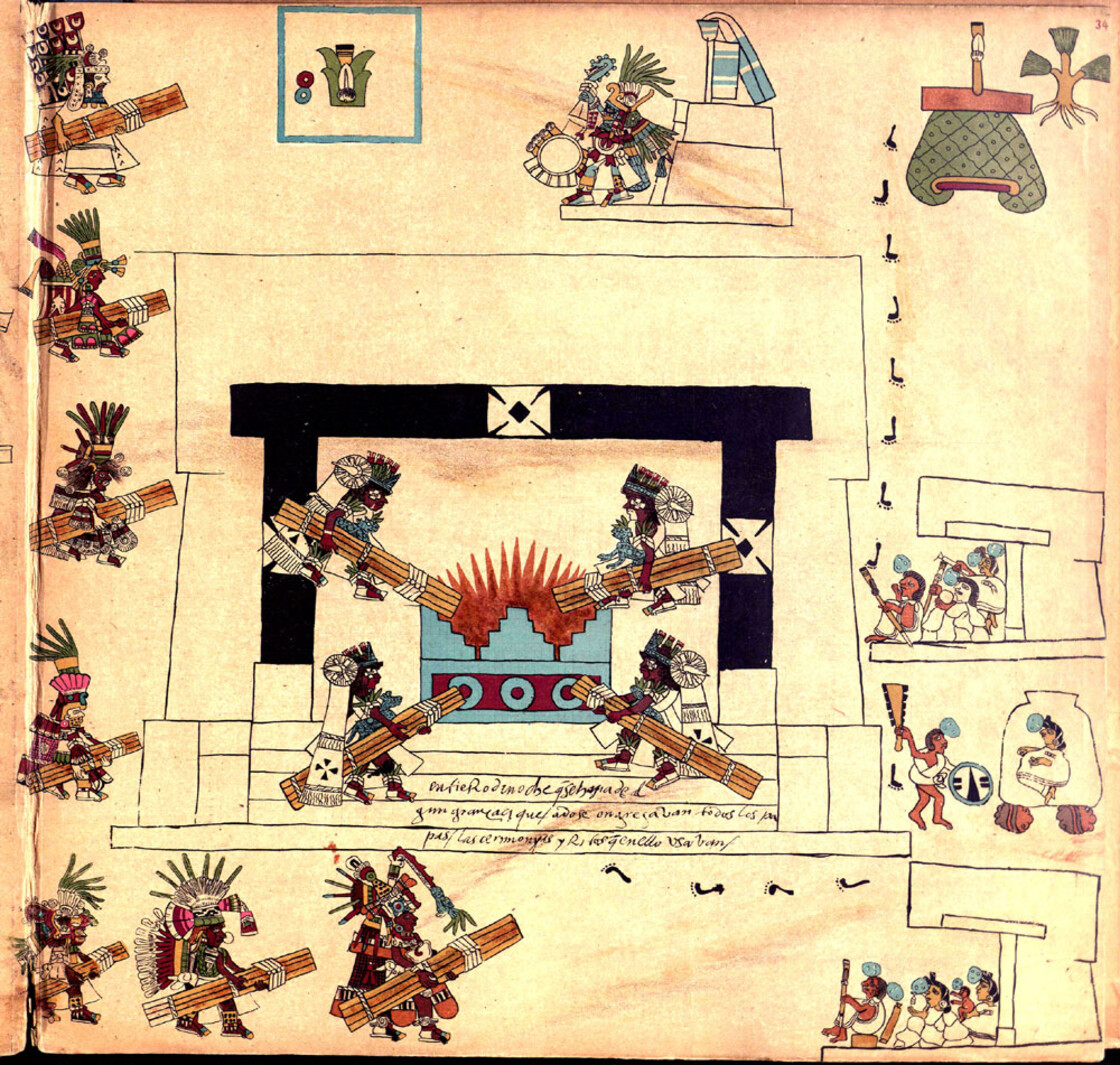
At midnight priests on a hill near Itztapalapa watched the Pleiades. When the stars passed the middle of the sky, the world had another fifty-two years, and the priests drilled fire on the chest of a war captive.
Runners carried the flame to the temples, and from there every household took its fire. Afterwards each house renewed its goods, and people dressed in new clothes. The calendar page on the New Fire ceremony follows that night.
The last full New Fire was held in 1507, before the Spaniards came. The next one fell due in 1559 and passed with no public ceremony. Writing in 1576, Sahagún still counted the bundle: it was then in its fifteenth year.
In the calendar the two rites sit side by side. The New Fire opened a year 2-Reed, the year before it was always 1-Rabbit, and that year closed with its five nemontemi. Once every fifty-two years, then, the empty days were the last days before the New Fire. Some modern retellings merge the two and give every nemontemi the dousing and the smashed pots.
What do the excavations show?
The digs fit the great renewal. In 2021, excavations under the streets of Mexico City uncovered Aztec refuse pits packed with cooking pots, clay figurines and hearthstones, as well as wooden drills for making fire, all from the last decades before Spanish rule.
No excavated pit shows such destruction for the ordinary five-day pause. As far as the evidence goes, the mass dumping of household goods belonged to the fifty-two-year renewal.
When do the Nemontemi fall in 2026?
Here the sources part ways. The friars of the sixteenth century recorded different dates: Sahagún put the five days in late January, the Codex Tovar in late February.
Modern calendars line up the Aztec cycle with ours by counting from a known event, the fall of Tenochtitlan in August 1521. Under the reckoning that the colonial month lists support best, the five nemontemi of 2026 run from 18 to 22 October, as tracked on this site’s Nemontemi calendar page.
Sahagún suspected the Aztecs had a leap day. Every fourth year, at the feast where children’s ears were pierced, they may have counted six nemontemi instead of five. He marks this as a conjecture each time he mentions it.
In that count, 2026 completes an Aztec year called 1-Rabbit. In pre-Hispanic memory, 1-Rabbit years carried a dread of severe famine, and families stored corn silk and wild tassels against it. It was also the year that led straight into the fifty-two-year threshold of the New Fire.