Myths and Folklore.

The Devil's Wedding at Gotovuša

A Severed Horse Head Instead of a Flask

A legend from Gotovuša, a Serbian village in Kosovo: a man joins a devils' wedding, crosses himself before the toast and wakes on a cliff holding a severed horse head.

The Devil's Wedding at Gotovuša: A Severed Horse Head Instead of a Flask
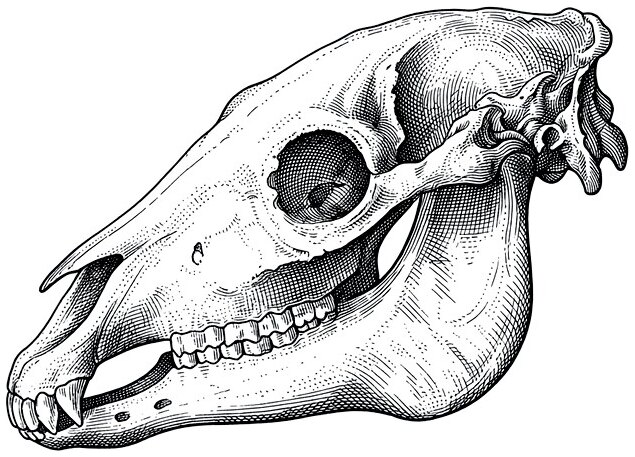
House engraving Horse skull after Salvator Rosa, study for 'Democritus in Meditation', etching, 1662, The Metropolitan Museum of Art (CC0).

In Gotovuša, a Serbian village in the mountains of Kosovo, people tell of a man who met a wedding of devils on his way home from market. The devils handed him a flask for the toast, and he crossed himself before he drank. The wedding vanished. He found himself on a cliff with a severed horse head in his hands.

The story is one local telling of an old legend from the Balkans, known simply as the devil’s wedding.

The severed horse head at Gotovuša: what does the story say?

An old man from the village told the story to a university student who came to record local legends.

People from Gotovuša used to walk to market in the nearest town. On the way back they crossed a bridge just before the village. Above the bridge, ringed by rocks, stands a small church.

One man from the village was coming home that way when he heard a voice. “Oh Milosav, Milosav, where are you going? That is not the road. Come over here.”

He followed the voice. The devils carried him across the river, and he did not even get wet. They took him up onto a rock where a devils’ wedding was going on. Someone brought out a buklija, the flask passed round for toasts. It went from guest to guest, and then they handed it to him.

As he took it, he crossed himself, and at that moment he came to his senses. There was rock below him and rock above him. In his hands, instead of the flask, he held a severed horse head.

He sat there until morning. Villagers came with ropes, but the ropes did not work on that rock. So they wrapped the belt men wore in those days around him and lowered him down. Within two weeks he was dead of the fright. The old man ended with one line: “Just so you know, this is the living truth.”
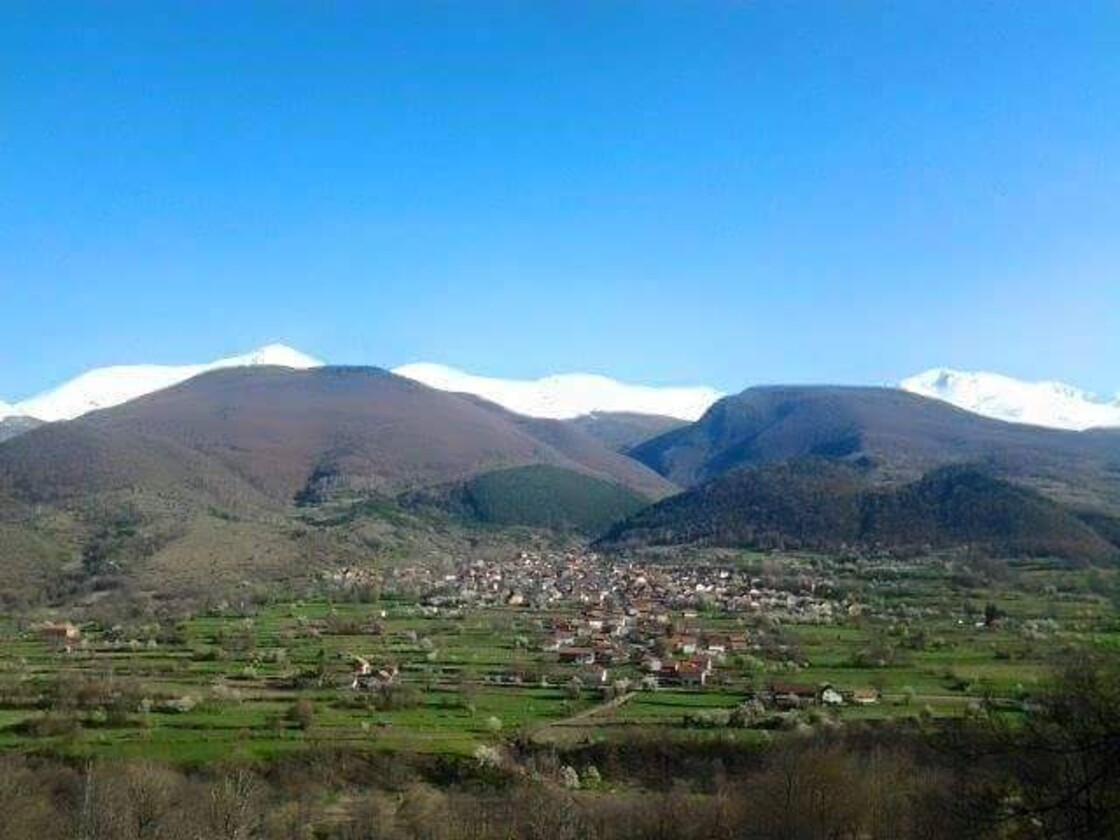
A village of red-roofed houses spread across a green valley floor, with brown wooded hills behind it and snow-covered mountain ridges against a clear blue sky
Gotovuša on the valley floor below the Šar Mountains. The village first appears in an Ottoman tax register of 1455, as a large village with 64 houses and an Orthodox priest. Photograph by НиколаБ, 17 June 2017, via Wikimedia Commons, CC BY 4.0.

Who were the wedding guests, and why did the cross save him?

In the belief behind the legend, the guests were the dead, and the drink was a trap for the man’s soul.

The night weddings belonged to young men and women who had died before their own weddings. People thought such souls could not find the way to the next world. They roamed at night, above all in the days between Christmas and Epiphany. Burials of unmarried people even took on the look of a wedding, a custom called the black wedding.

The trap was the open mouth. Folk belief held that the soul comes up to the lips when a person opens the mouth to drink. A demon waiting there could pull it out. That is why the devils lead their guest to water: from there the soul can go straight down into the world under the river.

The Gotovuša man escapes the wedding because the sign of the cross comes before the sip. The fright still kills him two weeks later.

Why do the devils offer a flask?

The flask comes straight out of real weddings in the region.

In Bulgaria, a match between two families was sealed with a painted flask of wine. The young man’s father offered it, and the girl’s father took it, crossed himself and drank. In Montenegro, a father who drank from the flask agreed to the match, and a father who would not take the wine said no.

The folklorist who studied the legend most closely sees the traveller in that father’s place. Had he drunk, he would have given his soul to the other side.
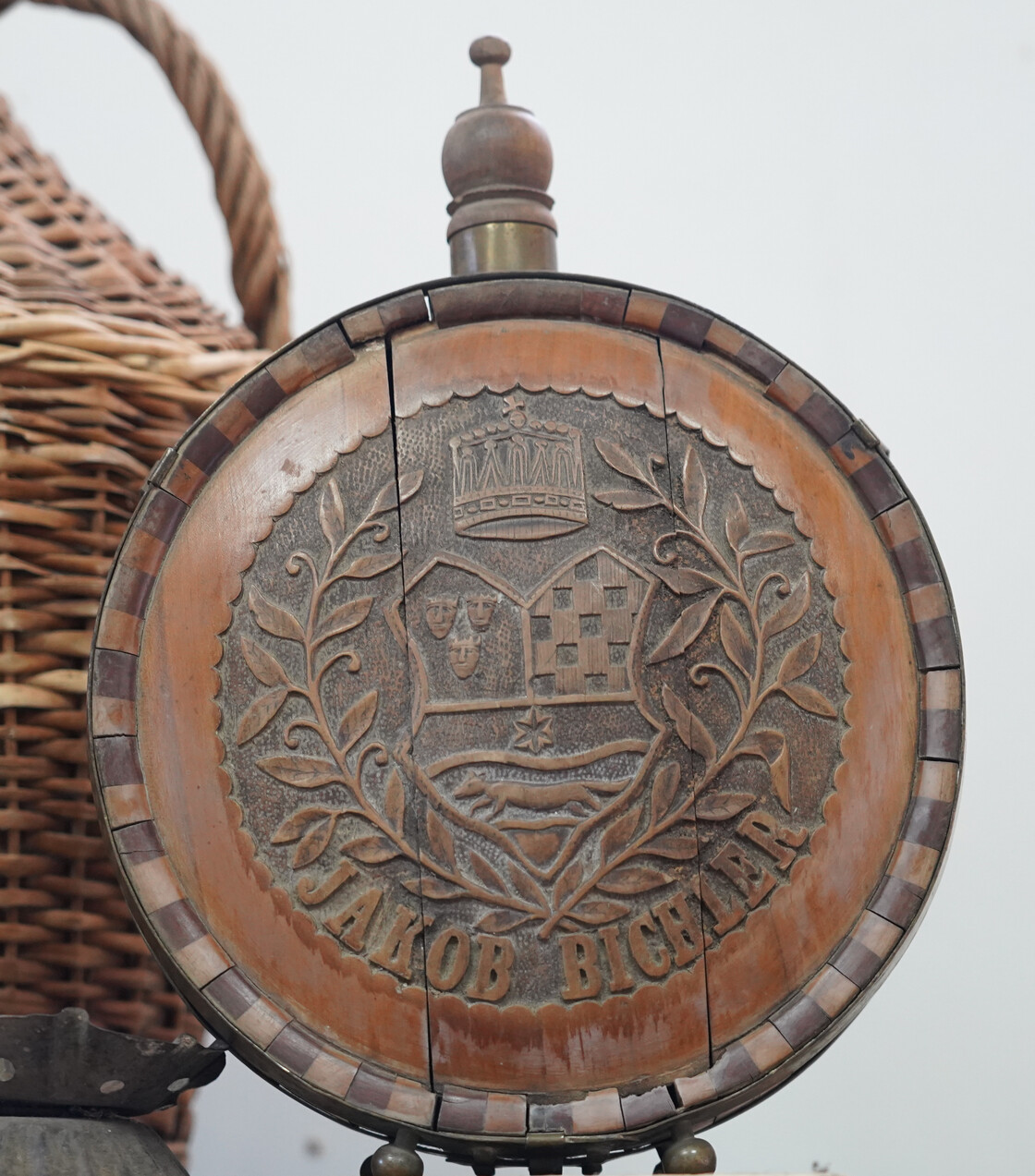
A round wooden flask with a turned wooden stopper, its face carved with a crown, a coat of arms inside a laurel wreath and the name Jakob Bichler, standing in front of a wicker-covered bottle
A wooden buklija from the 19th century in the Museum of Srem, Sremska Mitrovica. Flasks like this went round at weddings and feasts, and in the legend the devils hand one to their guest. This one comes from Srem in northern Serbia, far from Gotovuša. Photograph by DjordjeMarkovic, 2024, via Wikimedia Commons, CC BY-SA 4.0.

Why a horse head?

The same folklorist reads the horse head plainly: the man had been holding the demon itself all along.

The horse suits that role. In Serbian folk belief the horse belongs mostly with the demons of the underworld. Sinful souls and witches were said to turn into horses, and a black horse would never step on a vampire’s grave.

Serbian farmers also used horse skulls as guards. They put them on sheepfold posts and on stakes beside the beehives, so that the evil eye, a harmful look from envious people, would fall on the skull and not on the animals.

Did You Know?

Old beliefs in Kosovo gave horse bones power over the weather. A storm wind was said to die down once a horse bone was laid in the fire to smoke.

How far does the legend travel?

The Gotovuša story is one of about 35 versions written down in the last hundred years, most of them among Serbs and Bulgarians.

The plot hardly changes. A man walks alone at night, usually near a river or a spring. The wedding guests greet him like an old friend, often by name, and he sings and dances along with them. Then someone hands him wine or rakija, a fruit brandy. He crosses himself out of habit, or a rooster crows, and the wedding is gone.

He comes to in a willow over the water or on a rock above a river. In his hands he holds a horse skull, sometimes a donkey’s skull or a turtle. The tellers always name a real person and a real place, and listeners take the story as something that happened.

Did You Know?

An account from eastern Serbia, printed in 1940, tells of a different man with the same name, Milosav. He sat late in town one Saturday and ran to reach his village at night. He was left holding a horse head.

The belief was still alive in 2014. A villager in central Serbia remembered men on their way into the mountains who heard music coming along the river, “a wedding is coming”. When it came close, it turned and went off downstream. People said it was a devils’ wedding.

What else does Gotovuša remember?

Gotovuša kept other stories about demons, and in most of them the sign of the cross is the defence.

People there called the demons satans. Against them they crossed themselves or pulled their cap down over the forehead, because each person’s name was believed to be written there. In nearby Štrpce, a man remembered his grandmother saying that four crosses had been put up in the village to keep Satan away.

Did You Know?

Asked why the demons are gone now, Serbs in Kosovo had plain answers. The demons fled from electric light and from the factories. Others blamed the planes, or the peacekeeping troops of KFOR.

The village’s plague story turns on a cross as well. An old woman, who had it from her mother, told how the plague came as a woman two or three nights after a birth and strangled the newborn babies. The villagers asked the hodža, a Muslim cleric, what to do.

He told them to find twin brothers and twin oxen and plough a furrow around the whole village, starting from the cross and coming back to it. After that, the children stopped dying.
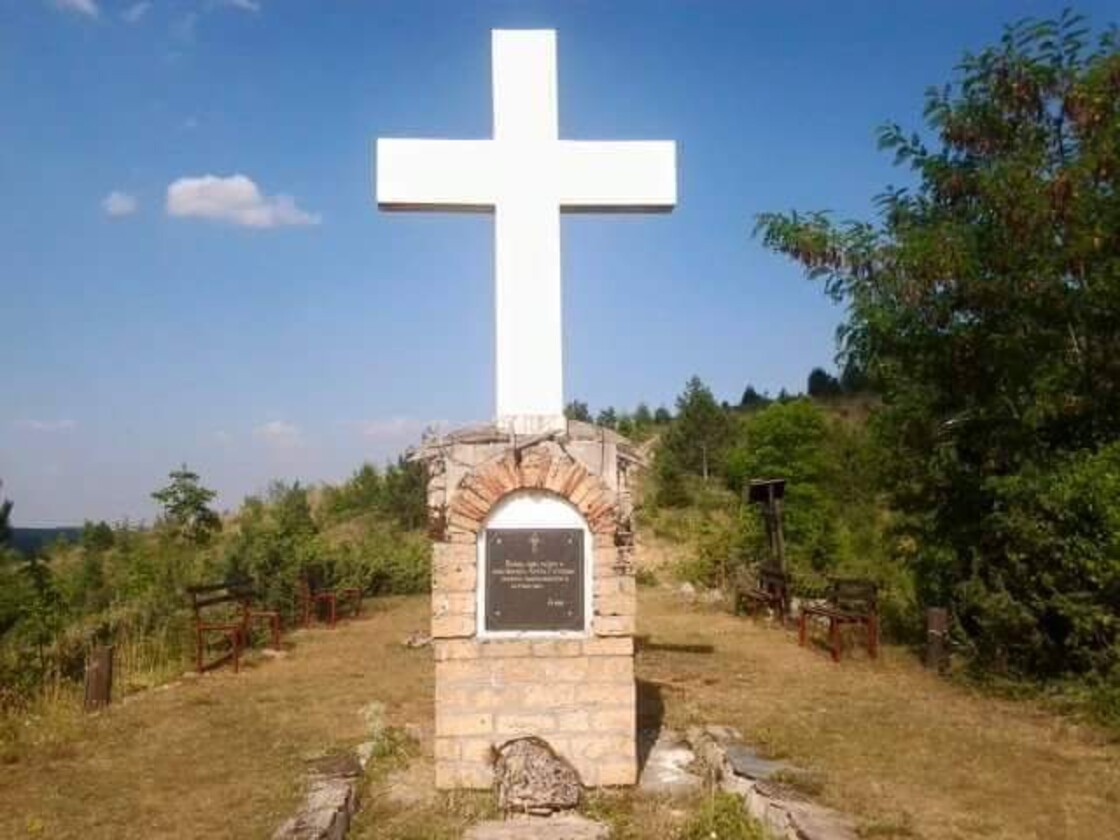
A tall white cross on a brick and stone pedestal with a dark inscription plaque, standing on a grassy hilltop with wooden benches on both sides and trees behind
A cross in the centre of Gotovuša, photographed in 2017. In the village’s plague legend, the protective furrow starts from a cross. Photograph by НиколаБ, 17 June 2017, via Wikimedia Commons, CC BY 3.0.

Where the furrow began, she said, there really was a cross of stone, and nature had made it that way. Priests blessed the place and read prayers there. Every year on Plague Day, shortly before the feast of Saint Nicholas, the villagers carried a cake to the church. They kept it up until a few years ago.
The Sources

Every statement in this report rests on these.

  • Valentina D. Pitulić, ‘Демонолошко предање на Косову и Метохији (теренско истраживање)’ [Demonological Legends in Kosovo and Metohija (Field Research)], Научни састанак слависта у Вукове дане 50/2, Belgrade: Međunarodni slavistički centar, Filološki fakultet, 2021, pp. 95-106, doi:10.18485/msc.2021.50.2.ch10; Gotovuša records by Marijana Stojković, notes 1, 18, 26.
  • Ljubinko Radenković, ‘Демонічне весілля в народних переказах. Слов’янські паралелі’ [The Demonic Wedding in Folk Legends: Slavic Parallels], translated from Serbian by Iryna Marković, Народна творчість та етнологія 2012, no. 2, pp. 6-10 (nte.etnolog.org.ua).
  • Ljubinko Radenković, ‘Демонска свадба’ [The Demonic Wedding], Кодови словенских култура 3, Belgrade: Clio, 1998, pp. 154-162 (Serbian version of the study).
  • Dunja Cerovina, ‘Теренски записи народних предања и веровања из Дубочице (Маглич, општина Краљево)’ [Field Records of Folk Legends and Beliefs from Dubočica], Фолклористика 8/1-2 (2023), pp. 239-246.
  • Milan Đ. Milićević, Život Srba seljaka, Belgrade, 1894, p. 135, no. 21 (Bayerische Staatsbibliothek, MDZ bsb00148487).
  • Tihomir R. Đorđević, Zle oči u verovanju Južnih Slovena, Srpski etnografski zbornik 53, Belgrade: Srpska kraljevska akademija, 1938, p. 132.
  • Špiro Kulišić, Petar Ž. Petrović, Nikola Pantelić, Srpski mitološki rečnik, Belgrade: Nolit, 1970, p. 170 (entry ‘konj’, as quoted by Pitulić 2021, note 8).
  • Tatomir Vukanović, Srbi na Kosovu, vol. II, Vranje, 1986, p. 454 (as cited by Radenković 2012).
  • Rade N. Kazimirović, Čaranje, gatanje, vračanje i proricanje u našem narodu, Belgrade, 1940, pp. 409-410 (as cited by Radenković 2012).
  • Wikipedia, ‘Gotovuša’ and ‘Sirinićka župa’, en.wikipedia.org, accessed 8 October 2026.
  • НиколаБ, ‘Gotovusa village.jpg’, photograph, 17 June 2017, Wikimedia Commons, CC BY 4.0.
  • НиколаБ, ‘Krst u selu Gotovusa.jpg’, photograph, 17 June 2017, Wikimedia Commons, CC BY 3.0.
  • DjordjeMarkovic, ‘Muzej Srema - drvena buklija, 19. vek.jpg’, photograph, 2024, Wikimedia Commons, CC BY-SA 4.0.
  • Salvator Rosa, Three ox skulls, two horse skulls, and a grotesque head, study for ‘Democritus in Meditation’, etching, 1662, The Metropolitan Museum of Art, CC0 (cover reference).

Filed under Gotovuša · Kosovo · Šar Mountains · devil's wedding · đavolja svadba · horse skull · Serbian folk belief · demons · legends · Ljubinko Radenković · evil eye · plague.

Pass this report on: Pinterest · Facebook · by Letter · Copy the Address


Questions from Readers

I. What happened at Gotovuša, according to the legend?

A man from Gotovuša was walking home from the market in Uroševac when a voice called him by name, Milosav, and told him he was off the road. He followed it. Devils carried him across the Lepenac river without getting him wet and took him up onto a rock, where a devils’ wedding was going on. They gave him the flask for the toast. He crossed himself, came to his senses and found rock below and rock above him, with a severed horse head in his hands instead of the flask. In the morning villagers lowered him down with a belt. He died within two weeks from the fright.

II. What is a devil's wedding in Serbian folklore?

It is a legend in which a lone traveller at night meets a wedding party, joins it and is handed a flask of wine or rakija. Before he drinks, he crosses himself, or a rooster crows, and the wedding disappears. He finds himself in a willow over a river or on a cliff above water, holding a horse’s skull or a turtle. The guests were demons who meant to drown him. A Serbian folklorist counted about 35 versions recorded in the last hundred years, mostly among Serbs and Bulgarians.

III. Why does the man end up holding a horse head?

The folklorist Ljubinko Radenković reads it this way: the man was holding the demon itself. In folk belief the soul comes up to the mouth at such moments, and the demon wanted him to open his mouth and drink so it could pull the soul out and carry it under the water. In Serbian folk belief the horse also belongs to the world below. Sinful souls and witches were said to turn into horses, and a black horse would never step on a vampire’s grave.

IV. Why did Serbian farmers put horse skulls on fences and beehives?

Against the evil eye. A writer in 1894 found the custom almost everywhere in Serbia: a skull, most often a horse’s, on the post of every sheepfold fence. Most farmers could not say why. One in Vranjska Banja said it kept evil eyes from harming the animals. Beekeepers set a dead horse’s head on a stake so that a stranger’s look would fall on the skull and not on the hives.

V. How is the story connected to Gotovuša's cross?

It is a different legend from the same village. A storyteller told how the plague spirit came to strangle newborn babies. A Muslim cleric, the hodža, advised the villagers to plough a furrow round the whole village with twin brothers and twin oxen, starting from the cross. After that the children stopped dying. The village then carried a cake to church every year on Plague Day, shortly before Saint Nicholas, until a few years ago.

VI. Did the Gotovuša man really die?

The storyteller says he died within two weeks and ends with the words ’this is the living truth’. The recording gives no surname and no year. Swearing to the truth at the end is typical of this kind of legend, and the people who tell it treat it as something that happened to someone they knew.

The Weekly, by Post

Every Tuesday the week’s reports in a few lines, and one book from our press. Free, and you may leave at any time.


More from Myths and Folklore

Kiehtan and HobbamockWhat the Pilgrims Wrote About Wampanoag Religion BlåkullaHow Swedish Witches Flew to the Devil on Maundy Thursday Mile VampirovićA Vampire's Son in Serbian Folklore Why Was the Corner Behind the Stove Called "Hell"?

All 84 reports in Myths and Folklore ☞


From Our Own Press