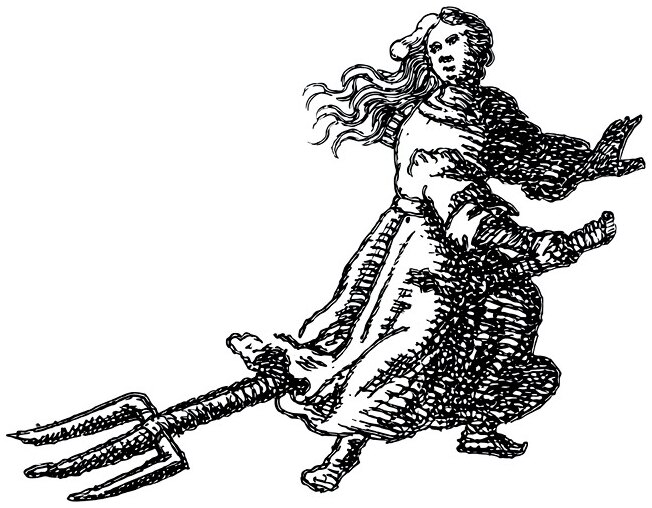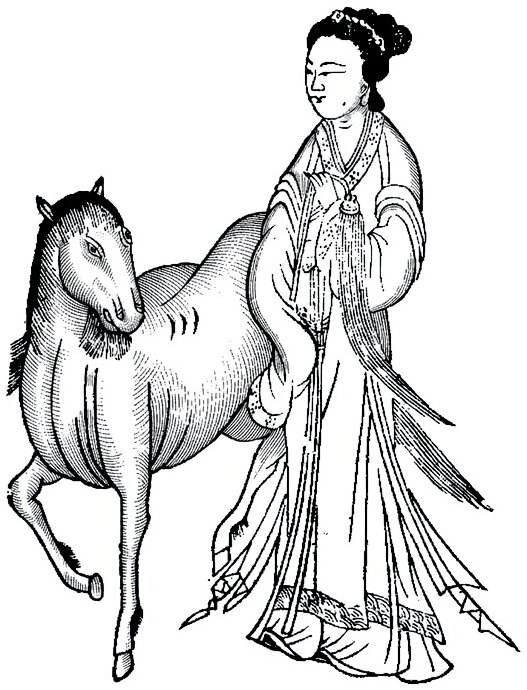
A horse hide lies drying in an ancient courtyard. The daughter of the house had promised the family stallion that she would marry it if the horse brought her missing father home. The stallion did, and the father killed it. Now the girl kicks the hide and mocks it, and before she has finished speaking the skin rises, wraps around her and carries her off. Days later she and the hide are found high in a mulberry tree, and both have turned into silkworms.
Her name in the old texts is Can Nü, “the Silkworm Girl”. Temples in south-western China later showed her as a young woman wearing a horse’s hide and called her the Horse-Head Lady. So why does China’s old story of where silk came from need a horse at all? The Chinese writers who recorded it asked that question themselves and gave several answers, though none of them says which came first, the story or the explanation.
Who first wrote down the Can Nü horse myth?
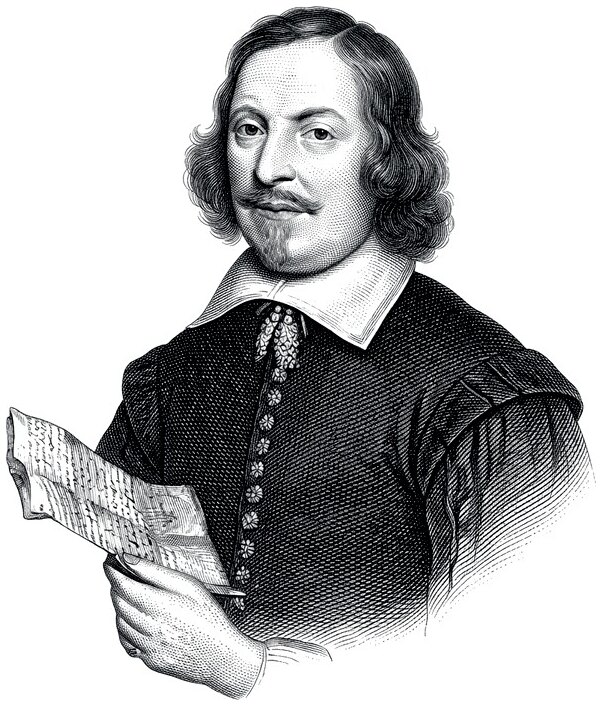
The oldest version we have comes from Gan Bao, a court historian of the Jin dynasty who died in 336. He was put in charge of writing the official history of his state, and people of his time called him a good historian. He also collected reports of spirits and strange events in a book called Soushen ji, In Search of the Spirits. The horse story stands in the fourteenth of its twenty juan, the scrolls or chapters into which Chinese books were divided.
He had a family reason for this collection, because his official biography records a strange event in his own household. When his father died, his jealous mother pushed his father’s favourite maid alive into the tomb. Ten years later the mother died, and the tomb was opened again. The maid lay on the father’s coffin, still warm, and woke after a day. She said the dead father had kept bringing her food and drink. Gan Bao’s elder brother also stopped breathing once, came back to life and said he had seen spirits. After these two events Gan Bao wrote his collection, in his own words, to “show that the way of the spirits is no lie”. The same maid appears on our page about the Jiangshi, the hopping corpse of later Chinese belief.
Gan Bao begins the silkworm story with the words “An old account says” and sets it “in remote antiquity”, so for him it was already an old tale.
What happens between the girl and the horse?
A man goes far away and leaves behind only his daughter and one stallion, which she looks after herself. She is lonely and misses her father. One day she says to the horse, as a joke: “If you can bring my father back for me, I will marry you.”
The horse breaks its halter and runs straight to the father. He is surprised and glad and climbs on its back. The horse keeps looking back the way it came and neighs without stopping, so the father thinks something must be wrong at home and rides back at once.
At home he gives the horse extra fodder for its loyalty, but the horse will not eat. Each time it sees the girl go in or out, it grows excited and angry and strikes out with its hooves. This happens again and again, until the father asks his daughter in private what is going on. She tells him what she once said to the horse. He orders her to tell no one, because he fears the story would disgrace the family, and to stop going in and out of the house. Then he hides with a crossbow, shoots the horse and spreads its skin out in the courtyard to dry.
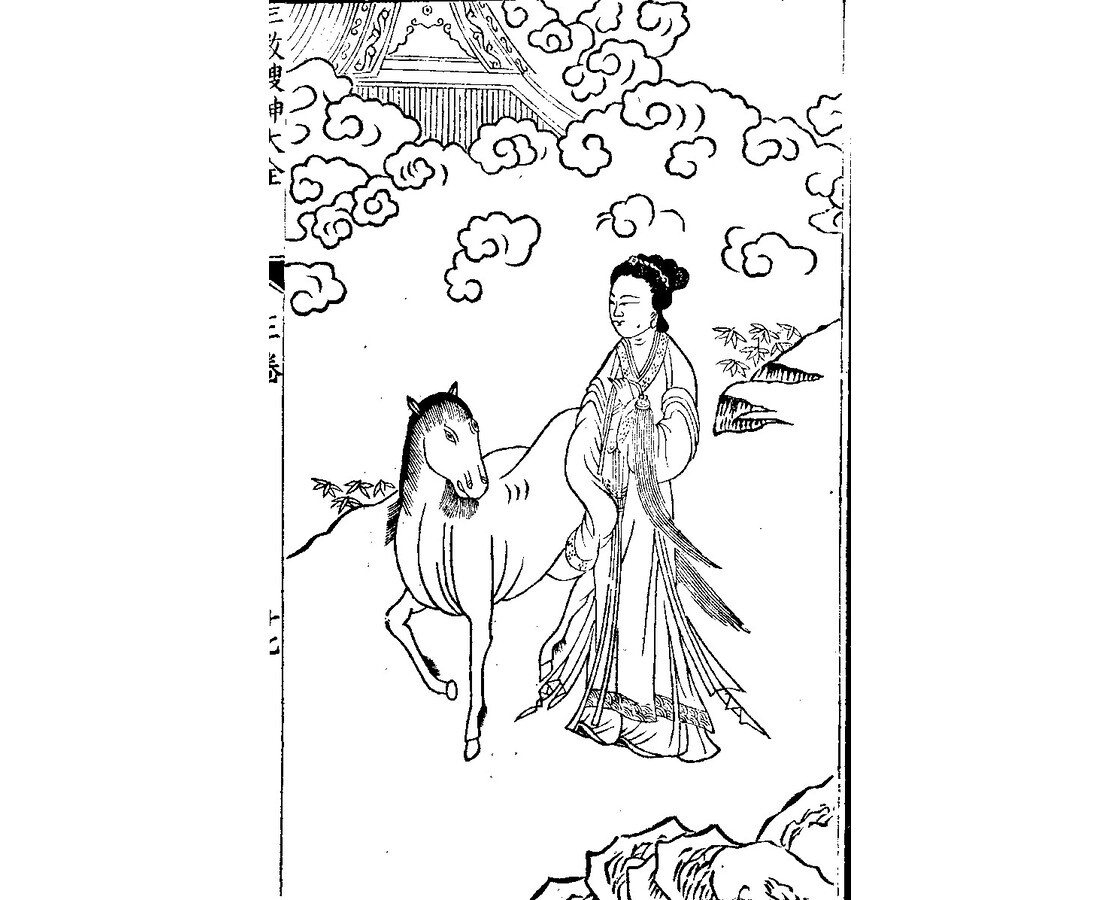
The father goes out. The girl and a neighbour’s daughter are playing beside the hide, and the girl kicks it. “You are an animal, and you wanted a human for a wife!” she says. “You brought the killing and the skinning on yourself. Why make yourself suffer like that?”
Before she has finished, the hide springs up, rolls itself around her and goes off with her. The neighbour’s daughter is too frightened to help and runs to fetch the father, but when he comes home the girl is gone.
Why is the mulberry tree named after mourning?
Some days later the girl and the hide are found in the branches of a large tree. In Gan Bao’s words, girl and hide have “all turned into silkworms”, and the silkworms are spinning there. Their cocoons are thick and large, unlike those of ordinary silkworms. A neighbour woman takes them home and raises them, and her harvest grows several times over.
The tree gets its name from this, Gan Bao says. It is called sang, the mulberry, and in Chinese the word for mourning is also pronounced sang. After that, he writes, people competed to plant it, and the silkworms raised in his own day were descendants of those first silkworms.
Gan Bao closes the story with a word from everyday speech. He writes that in his time some people still called silkworms nü’er, “girl”, and he calls this a leftover word from antiquity. The same remark closes a second telling that follows Gan Bao almost word for word. The Taiping Yulan, an encyclopedia of the Song dynasty compiled from 977 to 983, copied it from another book of notes, the Zhonghua gujin zhu.
Why a horse? What the old texts say
Gan Bao gives his own answer straight after the story, in the form of a scholar’s note. In the old star lore, he writes, the star called Chen was “the horse star”. Then he quotes an old silkworm book. It told breeders to wash eggs when the moon stood in the Great Fire constellation, near Antares. “So silkworm and horse share the same qi,” he concludes. Qi was the breath or vital energy thought to run through all living things.
Gan Bao does not spell out how this explains a girl who promised to marry a horse. He sets the stars, the eggs and an old rule beside the story and leaves the reader to put them together.
The rule comes from the Zhou li, a classic book of rituals and offices. It forbade raising a second brood of silkworms, a second generation hatched and reared in the same year. An old commentary explains why: two things cannot both grow great at once, and a second brood harmed the horses.
The link between silkworm and horse is older than Gan Bao. Xunzi, a philosopher of the Confucian school who lived in the 3rd century BC, wrote a set of riddles in rhyme. One of them describes a creature that changes shape many times, eats mulberry leaves, spits silk, and “three times lies down and three times rises”. The answer is the silkworm, and the riddle asks: “Is this not the one whose body is soft like a woman’s and whose head is a horse’s head?” A Tang-dynasty commentator added that the silkworm’s head looks like the head of a horse.
Whether the story grew out of that likeness between a woman’s soft body and a horse’s head, or people noticed the likeness because they knew the story, no source says.
How did the girl become the Horse-Head Lady?
A second version of the story comes from Sichuan in south-western China. By the Tang dynasty (618–907), the tale had turned into a Daoist legend of immortals and heavenly offices. It survives in the collection Taiping Guangji, finished in 978, under the title “The Silkworm Girl”. The editors copied it from an older, lost collection whose author remains unknown.
Here the father is carried off by raiders from a neighbouring clan and is gone for more than a year. Only the horse he used to ride is left. The girl misses him so much that she stops eating. Trying to comfort her, her mother swears an oath: whoever brings the father home may marry the girl. None of the men can do it. The horse hears the vow, breaks its tether and leaves, and a few days later the father rides home on it.
From then on the horse neighs and will not eat or drink. When the mother tells her husband about her oath, he refuses to keep it. “The vow was made to people, not to a horse,” he says. “How could a human be married to something that is not her kind? He saved me from danger, and that is a great service, but the promise cannot be kept.” The horse paws and kicks all the harder, so the father shoots it in anger and dries the hide in the courtyard.
As the girl walks past, the hide rises, rolls her up and flies away. Ten days later it comes to rest in a mulberry tree, and the girl has become a silkworm that eats mulberry leaves and spins cocoons to clothe the people of the world.
Then the parents see her coming down from the sky on a drifting cloud, driving the same horse, with dozens of attendants around her. She tells them that the Most High, a god of heaven, has given her the rank of a heavenly consort and that she will live there forever. The reason, she says, is that she let herself be given away out of love for her father. They should stop grieving for her, she says, and then she rises out of sight.
The text places her old home where three counties of Sichuan meet. Every year, it says, people praying for silkworms gathered “from the four directions like clouds”, and all of them had their prayers answered. In the temples and Daoist monasteries the statue showed a girl draped in a horse hide, and people called her Ma tou niang, the Horse-Head Lady.
How does the Larousse encyclopedia tell it?
In English the story also stands in the New Larousse Encyclopedia of Mythology, a reference work translated from French and first published by Hamlyn in 1959. Its chapter on China, by Ou-I-Tai, places “Lady Horse-head” among the gods of the countryside. Beside the official gods of the state, it says, “the peasants venerate other deities of a more popular kind”, and she is one of them.
The Larousse follows the Sichuan line. The mother makes the vow, the horse is “in love with his young mistress”, the father “slew the poor animal, skinned him and put the skin to dry in the sun”, and as the girl passes, “the skin leaped at her and carried her off”. Two details differ from the Sichuan text in the Taiping Guangji. There the father was carried off by neighbouring raiders, while the Larousse has him “kidnapped by pirates”. And where the older text spoke only of “the Most High”, the Larousse names the ruler of heaven, “the August Personage of Jade”, who changes the girl into a silkworm, takes her up to heaven and ranks her among his concubines.
A much older Chinese book already pictures silk coming out of a woman. The Shanhaijing, an ancient book of marvels, describes a “Field of Spitting Silk”. In that place, “a woman kneels, leaning on a tree, spitting silk”. To the east of it stand three mulberry trees without branches, a hundred ren tall, the ren being an old Chinese measure of length. No horse appears in the passage.
Who was the court’s goddess of silk?
Silk had other patrons as well, and Gan Bao names two of them in the same note. Under the Han dynasty, which ruled China for about four centuries around the time of Christ, the empress picked mulberry leaves herself and made sacrifices to the silkworm spirits, called Lady Yuanyu and Princess Yushi. Lady Yuanyu, Gan Bao writes, was the first person to raise silkworms, and “princess” was an honourable way to speak of a girl.
Later court art thanked yet another woman. The Shiji, the first great history of China, says the Yellow Emperor, a legendary early ruler, married a daughter of the Xiling clan called Leizu and made her his principal wife. A painting made at the court of the Qing, China’s last dynasty, thanks her by her clan name.
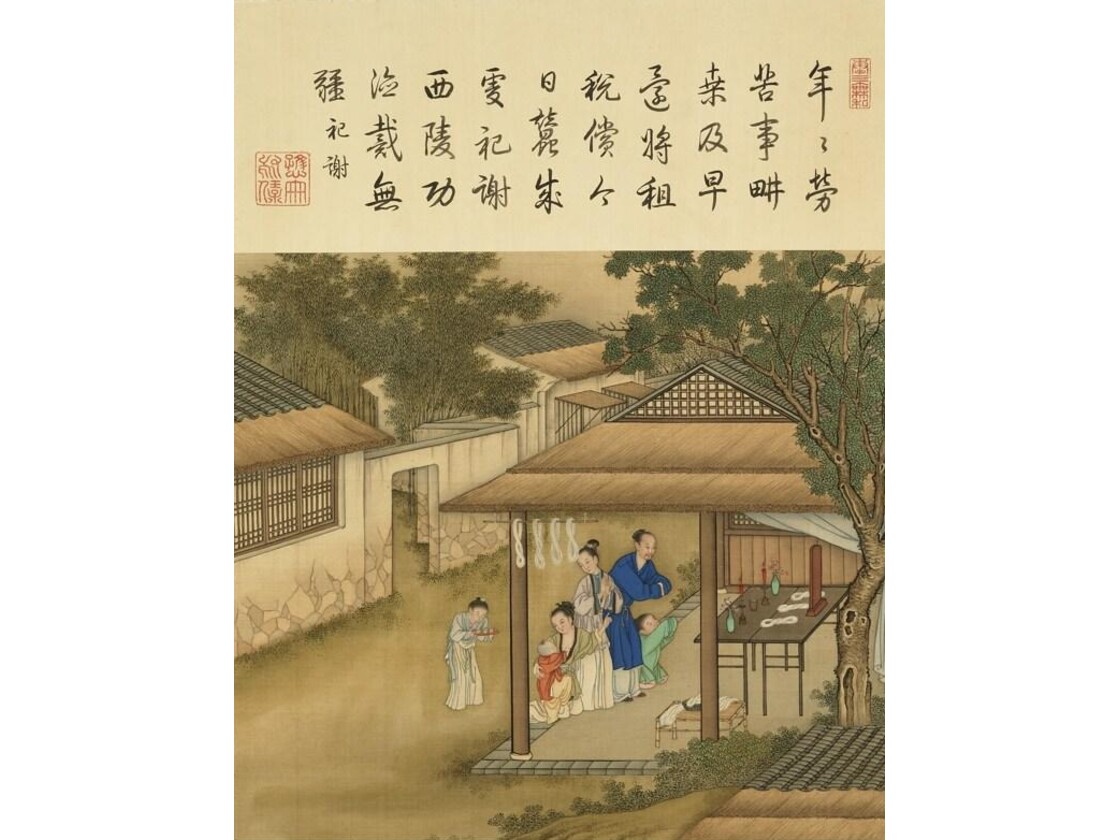
The painting comes from an album of the farming and weaving year by the court painter Chen Mei. In this scene a family gives thanks at an altar after the silk harvest, and the emperor’s poem gives the credit to Xiling, while the girl in the horse hide has no place in the picture.
Does Japan tell the same story?
In 1910 the Japanese scholar Yanagita Kunio published Tōno monogatari, the legends of Tōno, a basin ringed by mountains in north-eastern Japan. He wrote them down as a man from Tōno called Sasaki told them to him. Tale 69 comes from Ohide, a woman of over eighty and the sister of Sasaki’s grandmother. Ohide was skilled in magic, and Sasaki had often watched her kill snakes and bring birds down from trees with spells. She told the story on the fifteenth day of the first month of the old calendar.
A poor farmer has no wife, a beautiful daughter and one horse. The daughter loves the horse, goes to sleep in the stable at night, and in the end they become husband and wife. When the father finds out, he takes the horse out the next day without telling her, hangs it from a mulberry tree and kills it. That night she learns what happened, goes to the tree and clings weeping to the dead horse’s head. In fury, the father cuts off the horse’s head with an axe. At once the girl, still clinging to the head, floats up to heaven.
Ohide’s tale closes with a god: this is how Oshira-sama, a household god of the region, came into being, and images of Oshira-sama were carved from the mulberry branch on which the horse had hung. Silkworms do not appear in her telling.
The Tōno monogatari also says where the three images carved from that branch went. The one from the base of the branch, called the elder-sister god, stayed with the Daidō house in Yamaguchi, the family of Ohide’s adopted son. The one from the middle went to a house in Yamazaki and was lost when that house died out. The one from the tip, the younger-sister god, is now in the village of Tsukumoushi.
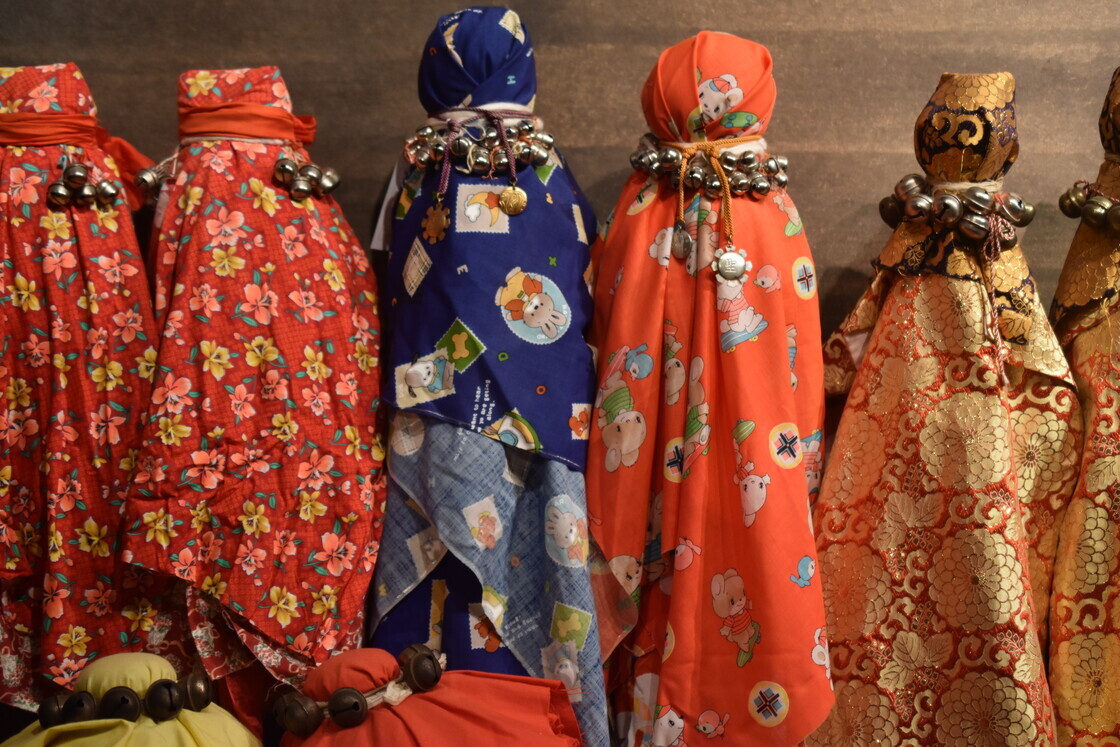
Across north-eastern Japan, Oshira-sama is commonly seen as a household protector of farming and of silkworm raising; a modern comparison of these traditions appears in our note on the East Asian silkworm goddess. The deity is a pair of mulberry sticks about 30 centimetres tall, carved with human faces or a horse’s head, and each year the family dresses them in a new layer of cloth. On festival days in the third and ninth months the family invites itako, female shamans, who chant and make the two sticks dance.