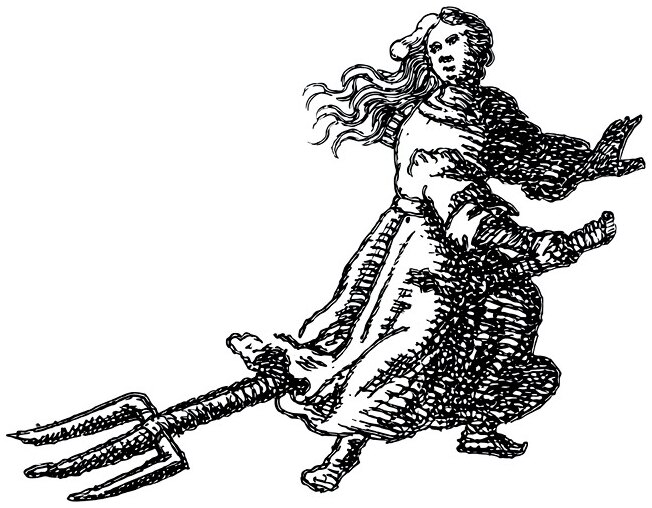
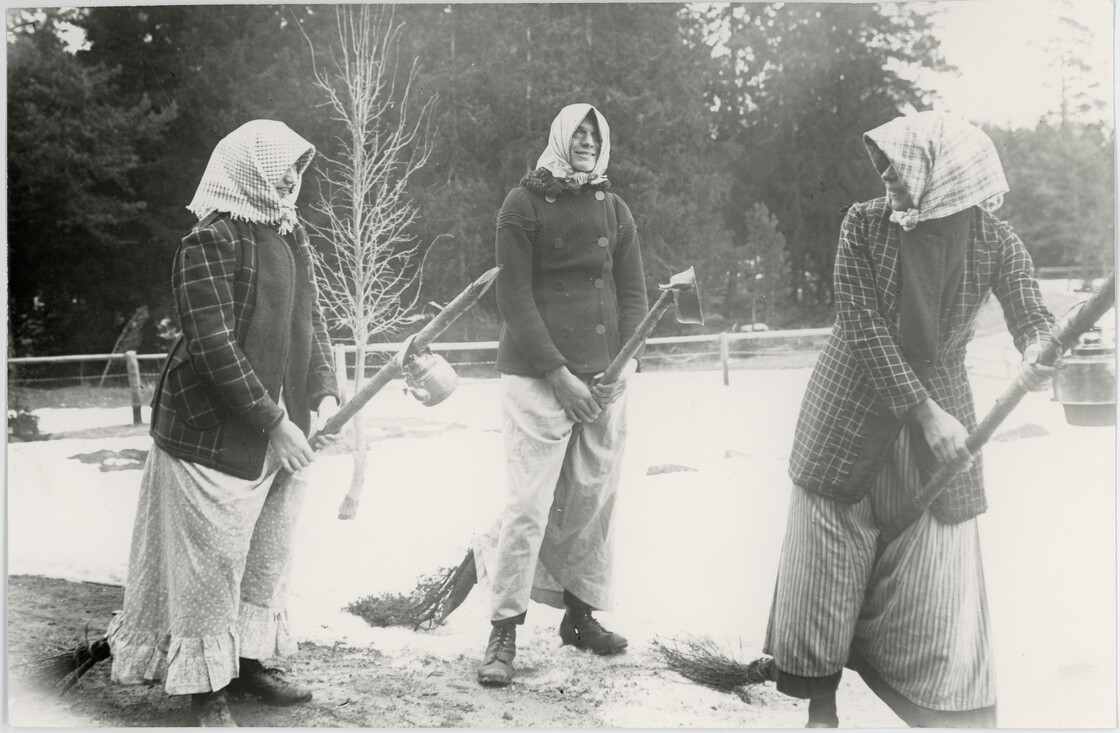
In the farm kitchens of southern Sweden, the days before Easter were a time to hide the baking tools. A housewife who did not want to help the witches put away her bread-spade, the flat wooden shovel for sliding loaves into the oven. She also hid the broom for cleaning the oven, her rake and every besom, the broom made of bundled twigs. On the evening of Maundy Thursday, the Thursday before Easter, the witches were said to ride off on such things to Blåkulla, the Devil’s meeting place, and to be home again before sunrise.
The legend was written down in the far south of Sweden in the nineteenth century, and it follows the witches through the whole night, from the chimney to the Devil’s table and back. Two hundred years earlier, children and accused women had described the same scenes to a royal commission in the village of Mora, and on the strength of their words dozens of people were executed.
What did the Blåkulla legend say about the witches’ flight on Maundy Thursday?
The legend reached English readers through William Craigie, a Scottish scholar of the Nordic languages, who translated a large selection of Scandinavian folk beliefs in 1896. He took it from Eva Wigström, a collector who wrote down the songs and stories of Skåne, Sweden’s southernmost province, and published them in 1880.
The legend starts at the church. Before their journey the witches blow into the keyhole of the church door, “in order to blow from themselves the Holy Ghost”. Only then do they travel to Blåkulla to be taken into the service of the Evil One, as the legend calls the Devil. They need something to ride, so they take the baking tools, and a witch who has none of her own borrows or takes them wherever she can. Her own broomstick is not always enough, because some witches bring children along to have them initiated in the black art as well.
The way out leads up through the witch’s own chimney. As she rises, she cries: “In the Evil One’s name, up and not down, over all tree-tops, and back again before daylight.” A young witch on her first journey once got the words wrong and said “Up and down till daylight” instead, so she flew up and down the chimney until the sun rose.
The legend gives no reason for the choice of night and places the journey inside Easter Week, the holiest days of the church year. Thursday evenings, though, had been linked to such journeys in Sweden four centuries before the legend was printed. In a trial in Stockholm in 1492, a man named Erik Claueson admitted that he had denied God by going on nine journeys on nine Thursday evenings, and that he had accepted Odin, the old Norse god whom the record called a devil, in return for money.
What happened when the witches reached Blåkulla?
At Blåkulla the Evil One receives the witches “in the best fashion”. He has the shape of a man but a horse’s foot. Each witch gives him an account of all the harm she has done over the past year, and he teaches the older ones still worse arts. Then he dances with all of them.
The night ends with a banquet, and to the witches’ eyes it is made of the rarest dishes. One witch, however, had brought a small child along, and the child would not eat a single bite, because it could see what the food really was: snakes, worms, lizards and black toads.
The witches ride home through the air, and people who got up very early could hear them fly past, with sticks and straws whirling high behind them. On the morning of Good Friday, the day after Maundy Thursday, a boy was standing by a farmyard when the witches came by. He threw his clasp-knife into the whirlwind and struck one of the witches on the leg. She dropped into the dung-heap and stuck fast. He would not help her out until she promised him one of her garters, and he kept it as proof that he had really seen a witch.
What did the witches do in church on Easter Day?
After the flight the witches still went to church. On Easter Day all of them had to attend the service, but they said all their prayers backwards.
There was a way to pick them out of the congregation. Whoever carried three eggs in his pocket, the first eggs laid by three young hens, could see them. In church the witches sat with milk-pails on their heads and a cross in their eyes. According to the legend, the pail stood for the witch’s power over other people’s cows: a witch could drive a knife into the roof-tree of her house, the main beam that carries the roof, and milk the shaft of the knife. She got as much milk as she wanted from the cows she named, and she sometimes milked them so hard that pure blood came.
A witch who did not want the work sent her milk-hares instead. They sucked the cows in the stalls and carried the milk home to her.
Another story from the same Skåne collection tells how a witch made a milk-hare. She took a few wooden pegs and a stocking-leg, poured a drop of stolen milk into it and sent it to the cows. A peasant out hunting once shot at what he took for an ordinary hare. When he went to pick it up he found only some wooden pegs and a blue stocking, the colour worn by the older women of the district. Beside them lay a splash of milk.
The soldier who went to Blåkulla in his wife’s shape
The longest story in the legend is about a witch who could churn whole pounds of butter in a pail of water. Her neighbours knew what she was, so each year as Maundy Thursday came near they hurried to hide their oven-rakes and other baking tools.
One Easter week this witch fell ill and had to stay in bed. Her husband saw that she grew more restless the nearer Thursday came, and he asked her why. At first she said only that she had important business which had been neglected. When he declared himself willing to do it, whatever it was, she admitted that she was afraid of missing the flight to Blåkulla with her companions and of not hearing what was said there.
The husband asked whether he could go in her place. She said it could be done if he followed her instructions in every detail, and he promised. So she put her own shape on him and gave him a long stick to fence with the witches. Every time he struck one of them, he was to say “Sore to-day, whole to-morrow.” She smeared the oven-rake with troll-salve, the witches’ ointment, and taught him the words that would carry him up the chimney: “Straight up and straight out, over all beech-tops.”
But the husband was a soldier, and he had always held a grudge against his wife’s companions. He swapped the wooden stick for his good sword and flew off to Blåkulla. When the witches began to fence, he struck with the sword and aimed every blow at their noses and ears, and with each stroke he turned the formula around, “Whole to-day, sore to-morrow”, until the witches came home with faces that were anything but beautiful.
The other witches now looked on the wife as a traitor, and she was in danger of punishment from them and from their master unless she took revenge on her husband. Still lying in bed, she pulled two straws from her mattress, made a pop-gun out of them, loaded it with charmed material and fired at him. He dodged the shot, and it went straight through the door-post.
The Danish ploughman who was ridden like a horse
Denmark had the same belief with a different destination. According to Craigie, the Danish witches gathered at Tromskirk in Norway, as the Swedish ones gathered at Blåkulla. His Danish story comes from the folklorist Svend Grundtvig and is set in Brovst in Vendsyssel, the northern tip of Jutland.
A woman there was a witch, and all the ploughmen who worked for her grew terribly thin, however much they ate. One of them, worn down to skin and bone, went to a wise woman to find out why. She told him that his mistress rode on him every night to Tromskirk in Norway. She gave him a salve for his eyes. With the salve on his eyes, he would wake up outside the church at Tromskirk in the shape of a horse. As soon as he worked the bridle off, he would become a man again. Then he was to throw the bridle over his mistress, so that she would become the horse and carry him home.
The ploughman did as he was told and woke up outside Tromskirk. He worked the bridle off and became human again. When the woman came out of the church and saw that her horse had turned into a man, she tried every trick to get the bridle back on him, but he put it on her instead. He rode her home through the air and stopped on the way at a smithy, where he had her shod on all four feet. At home she went down the chimney into the kitchen, and he took off the bridle. She got her own shape back, but the four horseshoes remained nailed to her hands and feet. Everyone could see what she was, and her husband drove her from the house.
When the Blåkulla story went to court: Mora, 1669
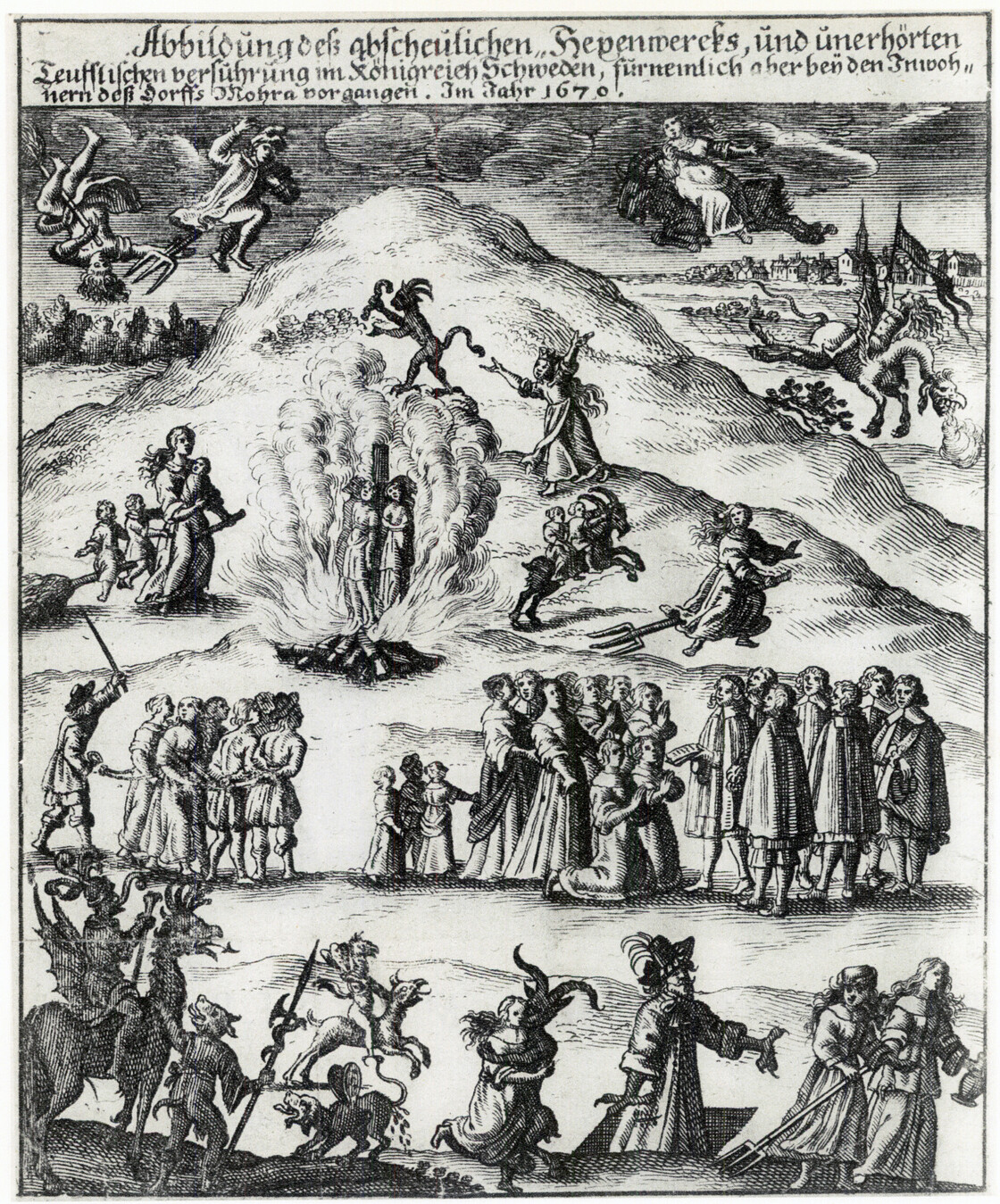
Craigie added a note to the Swedish legend: these meetings of the witches had been “notorious during the witch-persecutions in the 17th century”. He meant the years from 1668 to 1676, which Swedes call Det stora oväsendet, the Great Noise. In those years children in Dalarna, a province of forests and lakes in central Sweden, began to say that women of their villages had carried them to Blåkulla at night. On 19 May 1669 six women and one man were executed in the parish of Älvdalen on the strength of children’s testimony.
King Charles XI then sent a royal commission, half of whose members were clergymen, to the village of Mora. Its report reached England in a translation by Anthony Horneck, printed in Joseph Glanvill’s collection of witchcraft cases, Saducismus Triumphatus. According to this account, the commissioners met at the parsonage on 12 August 1669. Nearly three thousand people gathered the next day, and the children were questioned one at a time to see whether their stories agreed.
The confessions describe the flight much as the legend does. The accused said they went to a gravel pit beside a crossroads, put a garment over their heads, danced, and called the Devil three times: “Antecessour, come and carry us to Blockula.” He appeared, usually in a grey coat with red and blue stockings, a red beard and a high-crowned hat. He set them on a beast and carried them “over Churches and high Walls” until they came to a green meadow where Blockula lay. They went out through chimneys and broken window-panes. For the journey, they said, they used “all sorts of Instruments, of Beasts, of Men, of Spits and Posts”. One boy said he took his father’s horse from the pasture to ride.
Blockula itself, in these confessions, was a large meadow without end, with a house behind a gate “painted with divers Colours”. The people the witches had used for riding stood inside by the gate, asleep against the wall, and further in stood a long table. The food at the Devil’s table was farm food: broth with cabbage and bacon, oatmeal, bread and butter, milk and cheese, and it “sometimes tasted very well, and sometimes very ill”. The children had to stand at the door, and some of them spoke of a white angel who stood between them and the witches and pulled them back.
One confession matches the legend from Skåne closely. The Devil, the accused women said, had taught them to milk: they “used to stick a Knife in the Wall, and hang a kind of a Label on it, which they drew and stroaked”, and as long as they did, the animals of the people they had power over were milked that way, “till sometimes they died of it”.
According to the report, seventy villagers were condemned as witches. Twenty-three confessed and were condemned to death on the spot, while most of the others were sent to the town of Falun and executed later. Fifteen children were executed too. Thirty-six children between nine and sixteen had to run the gauntlet, the punishment in which the condemned run between two rows of people who strike them, and twenty younger ones were beaten with rods at the church door. The executions took place in late August 1669 in front of thousands of onlookers.
At Blockula, the Mora confessions say, the witches had to bring scrapings from altars and filings from church clocks. The Devil gave them a purse with clock filings in it, and they threw it into the water with the words: “As these filings of the Clock do never return to the Clock from which they are taken, so may my Soul never return to Heaven.”
How did the Swedish witch hunt end?
In the following years the trials spread to other parts of Sweden, and in 1676 they reached Stockholm. There, on 11 September 1676, one of the child witnesses admitted to having lied in court, and the other child witnesses then admitted the same. The witchcraft commission ordered a halt across the whole country.
In the legend from Skåne, the flight and the feast belong to a story with tricks and comic revenge, a soldier slashing noses and a boy winning a garter. In the court records from Mora they were sworn testimony. Children described the meadow, the gate and the feast, and judges sent dozens of people to their deaths on their words. The records cannot tell us what each child at Mora had in mind. They show only that the children and the accused women told the same scenes that the legend from Skåne still told two centuries later.
Those scenes lasted into modern Sweden. According to Nordiska museet, the national museum of Swedish cultural history, the oldest written records of påskkärringar, Easter witches, date from the early nineteenth century, and at first it was adults who dressed up to frighten people. Today children dress up as Easter witches on Maundy Thursday or Easter Eve and go from door to door with Easter cards, hoping for sweets or a small coin. The museum traces the custom back to the belief that witches flew to Blåkulla to meet the Devil before Easter.
Where was Blåkulla?
The stories did not agree on where Blåkulla lay. In Nordic folklore, witches flew to a mountain in a distant country or to an island in the southern Baltic. Scholars trace the name Blåkulla to German names like the Brocken or Blocksberg, where German witches gathered on Walpurgis Night. Far to the south, South Slavic witches were said to fly to the mountain of Klek, as told in Klek and the Wax Bullets and in our bestiary entry on the vještica.
In Sweden, Blåkulla came to mean one island in Kalmar Sound, the strait between the mainland and the long island of Öland. Today it is called Blå Jungfrun, the Blue Maiden. It rises 86.5 metres out of the sea, a rounded dome of red granite about 1,100 metres long, visible far up and down the coast.
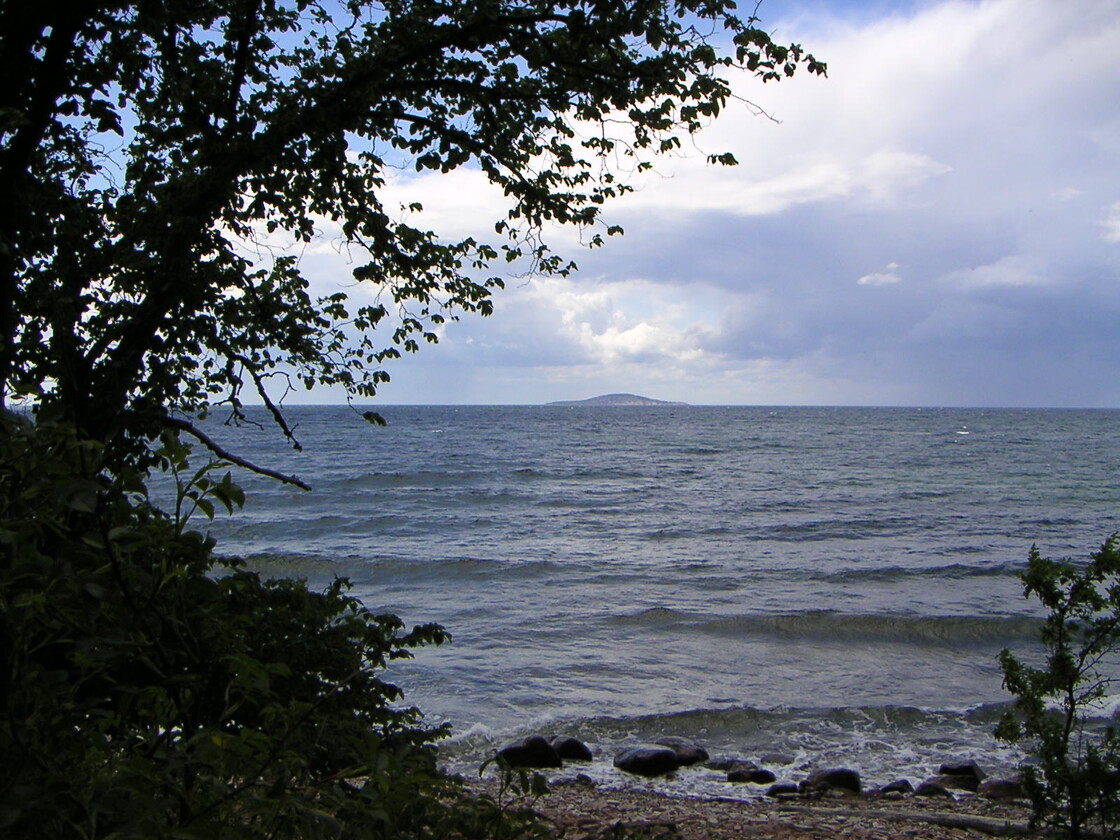
The island carried the name long before anyone linked it to witches. A record of miracles from the Dominican friary in Stockholm, written in the early 1420s, tells of a ship sailing from the German port of Lübeck to Stockholm in 1410. It ran into a violent storm “in the sea-lane near Blåkulla” and lost its sail and mast. The crew reached Stockholm only after making a religious vow, and the account mentions no witches at all.
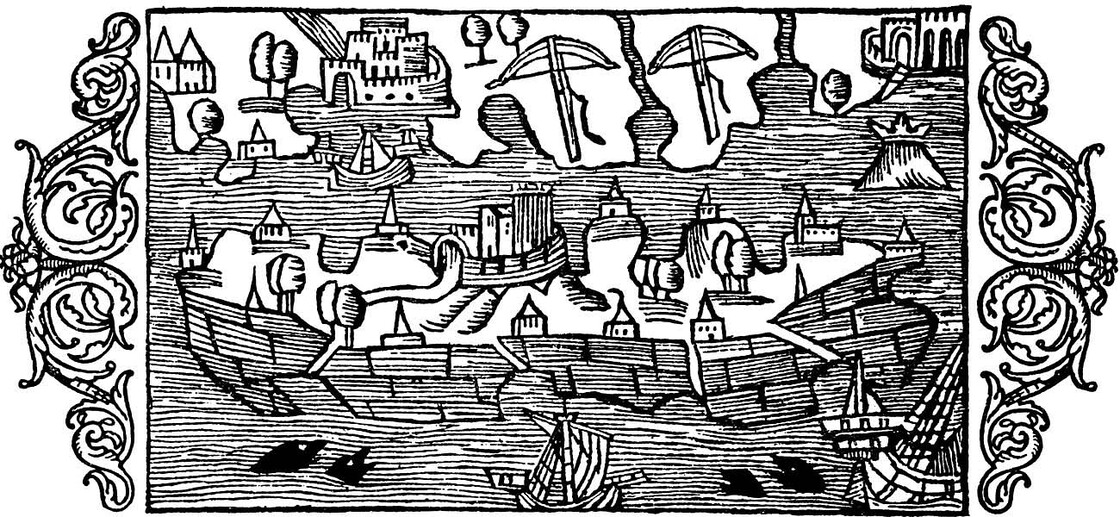
The witches first appear on the island in the work of Olaus Magnus, Sweden’s last Catholic bishop, who lived in exile in Rome and published his great History of the Northern Peoples there in 1555. He wrote of a very high mountain which sailors called the Virgin, to avoid an ill omen and storms at sea. In an English translation of 1658, he goes on: “In that Mountain men say at set times of the yeare, there is a meeting of all the Northern Hags, that they may try their witchery: he that comes late to the Devills Ministery, is cruelly tormented.” Then he added his own reservation: “But these are but opinions”.
The regional museum reports that stones regularly arrive at the municipal office in Oskarshamn, the mainland town opposite the island. Tourists who took them from Blå Jungfrun mail them back. They want the stones returned to Blå Jungfrun so that the bad luck that has followed them since will stop.