Every year on 19 October, Rome held the Armilustrium, an ancient rite to purify weapons. Most modern guidebooks describe a dramatic scene: twelve priests dancing on the Aventine Hill with sacred figure-eight shields to close the season of war.
The Roman sources themselves say less: armed men performed rites and sounded trumpets during the sacrifice. The famous dance rests on a single sentence by the scholar Varro, where the word for “playing” with shields was only added by a Renaissance editor in 1563.
What was the Armilustrium on October 19?
The festival is known from a few lines in old Roman reference books. A Roman dictionary of rare words, which survives in a shortened copy, gives the fullest entry. It says the Armilustrium was a festival “at which they performed sacred rites armed, and while they sacrificed, they sounded the trumpets.”
The scholar Marcus Varro, writing in the first century BC, adds that the same name was used for the place. In his view the word came from the going-around of the purifying offering. A Latin lustrum was a rite of cleansing, often performed by walking in a circle around the thing to be cleansed.
The festival took place in an open square on the northwest Aventine, where ancient inscriptions record a street named after the rite. The site lay next to a laurel grove, and laurel was a plant ancient priests often burned or carried in cleansing rites.
In 207 BC, while Hannibal threatened Rome, onlookers reported stones raining from the sky directly into the Armilustrium sacred ground. The omen was so alarming that priests repeated nine full days of cleansing rites.
For centuries the Aventine Hill lay outside Rome’s sacred city boundary, the line dividing daily civilian life from the realm of war. The autumn horse sacrifice for Mars, held four days earlier, began outside that same boundary.
What were the ancilia, and why were there twelve of them?
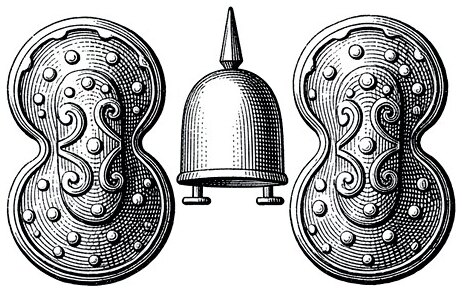
The ancilia were the sacred shields of Mars, the Roman war god. Each had an odd outline, narrow in the middle and wide at the top and bottom, like a figure eight. Varro explains the name from a word meaning “cut in on both sides.”
Roman legend says a bronze shield fell straight from heaven during a plague under King Numa. The poet Ovid has thunder from a clear sky and the heavens opening before the curved shield drifts down on a light breeze. Numa declared it had come to preserve Rome, and the sickness stopped.
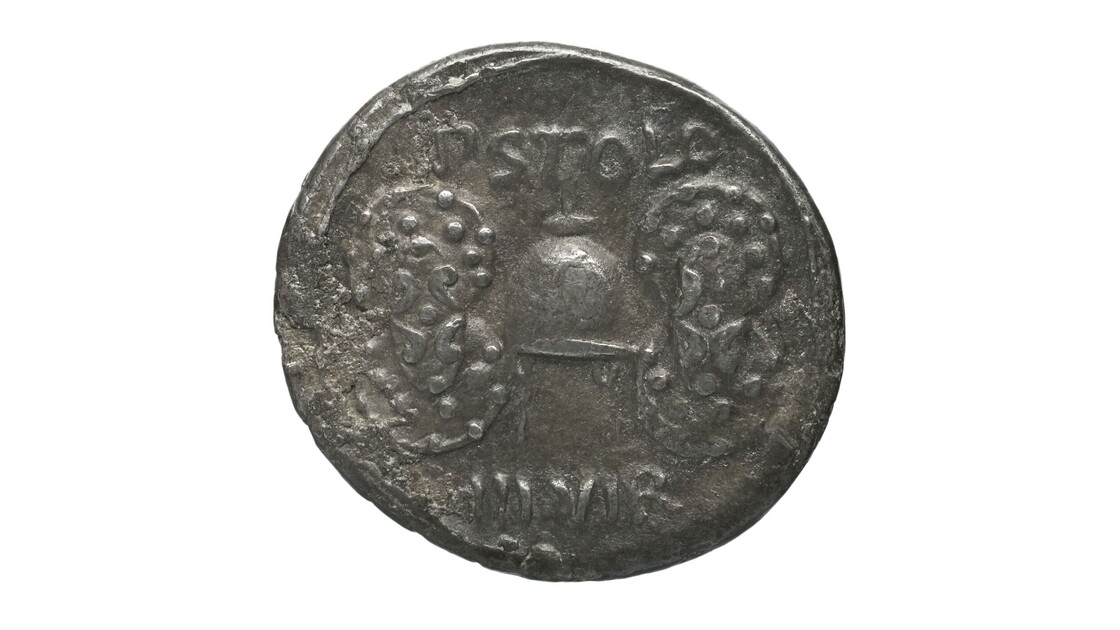
Because a shield that held the fate of the city was worth stealing, Numa had copies made. According to legend, every craftsman refused the job except a smith named Mamurius, who forged eleven shields so close to the divine original that even Numa could not tell them apart. Together with the heavenly shield, that produced twelve.
The total of twelve comes from this one tradition; another Roman history records the same miracle but mentions only a vast number of shields without a specific count. Mamurius asked for one reward: his name was to be sung in the priests’ hymn, and the priests kept the promise.
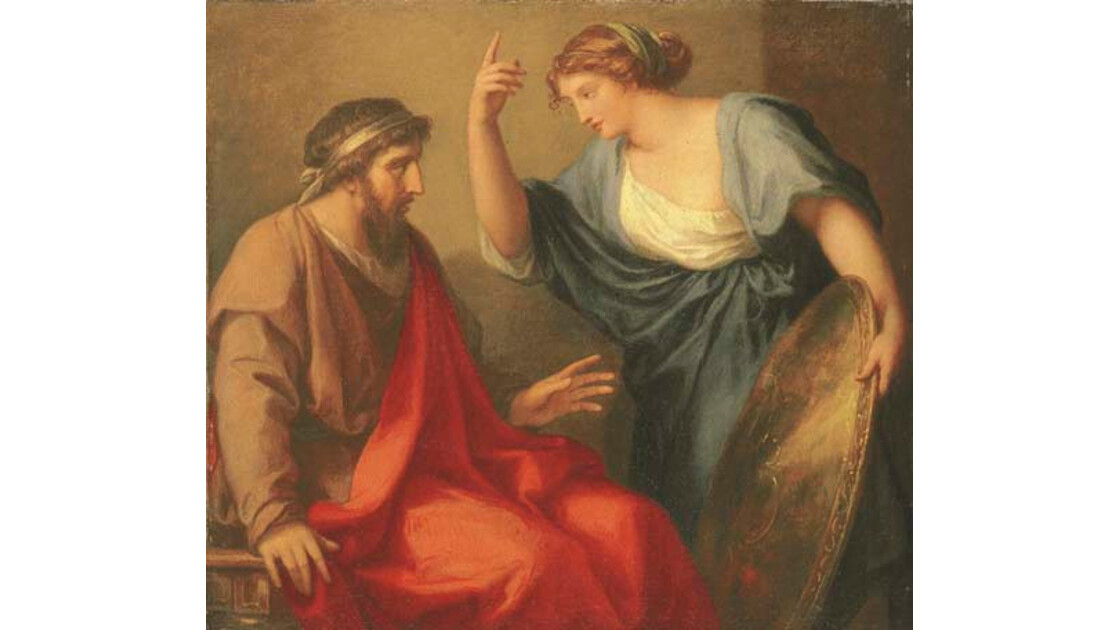
Who carried the shields through Rome?
The shields belonged to the Salii, a college of twelve priests. The historian Livy says Numa founded it for Mars and gave the priests an embroidered tunic with a bronze breastplate over it. Their task was to carry the heavenly shields through the city, singing as they went, with leaps and a solemn dance.
An ancient Greek historian who watched them in Rome described them as young noblemen. Each wore a pointed priest’s cap, a sword at his belt, and a staff in his right hand. With the curved shield strapped to the left arm, they danced to flute music and struck the bronze with daggers.
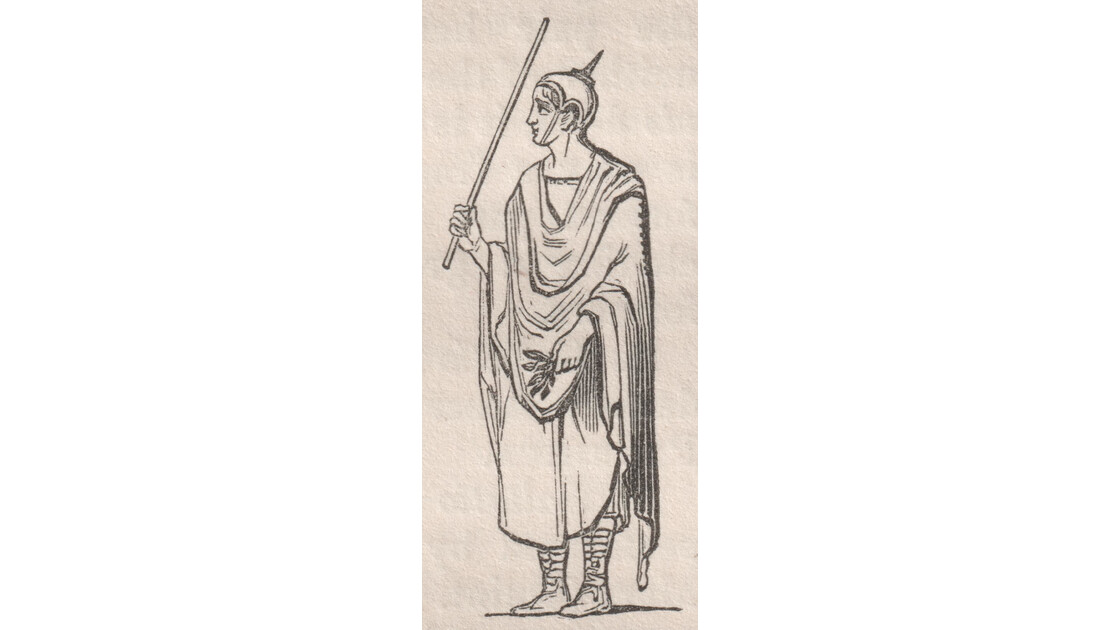
Apart from one disputed line, every ancient writer puts this dancing procession in March, opening the military year. Priests were strictly forbidden to travel for thirty days while the rites lasted. During a war in 190 BC, the general Scipio Africanus had to stay behind because he was a Salian priest, leaving Roman legions waiting idle at the Hellespont until the sacred month closed.
Romans held it unlucky to set out for war while the shields were out and not yet put away. In AD 69 the emperor Otho marched to war on 14 March anyway. Suetonius notes the bad omen. Otho lost the decisive battle and stabbed himself.
Did the Salii dance on the Aventine on October 19?
The whole October dance hangs on one sentence by Marcus Varro. In his book on Latin words he suggests the festival’s name might come from “playing” or “cleansing.” He adds that armed men walked in procession playing with the sacred shields.
That sentence is the only ancient link between the Salii’s shields and 19 October. In the manuscripts the word is luendo, a form that makes little sense there. A Renaissance editor changed it to ludendo, “playing,” in an edition printed in 1563. The standard modern edition keeps his correction.
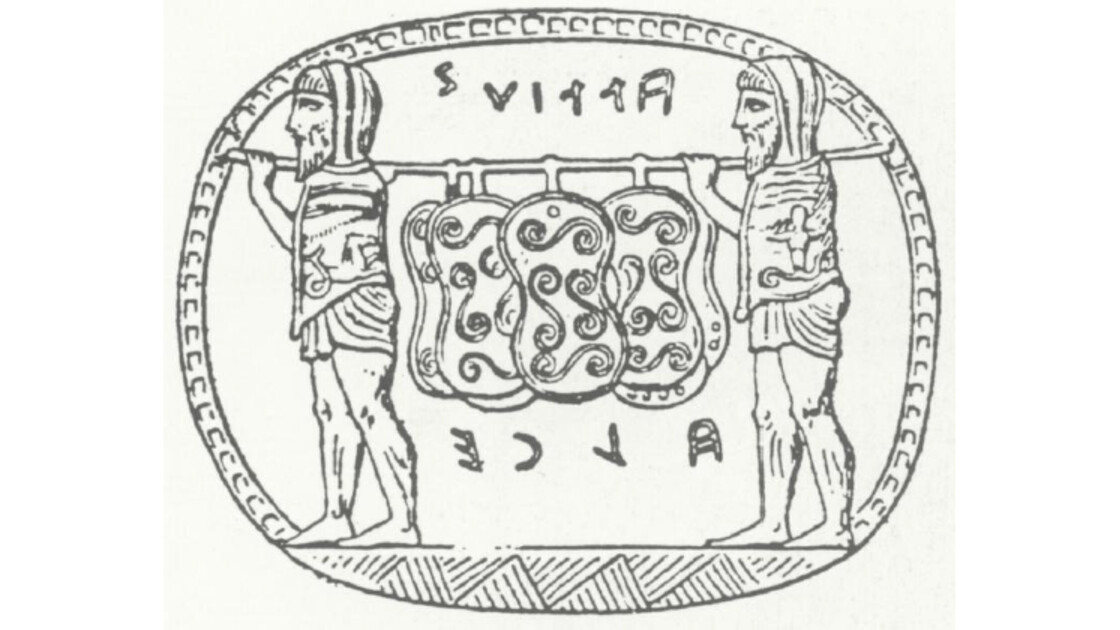
Scholars have built very different festivals on that sentence. The standard modern picture says the Salii took out their shields in March and put them away after the Armilustrium, closing the war year. One early twentieth-century study concluded that the army took no part in the day at all. In that view, the October rite cleansed only the priests’ own sacred shields before they were locked away.
The historian of religion Jörg Rüpke notes that the ancient evidence for the Salii belongs entirely to March, and in his analysis placing them at the October festival depends on Varro’s lone remark, which reads more like speculative wordplay than an eyewitness account.
Why did the Salii sing Latin that even Varro could no longer understand?
The Salian hymn was the oldest poetry Rome had, or so Romans believed. If it went back to King Numa, Varro reckoned, its words were at least seven hundred years old. Varro’s own teacher wrote a commentary on it. Varro says it explained some words and passed over many dark ones.
Later writers were blunter. To the teacher of rhetoric Quintilian, the Salian songs were “scarcely understood by their own priests.” The poet Horace mocks the man who praises Numa’s hymn and wants to seem the only one who knows what neither of them understands.
A few lines survive in old grammar notes. One verse addresses Janus, god of beginnings, calling him the good creator and doorkeeper. Another chants to Mamurius, the legendary shield-maker, fulfilling the king’s promise. The song even took in modern rulers: centuries later the Roman senate voted to add the emperor Augustus to the sacred text.
Did the Armilustrium really close Rome’s war season?
Modern textbooks often say that the festival marked the army’s return. In that standard model, Mars received rituals in March to open the campaign season and in October to close it when soldiers returned. On 15 October priests sacrificed a racehorse to Mars in the October Horse ritual. Four days later came the Armilustrium. In that reconstruction, soldiers ritually cleansed their weapons on the Aventine before heading home for winter.
Rüpke rejects this tidy seasonal symmetry as unproven, since in his view Roman armies never carried their campaign weapons to the Aventine. He reads the October ceremony as a symbolic rite to retire the trophies of past fighting back into civic peace.
The trumpets have a calendar of their own. On the Tubilustrium, held on 23 March and again on 23 May, the trumpets were purified with a ewe lamb. One older scholar read the May date as a trace of a time when Rome fought only before the harvest. No ancient text says what was done to the trumpets in October, beyond the note that they sounded during the sacrifice.
The October date on the Aventine rests on good evidence. The picture of priests clashing shields across the hill rests on a single disputed word, the ludendo that an editor printed in 1563.