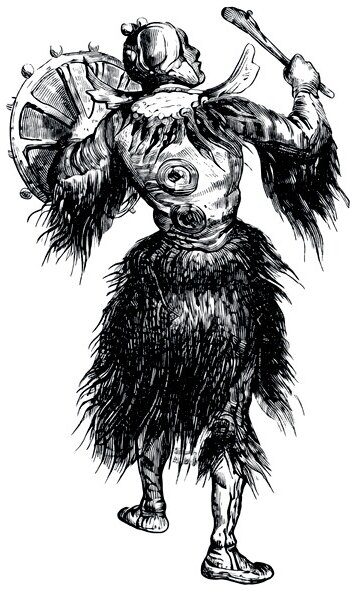
Abaasy in Sakha epics are the hosts of the Lower World: a whole tribe of iron-bodied raiders with a lord of their own and daughters who go to war, and the enemy the olonkho was built around. The olonkho are the sung epics of the Sakha people in northeastern Siberia, and the abaasy are the force they were made to hold back. They come up into the human world to take cattle, women and souls. In the Yakut language the same word still means an ugly thing and a person who is very hard to like.
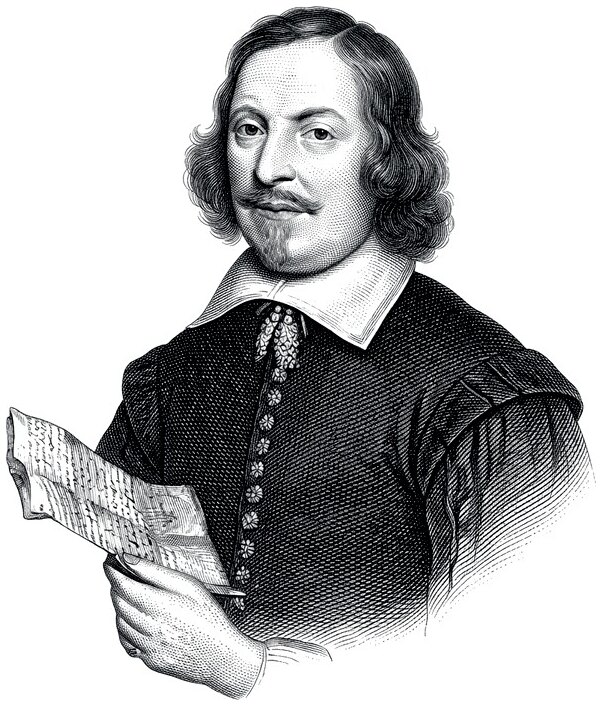
In 1890 an ethnographer in Siberian exile put a question to the shamans of the Namsky district. Wacław Sieroszewski had been living among the Sakha for a decade by then. He asked what an abaasy actually is, and the answer he wrote down is the hinge of the whole subject: Our abaasy are different, and the olonkho abaasy are different.
That sentence holds. The shamans were telling him that his word and their word were not the same word, and Sieroszewski, who could have folded the two together into one tidy chapter on demons, printed the objection instead. On the next page he wrote that the abaasy of the epics are people, enemies of the Yakuts, who live as people live, fight the heroes over women, drive off cattle and own houses and herds. The two registers run side by side in the same language and the same villages, and the people who worked with both of them kept them apart on purpose.
The everyday Yakut verb for hating somebody is abaahy kör, literally “to see an abaasy”. The same language calls a bat abaahy ürümecčite, the abaasy’s butterfly, and names two plants after the being: a honeysuckle and an angelica, the devil’s creeper and the devil’s staff.
Abaasy in Sakha Epics: What Does the Word Mean?
The derivation given in dictionaries runs from аба, poison, from Proto-Turkic *āgu, with a Middle Mongol borrowing as the competing explanation and Old Turkic abačï compared alongside. That etymology remains unresolved in the literature, so it functions as a working proposal rather than settled fact.
The entry opens the word wider than “demon” does. In the standard Yakut dictionary, the noun stands in three registers. The first is the mythological one: the evil spirits, everything harmful and hostile to humans. The second is medical and social, a person or animal born with a severe deformity, with the sample phrase abaahy torbos, a misshapen calf. The third is the swear word, and it cuts both ways. Abaahy kihi is a thoroughly bad person. It is also what you call a man who is stronger, quicker or bolder than everyone else in the room, and the dictionary prints it with the admiration left in.
Proverbs carry the same double edge. A devil will not eat a devil, meaning that the wicked spare each other. The devil never leaves the place where he once got a meal. With a good singer, even an evil spirit sings along. One phrase, abaahy imnengehe buolua, works like “the devil must have ridden him” and comes out when a person regrets something stupid he has just done. Another, abaahy olopoho, the devil’s stool, is the joke made about a very short man. Sudden sharp illness is the abaasy striking with a whip.
Are the Abaasy One Monster or a Whole Tribe?
They are a tribe, and Yakut has a phrase for the kin group: abaahy ajmagha, the abaasy clan, used for the whole mass of hostile supernatural force. The epics never treat them as one creature. They have an aristocracy and a rank and file, and the heroes meet different ones in different stories.
At the top sits Arsan Duolai, and the standard Russian encyclopedia of myth glosses his name as “lord of the earthen belly”. He lives at the very bottom of the underworld beside a mud so sticky that even spiders get caught in it, and the older accounts give him a wife and seven sons, each of them the head of a clan of evil spirits. His name is not fixed either. The 2026 study of his whole corpus lists Arsan Duolai, Ard’an Duolai, Arsaan Duolai and Arsaan Tuonai as variants, plus a set of names built on the Yakut word for earth, soil, dust: Buor Mangalaj, “earth belly”, and Buor Sürgej, from a verb meaning to tear the ground up in rage.
Below him are the champions. In Nurgun Botur the Swift, the longest of the epics at around thirty-six thousand lines, the abaasy abduct Nurgun Botur’s sister Aitalyn Kuo, and the hero spends the epic getting her back. One of the raiders is a demon called Timir Jigistei, and the first element of his name is timir, the Yakut word for iron.
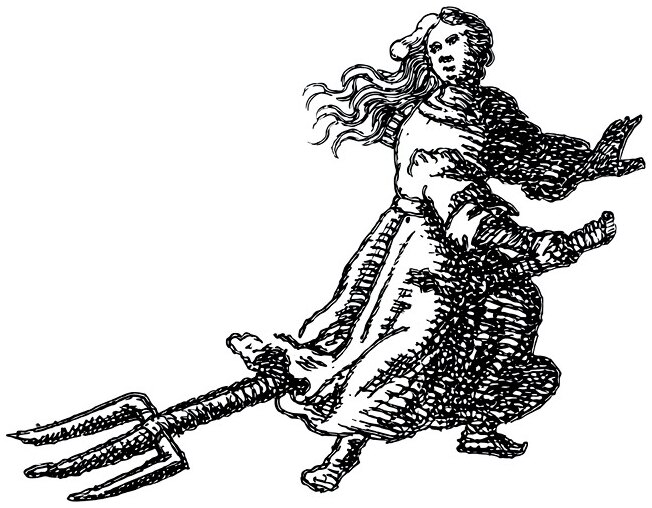
Then there are the female abaasy, and the epics give them some of their strongest lines. They are the daughters of the ilbis, the flying spirits of war who live at the tip of a spearhead and drink blood, and when they are hungry a blue or sulphur flame shows on the blade. An abaasy girl who wants a human warrior dresses for it in a dress cut from shamaness skin and a necklace strung with nine shamans’ skulls. She twists to show off her humped back and tucks in her bulging bottom to look like a wealthy lady.
The female abaasy are also, in the epics, naive. They dream of marrying a warrior from the Middle or Upper World and settling down with a family, and the poems say this love is what starts wars. The same tradition gives them bodies that cannot bear children and describes them as looking like the curved skeletons of sacrificed horses.
What Do the Abaasy Look Like?
The classic type comes from Innokenty Pukhov, the Yakut scholar who spent the middle of the twentieth century mapping the epic’s main characters. His abaahy is a one-armed, one-legged Cyclops made of iron, with its face on the back of its head. The single arm grows out of the centre of the chest and forks at the elbow; the single leg forks at the knee. Pukhov read the figure as a body with every sin written on it: from wrath and lust through to bestiality and cannibalism.
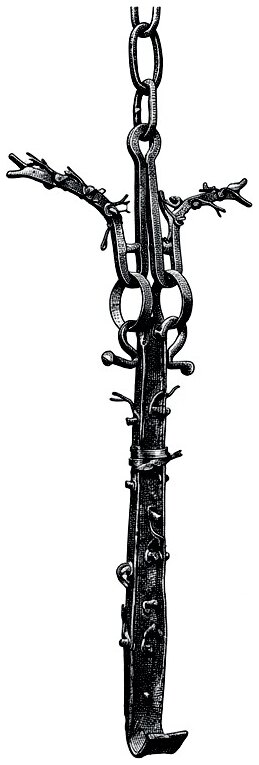
Iron runs through all of it, and the reason is local. The Sakha were smiths and they dug iron ore out of the ground, so the beings who live under the ground are naturally made of the stuff. Their world is a dark icy plain with a low red sky, fiery oceans and endless bog. They ride oxen made of iron, the ugus, harnessed to iron sledges, while the aiyy, the benevolent spirits, ride horses. That one detail carries the whole cosmology: horse against ox, and the sky against the earth under it.
Later texts pin the features down where the early ones left them loose. Arsan Duolai gets eight heads in two of the epics, and a formula from a twentieth-century record gives him short horns growing from the crown of his head, a tail as long as an arshin from the base of his spine, and eight protruding tusks. Another gives him a seven-branched fiery serpent’s tongue. Okonešnikova notes that his attributes include the adagha foot-clog, the bull’s yoke, the worn fur coat and the adze, symbols of forced labor, decay and blunt destructive force.
Transformation is where the epics let themselves go, and a 2022 classification made from the earliest olonkho recordings divides it into seven kinds. An abaasy turns into weather: scorching heat, a river with a stony bed, a whirlwind. Into birds: a raven, or a three-headed mythical eagle. Into animals: a wolf, a bull, a mythical black beast, and most often of all a dragon. Into fish: a perch, a pike. Into insects and small vermin: a beetle, a water beetle. It can be killed and come back from the dead. It can put on the shape of an aiyy girl.
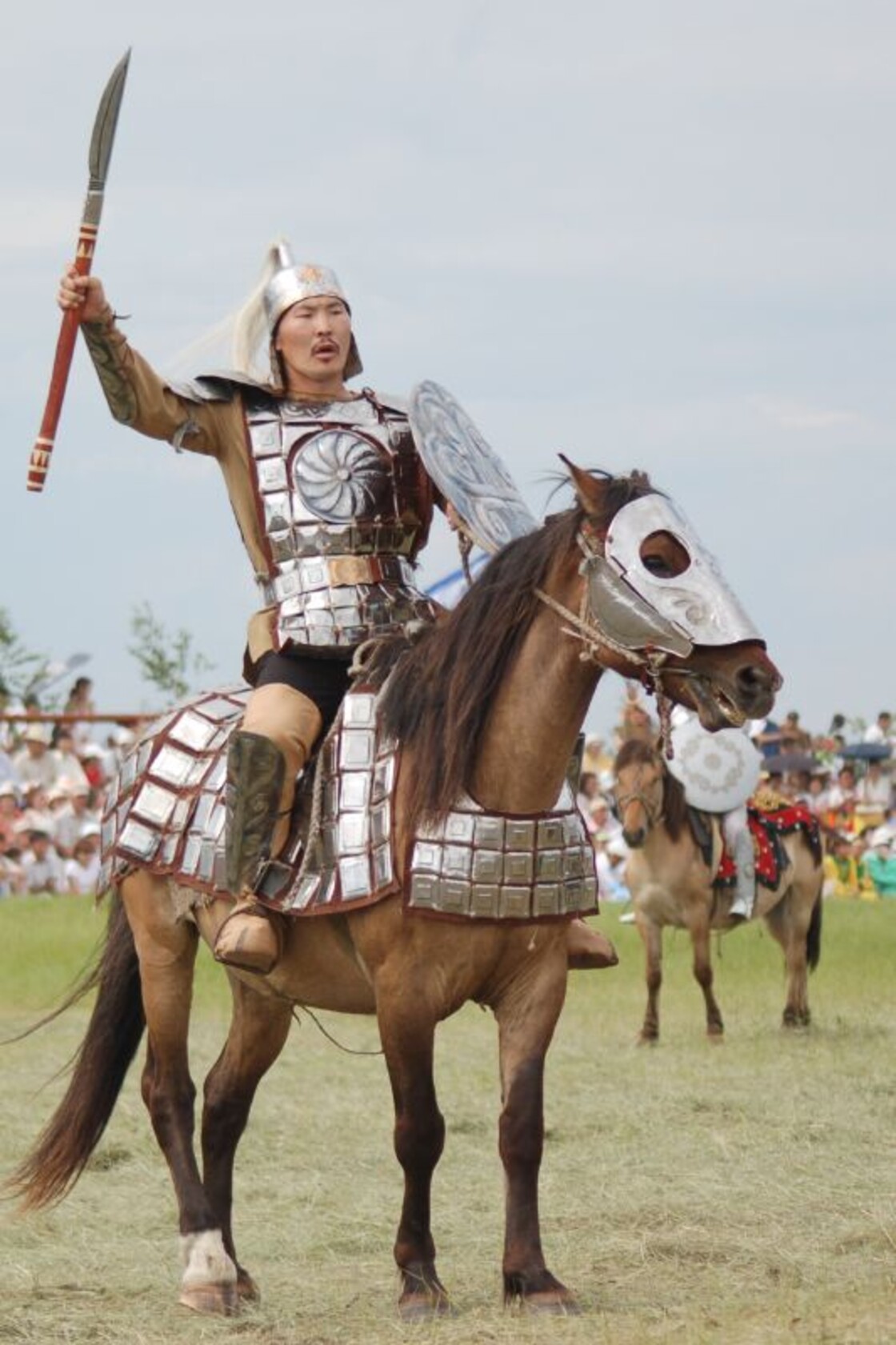
How they sound is part of the design. In performance the abaasy’s lines are delivered in a dull voice, and the character has interjections of his own, art-tatai and buiaka among them. A narrator who had learned the whole olonkho by ear could drop a listener into the Lower World with one of those words and a change of tone.
Where Do the Abaasy Live?
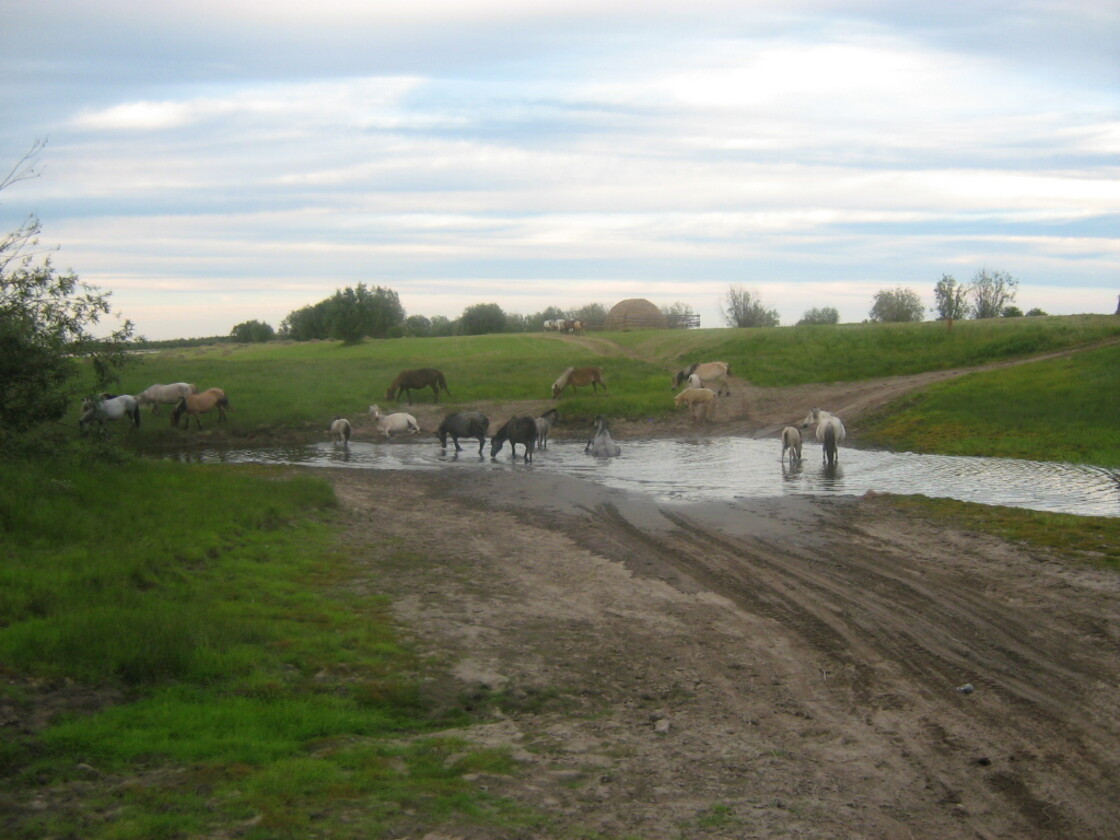
Beneath the roots of Aal Luuk Mas, the world tree, in a place the Sakha call Allaraa Doydu, the Lower World. In the epic’s geography the underworld and the north are the same direction, and the poems describe it with the real features of the Arctic: permanent cold and the polar night, with nothing growing underfoot. The journey into it is written as a descent through a body. The hero passes through the gaping gorge and the crumbling stomach of the Great Kuktui Khotun, and then through two swamps, one of them swarming with beetles the size of cattle and the other with toads the size of cows.
An 1840s record from the naturalist Alexander von Middendorf caught the older version of the same idea, and it runs the other way round. In that story the aiyy god made the earth smooth and beautiful, and the abaahy trampled and scratched it. The lakes, the rivers and the mountains are what his feet left behind. A landscape that gives people nothing to eat is, in this reading, an act of vandalism by the beings under it.
The sky is no safe place either. A 2019 study of the celestial abaasy found them at the edges of the lower tiers of the sky, in its northern, southern and western parts, under the name hallaan abaahyta. The same researchers note that one celestial abaasy is credited with a gift rather than a theft: an abaasy gave people fire. In the epic model of the world, the sky belongs to the gods and to the demons at once, and they are neighbours there.
How Do the Abaasy Work in an Olonkho?
The plot cycle is fixed, and the audience knew it before the singer opened his mouth. An abaasy raid comes up from the Lower World and takes cattle and people, most often a young woman. The hero, a champion placed in the Middle World by the aiyy, goes after them, fights them in the open or descends into their own country, and wins. Order comes back until the next raid. UNESCO describes the performance as a sung verse part alternating with spoken recitative, ten to fifteen thousand verses in a typical piece. A good singer needed the acting voice for the sung part and the improviser’s gift for filling the thing out in front of a live audience.
Fights run for hundreds of lines. But the epics keep breaking their own rule that the abaasy are the enemy, and those breaks are the most interesting thing in them. In one episode from Nurgun Botur the Swift, an iron man from the abaasy side named Kytygyras Baranchaj escapes the demon’s prison together with the hero’s younger brother, becomes his friend, and at the parting turns into a heavenly raven and flies off. In another, told to Sieroszewski from the olonkho Chaan D’argystaj, the abaasy Eksyukyulyakh Byakyustaj fights the good hero to a standstill and then makes peace with him. The two of them live together afterwards, and the poem spends real lines on the friendship: if one of them is away, the other does not eat; if one is late, the other sits up worrying.
Sieroszewski noticed what the epics were doing with the enemy’s body. The abaasy in the olonkho look foreign, he wrote, and their weapons are foreign, but the appearance is human. Some epics go further and call them nucha, Russians, or omuk, Tungus, outright. The Lower World host of the earliest layer had been given the faces of the neighbours the Sakha actually fought and traded with as they moved north.
What the Shamans Said About the Olonkho Abaasy
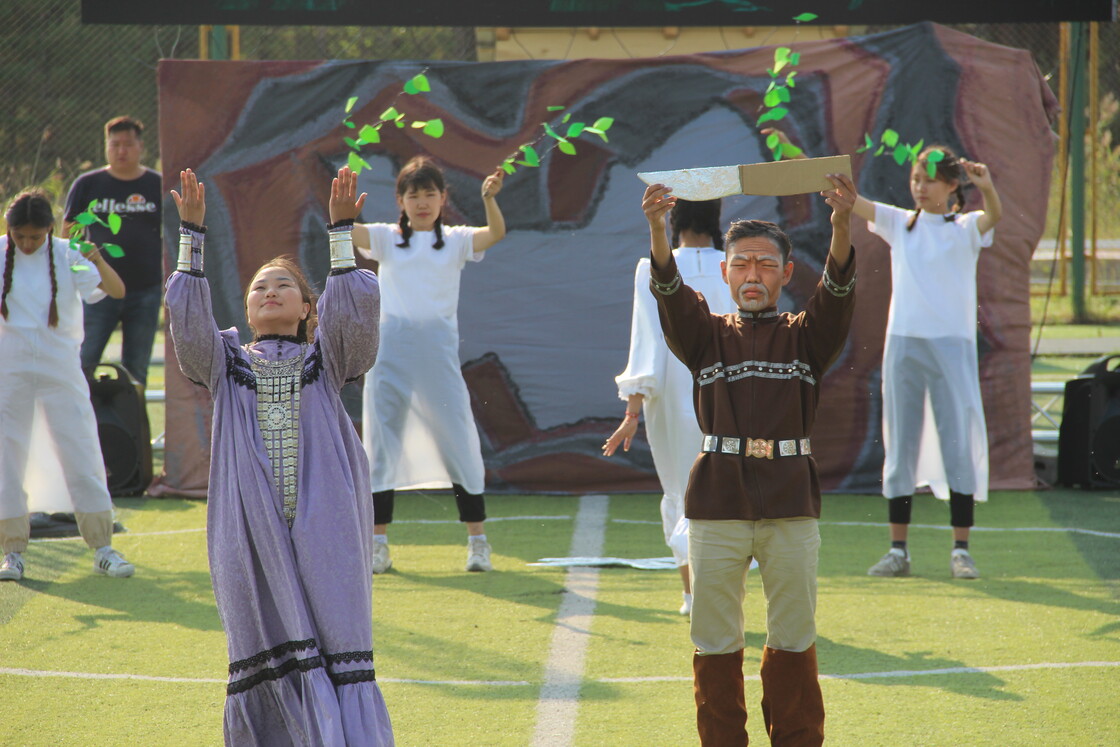
This is the part Sieroszewski’s informants insisted on, and it is worth taking at their word. The shamanic abaasy is the spirit blamed for illness and misfortune, said to swallow a person’s soul, and the oyuun who works with that kind of being is a different professional from the storyteller. The Yakut term abaahy ojuuna, abaasy shaman, names the practitioner who serves the evil spirits, and the dictionary files it under the black shamans. That is the professional whose work the Siberian kamlanie describes, and the register of the spirits he deals with is the one the Evenki tradition preserves in its own vocabulary next door. The weakest of the shamans were said to have a dog spirit, while the term for a spirit-possessed or bloodthirsty practitioner was ila abaasy.
The epic abaasy is a soldier. He has a body, armour, a name and a family, and his motives are the motives of a raiding neighbour. Sieroszewski’s warning was that reading one register into the other produces the same mistake as putting the Russian bogatyrs into the Slavic pantheon between Marica and Lel-Polel: a tidy list that gets everything wrong. Modern scholarship agrees with him without meaning to. The most recent study of the epic enemy describes the image as syncretic, with the ideas of natural force and of a hostile tribe still not separated out from each other in the text.
Later in the tradition the separation finishes by itself. As the Sakha settled in the north, the monster-antagonist of the epic gave way to a human one, and the Tungus hero took over the role. He is still exaggerated and still a rival for a bride, and by the end of the process he has become a comic figure. The iron Cyclops with the face on the back of his head did not evolve into anything. He stayed where the oldest recordings had put him, in the Lower World, at the top of the epic’s list of things a hero has to go down and meet.
One more proposal belongs on the table, and it belongs there marked as a proposal. A 2018 paper by three Yakut scholars connects the images of abaahy and the Turkic albasty to the anatomy and genetics of Neanderthals and Denisovans, and suggests that the folklore preserves a very old memory of encounters with archaic humans. Two things argue for keeping it at arm’s length. The etymology of the word is not settled, and the same word does ordinary work in modern Yakut for a deformed calf and a person you cannot stand. A word can carry a demon and a birth defect at the same time without either of them being a fossil. The general version of that argument, that a visible genetic difference can push a person into the spirit category, has been gathered from many cultures and is laid out in the pale ones.
The word outlived the old performance circles: the Yhyakh festival gathers crowds every June, while the number of epic tellers stays low. Modern Yakut retains both colloquial registers: an abaasy can denote a misshapen calf or a person nobody can stand.