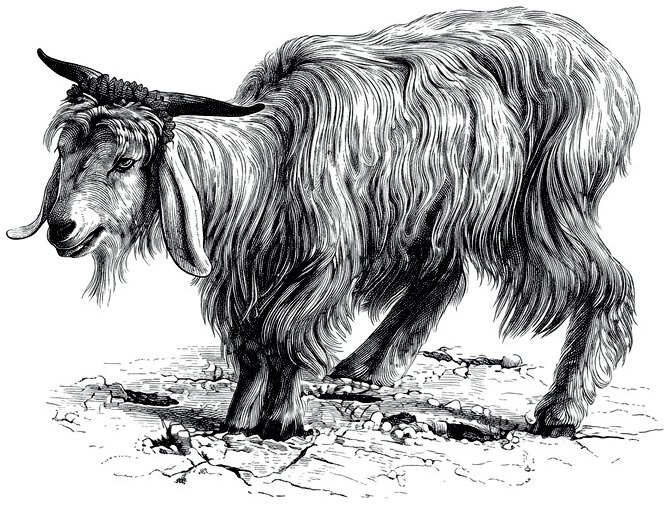
On Yom Kippur, the holiest day of the Jewish year, the priests sent a live goat into the desert. The goat carried the sins of the people away with it. The ritual comes from chapter 16 of Leviticus.
The usual explanation runs like this. Sins that people committed by accident could be cleaned away at the altar. Sins done on purpose could not. They had to leave, and the goat took them out into the wilderness, far from the place where God was present.
The Bible sends the goat away and stops there. The famous scene, with the goat pushed backwards off a rock twelve miles out, comes from a later book of law, written down more than a century after the Temple fell.
Why Was the Scapegoat Sent Into the Desert on Yom Kippur?
Leviticus 16 goes through the ritual step by step. Two male goats are brought to the entrance of the holy tent. Aaron, the high priest, draws lots over them. One lot is for God, written YHWH in Hebrew. The other lot is for Azazel, a being or a place out in the desert. What the name means is still unknown.
The goat chosen for God is killed at the altar. Its blood is carried behind the curtain, into the holiest part of the tent. The other goat stays alive, and verse 10 gives the reason: to make atonement over him, to send him away for Azazel into the wilderness.
The sending happens in verse 21. Aaron lays both hands on the goat’s head. Over it he confesses everything the people did wrong that year. Then a man chosen for the job leads the goat away. It goes to eretz gezerah, a land that is cut off.
Verse 26 has a small detail. The man who let the goat go had to wash his clothes and bathe before he could come back into the camp. It is as if the job came home with him.
Why did the goat have to leave instead of dying? The most common answer goes like this. The offerings at the altar dealt with impurity and with sins nobody meant to commit. Sins done on purpose were different. They could not be cleaned away at the altar, so they had to be carried out, away from God’s presence. The goat did the carrying.
The idea is older than Israel. Similar rituals are known from Mesopotamia and Anatolia. Across the ancient Near East, people carried guilt out of their towns in this way.
The Hebrew verb in these verses is shalach. It means to send, or to let go. No verse has a height or a fall.
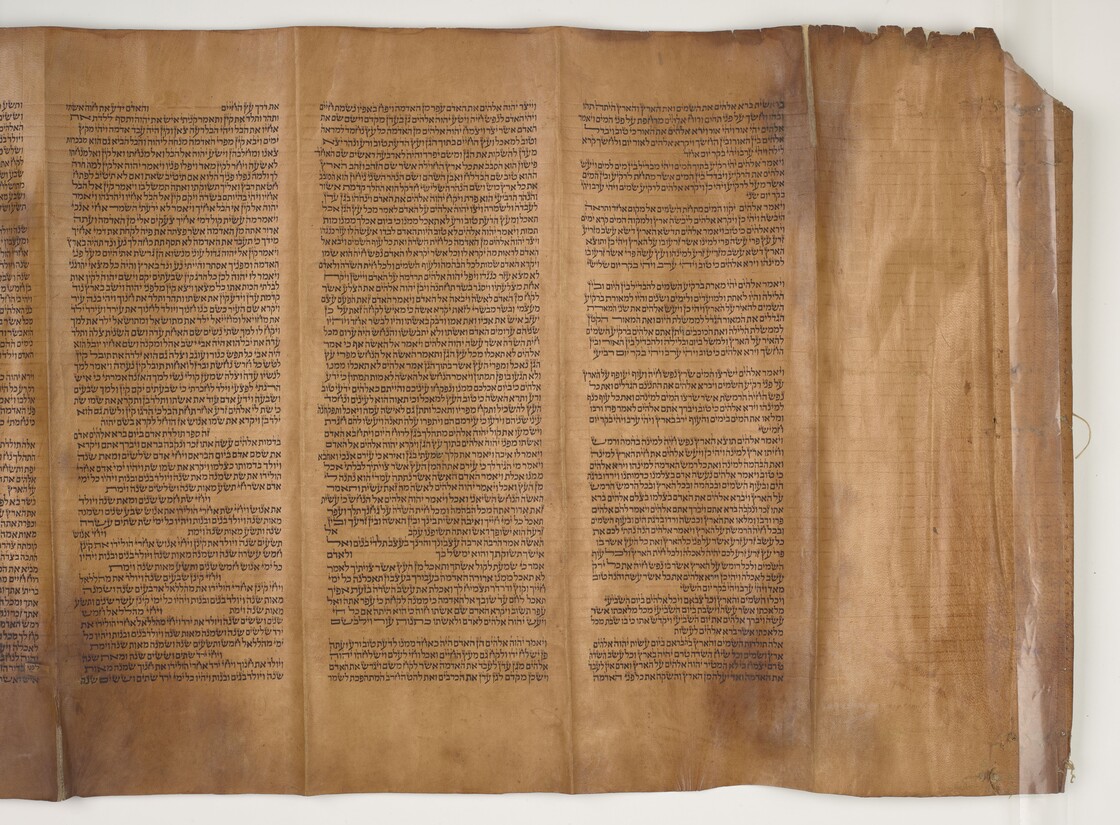
The word “scapegoat” is the King James Bible’s rendering of the Hebrew עֲזָאזֵל in Leviticus 16. Tyndale coined it in his 1530 Pentateuch from scape, a shortening of escape, plus goat. The Latin Vulgate had already called the animal caper emissarius, the goat that is sent out.
Who or What Is Azazel?
The name Azazel appears only in Leviticus 16, four times in three verses, and nowhere else in the Hebrew Bible.
The text puts the two lots side by side: one goat for YHWH, one goat for Azazel. That pairing makes Azazel look like a being, a counterpart to God. The grammar allows other readings, though. The wording shifts between the verses, and in some of them it may simply mean “this goat is for YHWH, that one is for Azazel”, with no person in mind. The question stays open.
Nobody knows what the word means, either. Scholars have tried roots from four old languages, with meanings from “to be angry” to “God is strong”. One theory even builds it from the name of the Egyptian god Set. The simplest reading splits it into two Hebrew words, “goat” and “go away”: the goat that goes away. That is the reading behind the English word scapegoat.
Some medieval Jewish scholars took Azazel for a place instead, a stretch of rough ground in the desert. Every one of these ideas has its problems, and none has won. A satisfactory explanation is still outstanding.
The chapter itself has layers. Its oldest part is the plain removal rite in verses 20 to 22: hands on the goat, the confession, the sending into the desert. Azazel is missing from that part. The name arrives with the drawing of lots, which sets Azazel opposite God. A later addition joins the two parts. Only then does Azazel become someone who lives in the wilderness.
So the Azazel of Leviticus has no power and no character of his own. He is there only as God’s opposite. Other traces of that older religious world survive in the Hebrew Bible, and Asherah is the best documented of them.
Later tradition turned the name into a person. Some rabbis linked it with the fallen angels of Genesis 6. Others made Azazel another name for Satan. One medieval collection has him leading people into sin, and that is why the sins go back to him on the Day of Atonement. In Arabic, ʿAzāzīl became a name for Iblis, the devil of Islamic tradition.
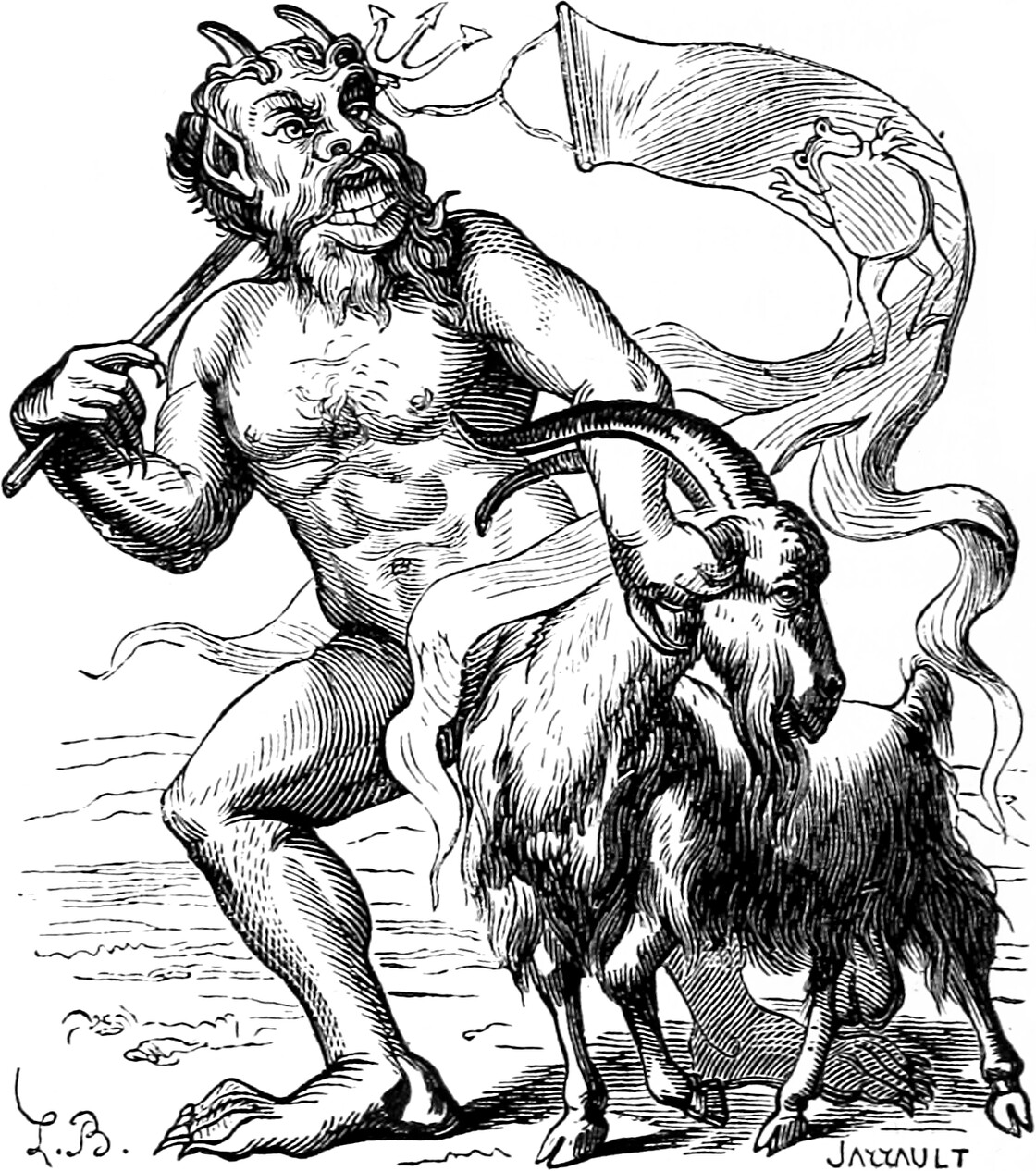
By the nineteenth century Azazel had become a horned demon with goat’s legs. A famous French dictionary of demons shows him with a goat across his shoulders and a banner on a staff. It is the picture most readers know today, and the one Leviticus supports least.
Why Did the Goat Have to Stay Alive?
In the twelfth century the Jewish scholar Abraham ibn Ezra gave two answers: a rule and a riddle.
The rule is simple. The goat that is sent away is never slaughtered, so it is not an offering. No blood, no altar. That means the goat can be sent to a being without the rite turning into worship of that being.
The riddle is about the secret of the name. In his note on Leviticus 16:8, ibn Ezra hints at a secret, then leaves a clue: when you are 33, you will know.
Another great commentator, Nahmanides, read the 33 as verses, not years. Count 33 verses on from where the name first appears, and you land on a verse that bans sacrifices to the se’irim, the goat-demons of the open field. In Hebrew, the word for goat and the word for goat-demon share a root. Another commentator, Joseph Bonfils, counted the same way and reached the same verse.
The count is right: 26 verses to the end of chapter 16, then 7 more. And the clue gives a reason why the goat left alive. A slaughtered goat would look like an offering. The one thing this rite must never look like is a gift to the goat-demons. So the goat was walked out and let go.
Maimonides, the great Jewish philosopher, came a generation later and did not believe in demons. He read the ritual as a symbol. For him the goat served as an atonement for all serious transgressions more than any other sin-offering of the congregation. Because it seemed to carry off all the sins, it was removed as far as possible, and sent forth into a waste, uncultivated, uninhabited land.
Then, plainly: There is no doubt that sins cannot be carried like a burden, and taken off the shoulder of one being to be laid on that of another being. For Maimonides the ceremony works on the people watching it. Repentance does the work. The goat is only the picture.
Mishnah Yoma 6:1 requires the two goats to match. They had to be alike in colour, height and price and bought together, so that nothing but the lot decided which one died and which one walked. Ramban read the lot the same way: with God named as the sender, nobody could claim the people had chosen to make a gift of the goat to Azazel.
Who Pushed the Goat Off the Cliff, and When Did That Start?
The cliff comes from the Mishnah, the first great book of Jewish law, in its tractate Yoma, chapter 6. It covers the practical side of the day, which Leviticus leaves out.
It starts with the two goats. They had to match in colour, size and price. The goat for Azazel was handed to a man who would lead it out. Any Israelite could do this job, but the high priests would not let an ordinary Israelite do it. Rabbi Jose remembered one who did it anyway, a man named Arsala of Zippori.
Ten booths stood along the road between Jerusalem and the rock. At each one the man was offered food and water. Part of the way ran on a raised walkway, for a simple reason. Jews from Babylonia used to pull at the goat’s hair and shout at it: “Take it and go, take it and go.”
At the rock the man divided a strip of red wool. Half went onto the stone, half between the goat’s horns. The reason is practical. If all the wool were on the horns, the goat might lower its head and rub it off. If it were all on the rock, the man might start celebrating before the job was done.
Then he pushed the goat backwards over the edge. It came apart limb from limb before it was halfway down.
Back at the Temple, the high priest waited for news. Men stood along the route and waved cloths, passing the signal back to Jerusalem. Rabbi Judah thought the signals were not needed. The edge of the wilderness, at Bet Chiddudo, lay three miles out, and in Jerusalem they could simply count the time the walk took.
The Mishnah puts the rock itself twelve miles from Jerusalem. The rabbis of the Talmud disagreed on the details: their counts run from five to ten booths, and from ten to twelve miles.
Nothing in the Bible matches either place. A German online Bible encyclopedia sums it up: the Bible gives no basis for the fall, because it has no fall. In the Torah the goat is simply let go in the wilderness. The Mishnah shows what the rite had become by the time the rabbis wrote it down.
How Does the Azazel Ritual Connect to the Book of Enoch and the Fallen Angels?
The Book of Enoch tells a very different story about Azazel. Its first part, the Book of the Watchers, was written by the second century BCE. There Azazel is one of the leaders of the angels who came down to Mount Hermon. He taught people to work metal and to make weapons, jewellery and eye-paint.
The archangel Raphael is ordered to punish him. Bind him hand and foot, throw him into darkness, open a hole in the desert at Dudael, and cover him with jagged rocks until the great judgment. One line from the passage keeps the comparison with Leviticus alive: and the whole earth has been corrupted by the works that were taught by Azazel; to him ascribe all sin.
The full story of these angels is in The Book of Enoch: The Angels Who Taught Too Much.
The parallels with Leviticus are easy to see. The angel’s name in the Aramaic fragments, Asael, looks like Azazel. His punishment happens in the desert. Sin is laid on him, and the land is healed afterwards. One scholar put it simply: the angel and the goat are treated alike, in where, how, when and why.
Even the place names are close. Dudael in Enoch sounds like Bet Charuda or Bet Hadudo, the names the rabbis give the ravine. Several scholars suspect a common origin.
What the parallels cannot show is which came first. The oldest Aramaic copies do not agree with each other. The Ethiopic text binds Semyaza, another leader of the angels, in one passage and Azazel in another. Yom Kippur has no place in Enoch. And in Leviticus, the name Azazel probably came late to a ritual that is older than the name. Whether the rite borrowed from the story or the story from the rite, the surviving evidence does not say.
1 Enoch binds two leaders separately. Semyaza is imprisoned in one passage and Azazel in another, with different punishments for each, and the book never mentions Yom Kippur. The link between the fallen angel and the Day of Atonement is a conclusion drawn by modern scholarship from the two texts, not a claim either text makes.
In 1950 a German scholar tried to settle the question with an object. An ivory plaque found at Megiddo, an ancient city in northern Israel, shows a winged sphinx with a human face above a goat. He said it showed the desert demon Azazel bringing down a ram. That would make the name older than both texts.
Other experts looked again and saw a different scene: a god or a mother animal defending its young from an attacker. One of them had once liked the demon idea. He later found nothing in the carving that marks the sphinx as a demon. The encyclopedia entry is flat: the ivory has nothing to do with a desert demon.
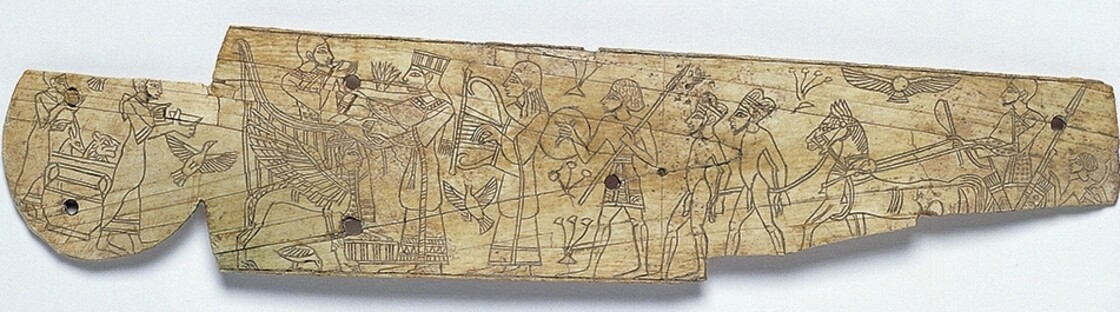
Current scholarship no longer treats the Megiddo plaque as a picture of Azazel. What remains is the link between the two texts, and a name that Leviticus leaves unexplained.
Did the Ritual Work?
The Mishnah gives Yom Kippur a test. A strip of red wool was tied to the Temple gate as well as to the goat. When the thread on the gate turned white, the day’s atonement had been accepted. The idea comes from Isaiah 1:18: though your sins be as scarlet, they shall be as white as snow.
In the old tradition, the thread turned white at once in the days of Simon the Just, a high priest of the old Temple. Then it stopped.
The Talmud gives the date in one sentence, in tractate Yoma 39b. For forty years before the Second Temple was destroyed, the lot for God no longer came up in the high priest’s right hand. And the red strip on the goat for Azazel no longer turned white. The Temple fell in the year 70, so the change came around the year 30. The tradition keeps the date on which its own sign stopped working. The destruction is still mourned every year on Tisha B’Av.
Maimonides, who never took Azazel for a demon, did not need the thread. For him the day worked through the repentance it produced in the people watching.
The same tractate shows what the rabbis thought about asking why at all. Leviticus 16:22 sends the goat to eretz gezerah, a land cut off. In Yoma 67b the rabbis hear in that rare word the root of gezartiv, “I have decreed”. They list the scapegoat among the laws whose reason is not given, next to the ban on pork and on mixed cloth. God says: it is a decree before me, and you have no right to question it.