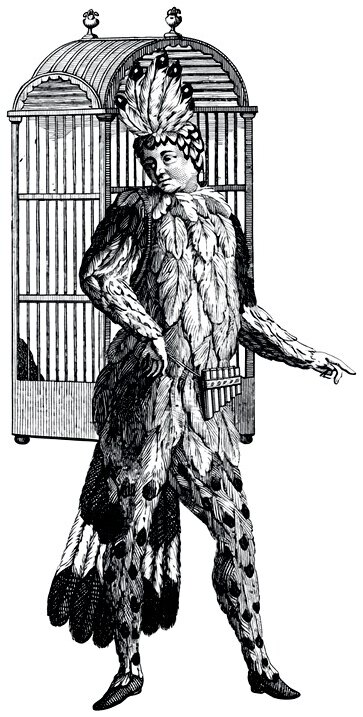
Is The Magic Flute a Masonic opera? The short answer is yes, with two qualifications. Mozart and his librettist Emanuel Schikaneder were both Freemasons, and the opera walks its hero through a ritual built from the lodge’s own vocabulary: silence, trial, light, and a brotherhood of virtuous men. The first qualification is that the libretto never names Freemasonry. The second is that the label “Masonic opera” was applied later, by critics and scholars, and some of what they read as lodge code turns out to be ordinary fairy-tale furniture.
Both things are true at once, and the gap between them is where the opera actually lives.
The story begins in the last year of Mozart’s life, at a suburban theater that made its money from spectacle.
The Magic Flute’s Freemason Symbolism Begins With Two Lodge Brothers
Mozart joined the Viennese lodge Zur Wohltätigkeit (“Beneficence”) on December 14, 1784. The lodge’s circular of December 5 announced the coming initiation of “Kapellmeister Mozart,” and the museum of Austrian Freemasonry still shows a copy. He took the second degree, Fellow Craft, on January 7, 1785, in the sister lodge Zur wahren Eintracht (“True Concord”), and reached the third degree, Master Mason, in the months that followed. His father Leopold followed him into the craft during a visit to Vienna in April 1785, initiated in the same lodge as his son.
Vienna’s lodges in those years were a laboratory of Enlightenment reform under Emperor Joseph II. That changed in December 1785, when Joseph issued a Masonic patent that cut the city’s eight lodges down to three and demanded membership lists from all of them. Mozart’s lodge was folded into a larger one, Zur neugekrönten Hoffnung (“Newly Crowned Hope”). The age of open enthusiasm was ending. By the time of the opera’s premiere in 1791, under Joseph’s successor Leopold II, Freemasonry in Vienna was a movement on the defensive.
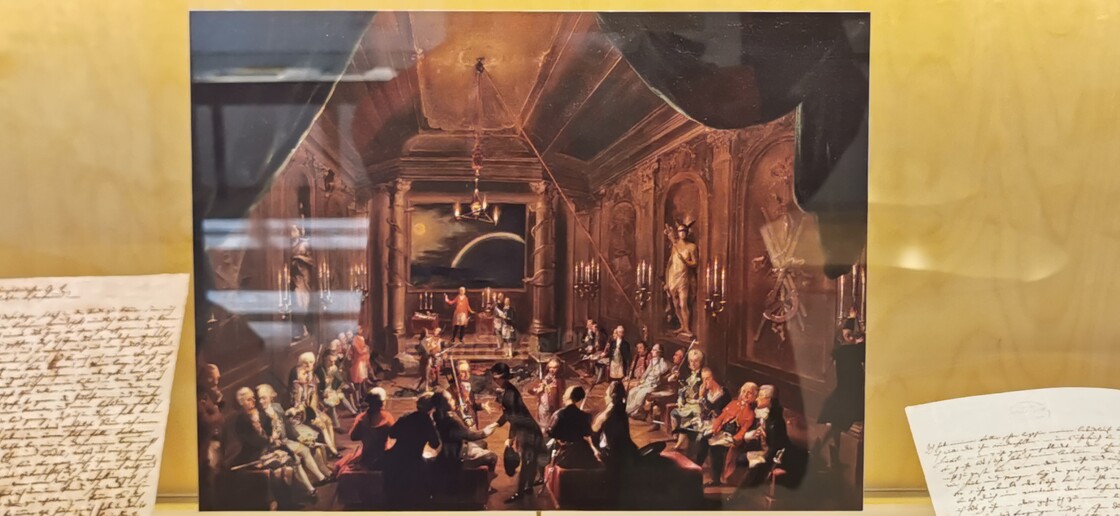
Schikaneder, the man who wrote the libretto and played the bird-catcher Papageno at the premiere, was a Freemason too. He filed his petition for admission in Regensburg in July 1788 and was initiated there, and in Vienna he moved in the same lodge circles as Mozart. His theater, the Freihaus-Theater auf der Wieden, sat outside the inner city and made its living from machine plays and fairy-tale operas, shows built on stage effects and spectacle. The Magic Flute was his project from the start: he wrote the libretto for his own stage and sang the comic lead himself at the premiere.
Mozart had been writing music for his lodge brothers for years. A song from 1785, Gesellenreise (K. 468), follows a candidate on his journey to the second degree. The Maurerische Trauermusik (K. 477) mourned two brothers who died that year, and the cantata Die Maurerfreude (K. 471) honored Ignaz von Born, the most powerful figure in Viennese Freemasonry and the editor of its journal. He was still writing lodge music at the end: his last completed work, a small cantata for the consecration of a new lodge temple, dates from November 1791. The man who wrote The Magic Flute had spent seven years inside the institution whose imagery the opera uses.
The house already keeps a longer account of where the craft came from and how much of its own history the lodge misremembers, in The Freemason Origin Myth: What the Lodge Won’t Tell You. The emblem that hung in every lodge room, the Square and Compasses with the G for God or Geometry, is in the bestiary.
A Fairy Tale With an Egyptian Basement
On the surface the libretto is a fairy tale. Its best-known source is the story “Lulu oder die Zauberflöte” by August Jacob Liebeskind, printed in Christoph Martin Wieland’s collection Dschinnistan in the 1780s. In that tale a prince rescues a princess from a wicked sorcerer with the help of a magic flute. Schikaneder’s version keeps the flute, the prince, and the rescue, then turns the story upside down halfway through: the grieving mother who sends Tamino to save Pamina turns out to be the deceiver, and the sorcerer who holds Pamina is revealed as a wise high priest who took her in on her dead father’s orders.
That reversal is where the Masonic reading begins. The Queen of the Night tells Pamina how her father gave the “sevenfold sun circle” to the initiates before he died, a badge Sarastro now wears on his breast. With his death her own power went to the grave, she says; his last instruction was that she place herself and her daughter under the guidance of wise men. It is a fairy tale that has absorbed the values of an Enlightenment secret society. The daylight world runs on reason and friendship, and the night belongs to the Queen.
The libretto’s printed stage directions call for a “threefold chord” and for the priests to blow three blasts on their horns. The triple signal marked solemn moments in lodge ceremony, and the opera sounds it at the same kind of moment.
Underneath the Egyptian decor lay a real body of Masonic writing. Ignaz von Born’s Journal für Freymaurer published an essay in 1784 “On the Mysteries of the Egyptians” that described the ancient priests as the ancestors of the lodge: men who fought ignorance in silence and led the candidate through trials toward the light. The essay drew on a widely read novel, the Abbé Terrasson’s Sethos (1731), in which a prince is initiated into the Egyptian mysteries; many Masons took Terrasson’s invention for genuine history. When Schikaneder and Mozart dressed their initiation in pyramids and invoked the gods Isis and Osiris, they were using the visual language of the Vienna lodge rooms, where Egypt already stood for the craft itself.
For the older story of the goddess the initiates prayed to, see Isis: The Enduring Power of an Ancient Goddess.
The Initiation on Stage, Scene by Scene
The opera maps onto a lodge ceremony more directly than most summaries admit.
The overture opens with three chords. Commentators read them as the three knocks a candidate strikes on the lodge door, and the reading fits what happens on stage: the number three governs the whole design. Even the opera’s key, E-flat major, carries three flats, which some writers identify as a Masonic tonality. An audience could feel the pattern even when it could not name it.
When Tamino reaches Sarastro’s temple district, he finds three temples: the temple of Wisdom in the center, with the temple of Reason on one side and the temple of Nature on the other. He tries two doors, and each time a voice from inside calls “Zurück!” At the third door an old priest comes out and meets him with a challenge: Sarastro rules here in the temple of Wisdom, and the hatred the prince has brought has no proof behind it. In the second act the priests assemble around Sarastro, who presents the candidate: a prince who wants to tear the “nightly veil” from himself and look into the sanctuary of the greatest light. The priests ask three questions, about virtue, about discretion, and about charity, and Sarastro answers yes to each. When a priest objects that Tamino is a prince, Sarastro answers with the opera’s most quoted line: “More than that, he is a human being.”
Tamino’s answer when the priests ask what drives him into their walls is “friendship and love.” The same words fill the answers eighteenth-century candidates gave when the lodge asked what they were seeking.
The trials that follow are the trials of the lodge. Tamino and Papageno are ordered to keep silent. Papageno chatters within minutes and nearly pays for it. Tamino holds the vow, and when Pamina finds him and he cannot answer her, she sings the opera’s most painful aria, believing he no longer loves her. The trial of silence costs the woman more than it costs the man, which is one reason modern productions keep rediscovering the opera’s discomfort.
Fire and water make up the last trial. Two men in black armor lead Tamino to a gate between two mountains, one spitting fire and one pouring water. On their helmets flames burn, and they read aloud an inscription written on a pyramid: the one who walks this road of hardship is purified through fire, water, air, and earth, and if he can overcome the fear of death, he will rise from earth to heaven, fit to devote himself wholly to the mysteries of Isis. Pamina comes to him, takes his hand, and walks through both elements at his side. The chorus that closes the opera hands the victory to the sun: “Die Strahlen der Sonne vertreiben die Nacht” (“The rays of the sun drive out the night”).
Carried in the open, the ritual content is the plot. What scholars argue about is how far the pattern runs and whether it runs all the way down.
The Number Three Is Doing Real Work
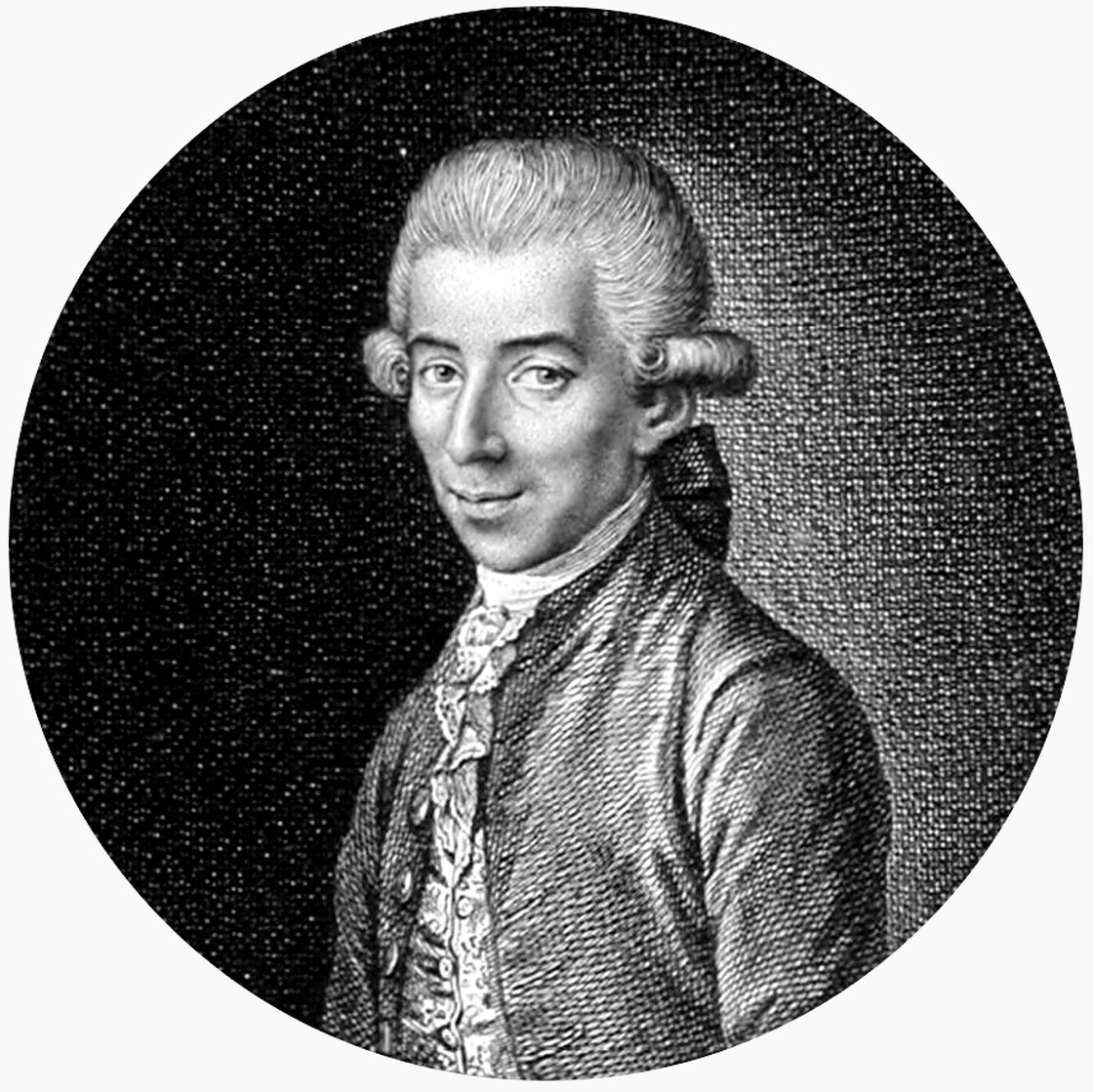
A skeptic could object that fairy tales love threes without any help from Freemasonry. Three brothers, three tasks, three days, three wishes: the pattern is older than any lodge. What makes the threes in The Magic Flute worth attention is that they coincide with a documented Masonic milieu and with the opera’s own stage directions, which call for a threefold chord at the very moment the priests accept a candidate.
Count them in the score and they pile up fast. The overture’s opening chords return at solemn turning points. The cast brings three ladies and three boys, the stage plan sets three temples side by side, and the questions the priests put to Tamino number three. The libretto prints the direction “(the threefold chord is repeated)” at the moment Sarastro wins the priests’ consent, and the same scene orders three blasts on the horns. This is the text itself instructing the orchestra to sound the signal three times, in a work written by two members of a society that signaled in threes.
Whether E-flat major counts as a “Masonic key” is a softer claim. The overture and several of Sarastro’s numbers sit in keys with three flats, and the three-flat signature is easy to map onto the number that dominates the opera. Eighteenth-century composers did use flat keys for solemn and sacred music, so the choice may be ordinary craft rather than cipher. Both readings can sit on the page; the music does not resolve the argument.
For the wider tradition of number-thinking in music, the house essay The Philosophy of Music: Number, Myth, and the Song of the World follows the same thread from Pythagoras onward.
Is The Magic Flute a Masonic Opera? The Fight Over the Label
The fullest allegorical reading belongs to the French musicologist Jacques Chailley, whose La Flûte enchantée: opéra maçonnique (1968) reads the opera as a coherent depiction of Masonic initiation. Chailley argued that Pamina’s passage through the fire and water beside Tamino proclaims the redemption of woman and her rise to equality with man, a claim that gives the opera’s gender politics their most generous possible frame.
David J. Buch raised the sharpest objection in 2004. The label is a modern one, he argued, and many supposedly Masonic motifs, the threes and the Egyptian trim included, show up in the fairy-tale operas Schikaneder produced before The Magic Flute, where no Masonic meaning is in play. Buch did not deny that real Masonic elements are present. He argued that the opera is also a commercial fairy-tale Singspiel, and that the search for a single hidden system flattens it.
Paul E. Kerry, writing in BYU Studies in 2004, took a middle path. He compared the libretto’s themes and language with key Masonic texts and found the parallels substantial, but he also noted that many Masonic ideals of the period were Enlightenment ideals first, and that the opera gives no clear answer about what the mysteries of Isis actually are. Evidence exists for several readings, he concluded. The audience is initiated by watching, whether or not any single code unlocks the whole.
That is the honest position, and it is the interesting one. The Magic Flute does not need to be a secret ritual handbook to be full of Freemasonry. It was written by two members of the craft, for a public that knew the craft was in trouble, and it used the lodge’s imagery the way any artist uses the world he lives in: as material. The material is everywhere in the opera. The meaning was never as tidy as the allegory-hunters hoped.
The Premiere and the Run That Outlived Its Composer
The premiere on September 30, 1791, was not the instant triumph of later legend. The opera built its following over the first weeks, and within a week Mozart was writing home about full houses and encores. He told Constanze, who was taking the waters in Baden, that he had come home from the opera to find the theater “as full as ever,” with the duet “Mann und Weib” between Pamina and Papageno, the glockenspiel song in the first act, and the boys’ trio in the second all encored. What pleased him most, he wrote, was the audience’s silent applause, the stiller Beifall that showed him how the opera was climbing.
One night during the run he could not resist the stage. He went behind the scenes during Papageno’s glockenspiel aria and played the instrument himself for fun. Schikaneder, who was singing Papageno and whose prop bells were actually played by a musician in the wings, heard an arpeggio at the wrong moment. He looked round, saw Mozart, and refused to go on. Mozart played another chord. Schikaneder struck his prop bells and shouted “Halt’s Maul!”, which means shut your mouth, and the audience roared. Mozart told the story to Constanze the same night, delighted that the prank had worked.
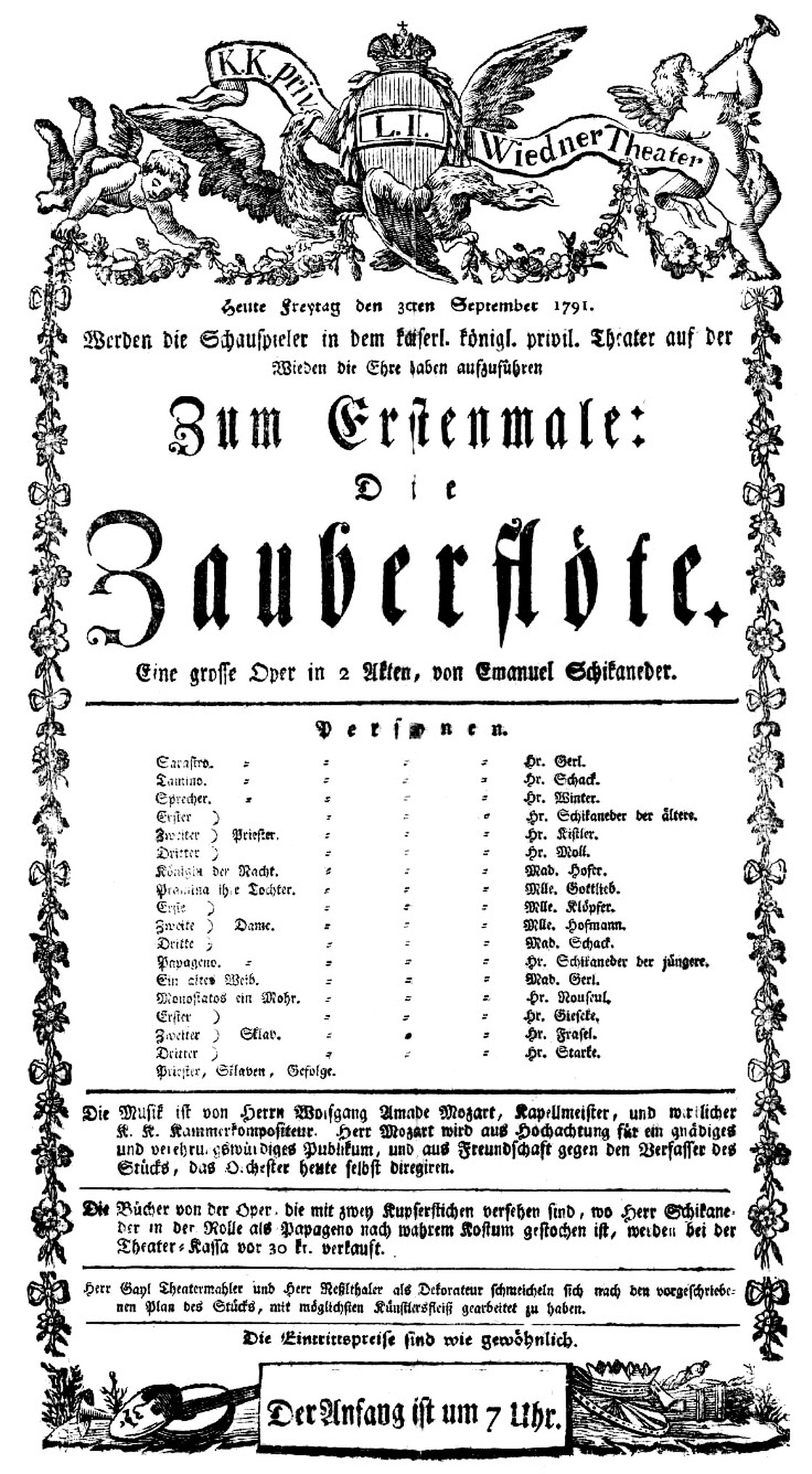
Two weeks into the run, Mozart took Antonio Salieri and the soprano Caterina Cavalieri to a performance. Salieri, his supposed rival, listened from the overture to the last chorus and praised every number, calling the work an operone, a great opera, worthy of the grandest festival. Whatever their professional history, Salieri’s verdict that night was generous.
The Queen of the Night’s coloratura arias were written for Josepha Hofer, Mozart’s sister-in-law, and she sang them at the premiere. The role included the vengeance aria “Der Hölle Rache kocht in meinem Herzen” (“Hell’s vengeance boils in my heart”), demanding exceptional coloratura agility from his sister-in-law.
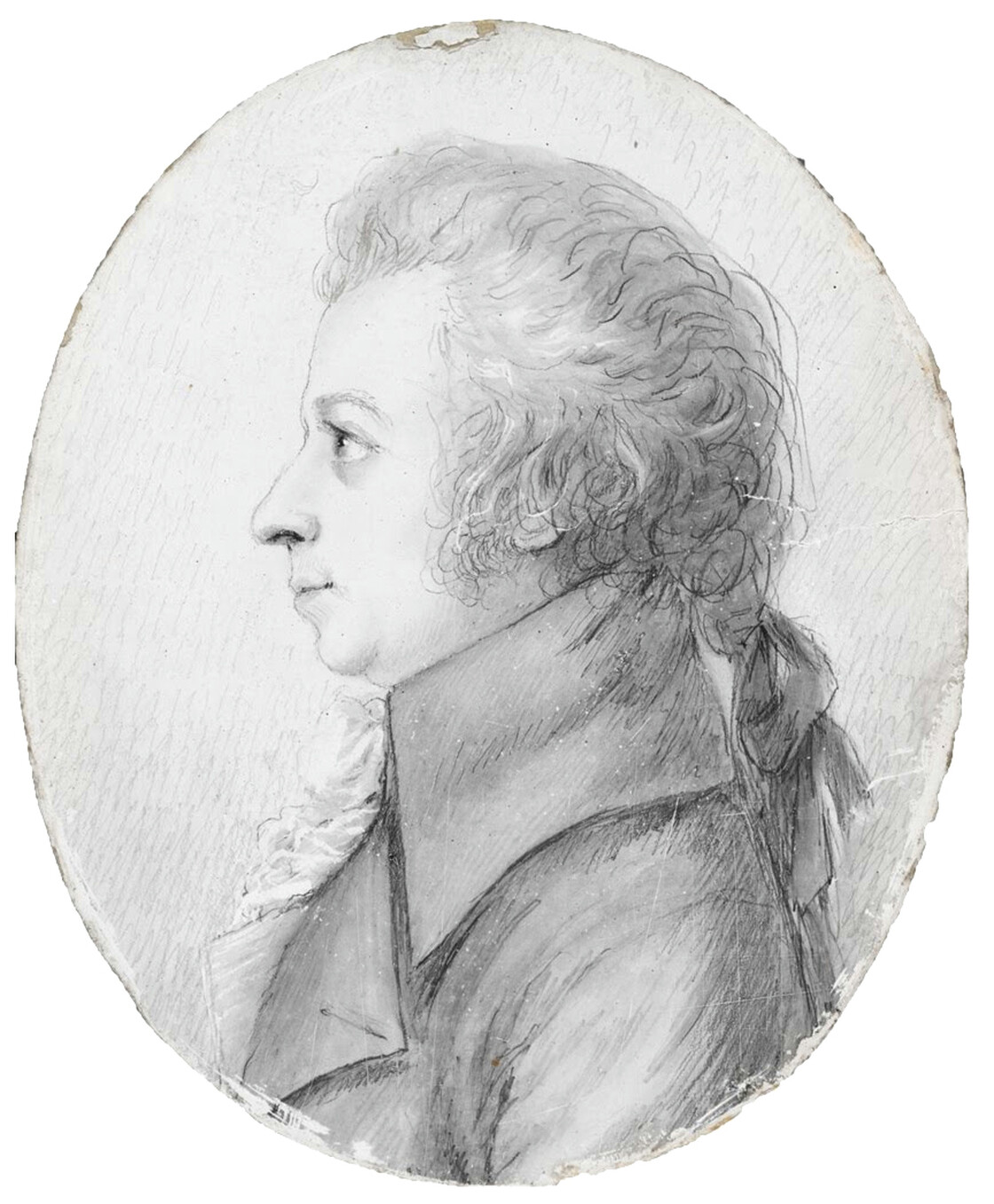
Mozart did not live to see the opera’s later triumph. He died on December 5, 1791, at thirty-five, leaving the Requiem unfinished. His last completed work, entered in his own catalogue, was the little Masonic cantata Laut verkünde unsre Freude (K. 623), written for the consecration of a new lodge temple and conducted by Mozart himself in November 1791. The man who had joined the craft in 1784 closed his working life inside it, and The Magic Flute, the work that outlived him, was the one in which the craft and the fairy tale finally became the same thing.
The printed libretto of 1791 accompanied its text with a copper engraving of Schikaneder in feathers, carrying his birdcage. It is Schikaneder, the lodge brother who wrote the opera and sang the bird-catcher at the premiere. On the final page the chorus tells the sun to drive out the night, and strength crowns beauty and wisdom with an eternal crown. The theater on the Wieden kept the production in its repertory, carrying both the fairy tale and its lodge signals before audiences that had never set foot in a temple.