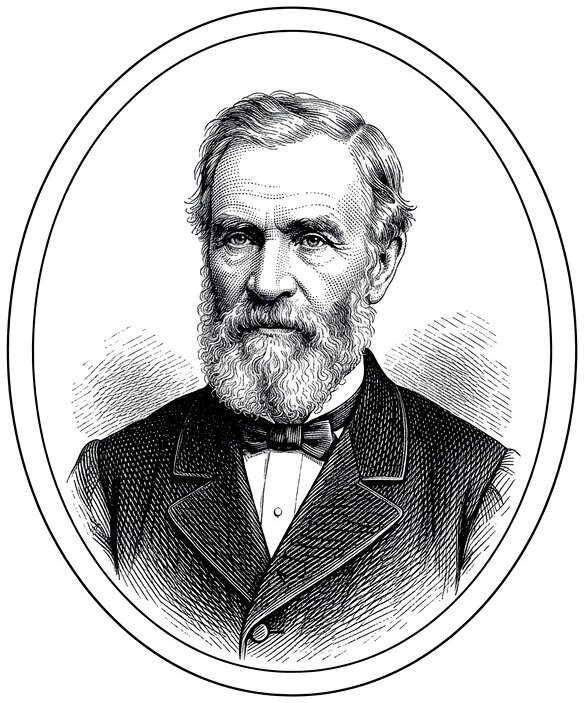
On the evening of 4 January 1893, in a house in Lyon, a former priest of 68 was at prayer with his household when he said “What is that?” and sank to the floor. He was dead in barely two minutes. Five days later a Paris journalist suggested in print that rival occultists had killed him by magic, and by April the quarrel had led to a pistol duel and a sword fight.
The dead man was Joseph-Antoine Boullan. Two years earlier the novelist J.-K. Huysmans had put him into Là-bas (“Down There”), a novel about devil worship in his own day, as its hero: Dr. Johannès, a kindly priest in Lyon who breaks curses at a home-made altar. The novel took Boullan’s life story and his rite, while its villain and its black mass, a mock Mass said for the Devil, came from somewhere else.
Joseph-Antoine Boullan and Là-bas: who was the real Dr. Johannès?
Boullan was born in 1824 and became a priest with a doctorate in theology. In 1856 he became spiritual guide to a nun, Adèle Chevalier, who believed the Virgin Mary had cured her blindness. Three years later the two founded a small religious house near Paris, where the members prayed and suffered to make up for the sins of others.
Inside the house Boullan treated nuns for illnesses he blamed on the Devil, and his cures included his own spit and urine. A court sentenced him and Chevalier to three years in prison for fraud, and he served his term in Rouen until 1864.
His break with the Church came over a cure. Boullan had treated an epileptic woman with a holy relic, the robe kept at Argenteuil, and in 1875 the Archbishop of Paris barred him from acting as a priest. Boullan left the Church for good.
He went over to the followers of Eugène Vintras, a self-made prophet whose communion wafers, the hosts of the Mass, bled, or so his followers believed. When Vintras died in December 1875, Boullan named himself the new leader, though most of the sect refused him. He settled in Lyon in an architect’s house, together with a seer, Julie Thibault, and there he fought curses with a ceremony from Vintras’s church called the Sacrifice of Glory of Melchisedek.
What did Huysmans take from Boullan?
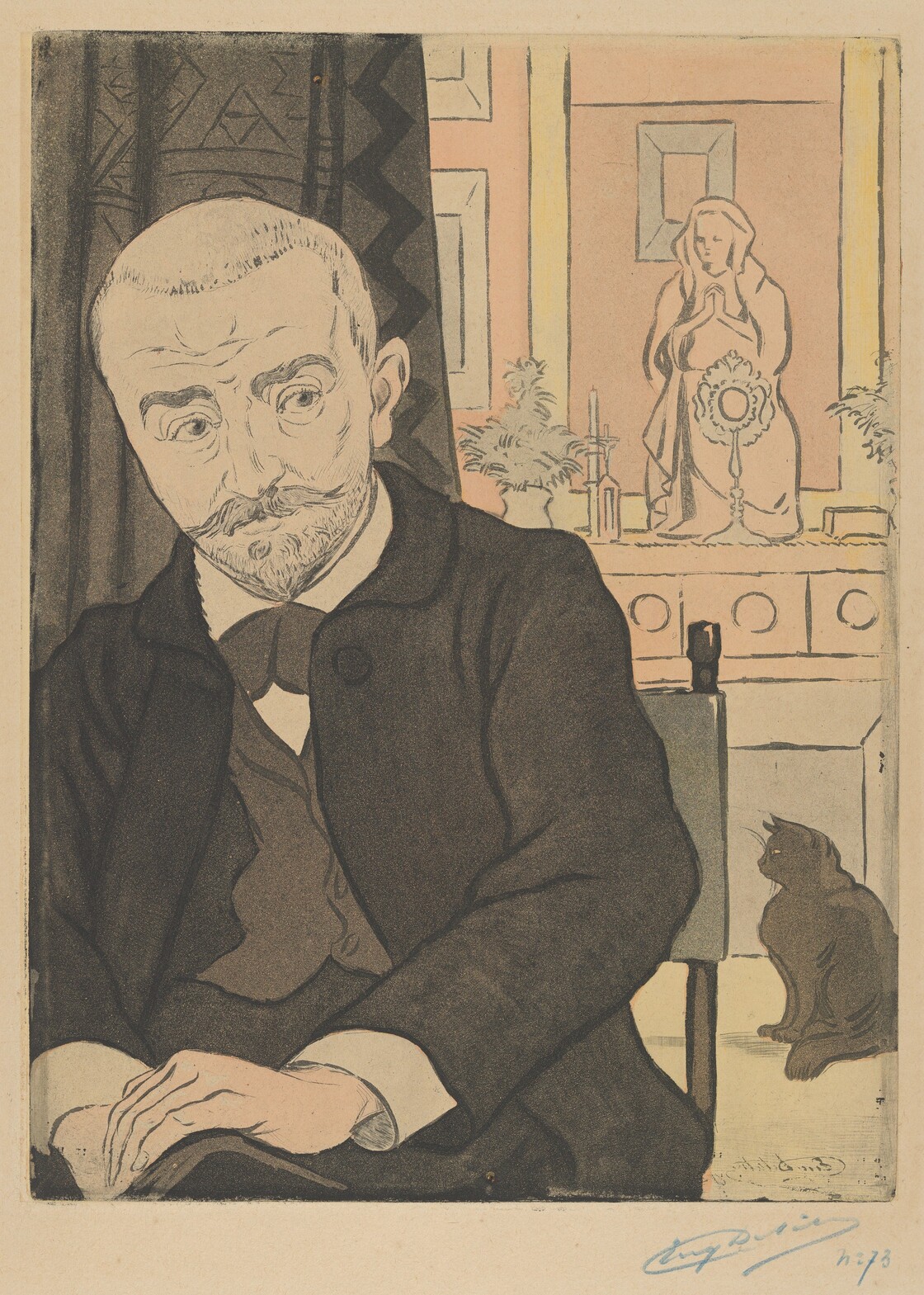
Huysmans worked by day as a civil servant at the Ministry of the Interior in Paris, and in 1890 he was planning a novel about Satanism in his own time. A woman in his circle, Berthe de Courrière, put him in touch with Boullan. Their letters ran from February 1890 until Boullan’s death, and Boullan sent him most of what the book came to know about the subject.
In the novel, Dr. Johannès is “a very intelligent and learned priest” who once led a religious community and edited a mystical magazine in Paris. His exorcisms in convents ruin him, and he now lives “very much in retirement at Lyons”, where he preaches the coming of the Holy Spirit.
Boullan’s own account of his fight with the Church went into the book almost word for word. In one scene the Archbishop of Paris questions Johannès about the epileptic woman and the robe of Argenteuil, then cuts him off with “You had best go to La Trappe”, the name of a famously strict monastery, and throws him out.
The book copied the Lyon rite as well. In the novel an astrologer travels to Lyon after a sorcerer has put a curse on him. The seer of the household falls into a trance to find the cause, and Johannès turns a table into an altar and prays to the archangel Michael with one hand on the victim’s head.
Huysmans watched the real rite. He first went to Lyon in September 1890, and after a visit almost a year later he wrote to his Dutch friend Arij Prins: “Boullan jumps around like a tiger cat, holding his hosts.” At the altar Boullan cried three times for the downfall of Péladan, one of his rivals among the Paris occultists, and the letter closes on the seer: “It is done, says Madame Thibault, her hands in her lap.”
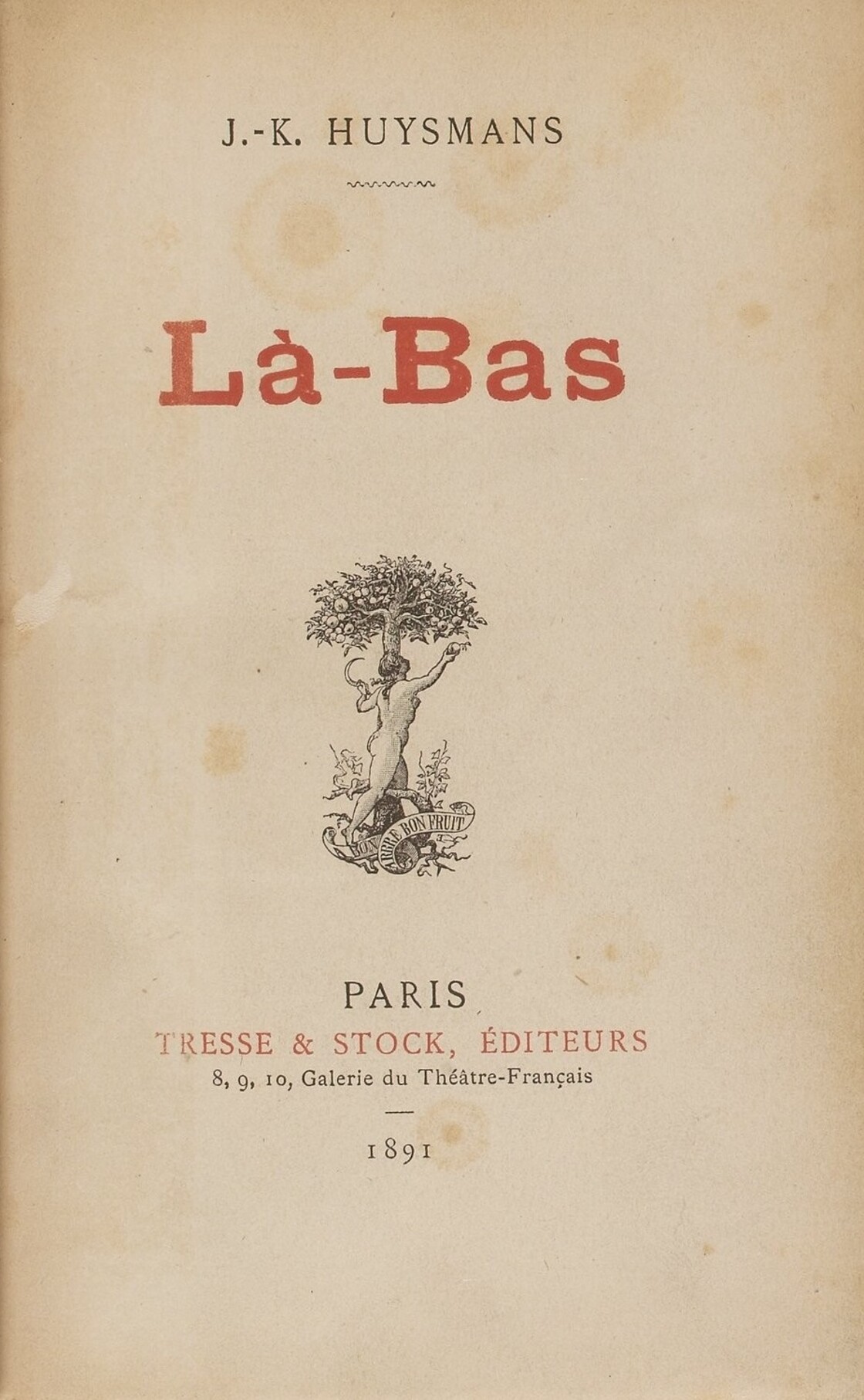
When L’Écho de Paris began the novel in February 1891, the paper sold it as the “first survey of contemporary Satanism made after nature and based on authentic documents”. The facts, according to the notice, came from “a former superior of a religious congregation”, one of the “most mysterious of healers of our times”. The healer meant was Boullan.
What did Huysmans invent?
The novel’s villain owes little to Boullan. Canon Docre, the Satanist priest of the book, feeds consecrated hosts to white mice and has a cross tattooed under his feet so that he always walks on Christ. He kills from a distance, and one character asks how such a man could be tried when “at the autopsy no traces of poison appear”.
Huysmans put Docre together from other men. He named two priests behind him: a chaplain to a queen in exile, who later hanged himself, and a priest at the Chapel of the Holy Blood in Bruges. The tattooed cross came from an old possession case in the diocese of Sens.
The Bruges priest was Louis Van Haecke, and his story reached Huysmans through Berthe de Courrière, not through Boullan. She broke down during a visit to Bruges in September 1890 and came back with strange tales about him. In Bruges itself people knew Van Haecke as a joker, and when Huysmans asked around there in 1897, his travel notes read: “Everybody smiles when Van Haecke is mentioned.”
The black mass at the end of the book is harder to trace. Huysmans wrote to Prins about every stage of the work, even his visits to brothels, yet neither those letters nor any note from those months mentions a black mass. Later he told it two ways: his friend Léon Hennique remembered him saying he had been to one, while to his confessor he denied it outright.
Much of the scene can be traced to reading. Docre’s prayer to Satan reworks “The Litanies of Satan”, a poem by Baudelaire. Boullan also sent Huysmans old papers from Vintras’s sect, among them a story about Satanists who abused hosts for years in the town of Agen, although the real bishop of Agen had condemned the woman behind that story in 1846.
In 1913 the occult writer Joanny Bricaud turned the borrowing around: he claimed that Boullan had fed hosts to mice himself and had pinned his own practice on Docre.
Why did Paris occultists call Boullan a sorcerer?
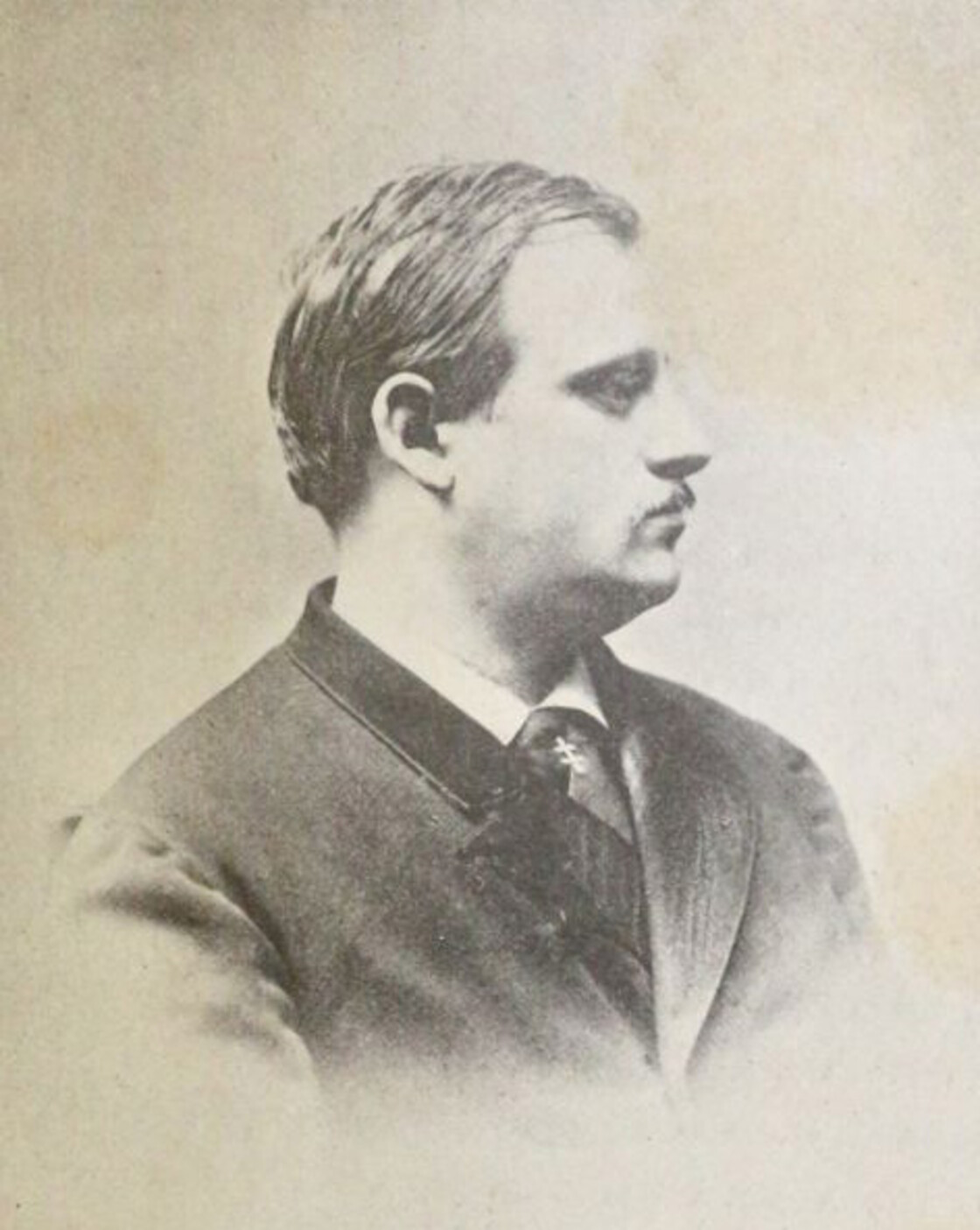
Boullan’s enemies sat in Paris. Their leader was Stanislas de Guaita, a young nobleman and poet who in 1888 founded a secret society for magic and Kabbalah, the Kabbalistic Order of the Rose-Cross, whose members were called Rosicrucians. Two years earlier Guaita and a friend had begun to gather material on Boullan, and the friend pretended to be interested in his teaching.
Guaita visited Lyon in November 1886. Boullan later wrote to Huysmans that soon after Guaita left he woke one night “struck in the heart”, and that Thibault named the culprit at once: “It is Guaita.”
On 23 May 1887 a private “court of honour” of occultists around Guaita condemned Boullan, and a letter the next day told him that “the sentence remains suspended over your head”. Boullan took this for a death sentence and fought it with rites at his altar. Guaita had exposure in mind. In 1891 he printed the whole case in a book, The Temple of Satan, with Boullan under the name “Doctor Baptiste”, and called the book itself the “late execution” of the sentence, the punishment carried out at last.
Huysmans took the Lyon side. In July 1890 he told Prins that the Rosicrucians had sentenced him to death as well, a warning that most likely came from Lyon rather than from Paris.
Huysmans came to believe he was under attack too. Every night, as he fell asleep, he felt blows of “fluid” on his head and face. He admitted it might be his nerves. His proof against that was his cat, which twitched at the same hour.
How did Boullan die, and why did the press blame magic?
Boullan had been afraid of the new year. On 2 January 1893 he wrote to Huysmans that its digits, 8-9-3, were full of bad omens for him. One night at three he had woken up choking and called out: “Madame Thibault, I am suffocating.” She had dreamed of Guaita, and of a death bird crying.
Two days later he was dead. Thibault went through his last day in a letter to Huysmans: he spent it writing an article for La Lumière, a spiritualist paper, and was cheerful over a good dinner before he collapsed at evening prayer. He had a liver and heart illness, she wrote.
On 9 January the journalist Jules Bois took the case to Gil Blas, a Paris daily. He set out Boullan’s forebodings and the “attacks” of the Rosicrucians, repeated rumours that Guaita handled poisons and sent them through the air, and asked for the cause of death to be cleared up. Rumour even gave Guaita a familiar spirit shut in a cupboard.
The next day Huysmans told Le Figaro that Guaita and Péladan practised black magic every day. In his view it was “quite possible” that his poor friend Boullan had died of a final spell. The charge read like the plot of Là-bas, where Docre kills from far away and leaves nothing for an autopsy to find, and now the man behind Johannès had died of a sudden illness.
Guaita answered in Gil Blas on 15 January with a mocking list of what the papers made of him. In that list he sent poison vapours into his enemies’ noses from hundreds of leagues away, played a new Gilles de Rais, the medieval knight who murdered children, and was friends “and more” with “the fearsome Docre, the beloved canon of Mr Huysmans”.
In his account Boullan had suffered from heart and liver trouble for years and cried “new spell” at every attack. Explanations of this kind, Guaita wrote, are best given “on the field”, meaning the duelling ground, and he sent his seconds, the friends who arrange a duel, to Huysmans and to Bois.
In 1893, Guaita’s close ally Papus, an occultist doctor whose real name was Gérard Encausse, published a booklet, Can One Cast a Spell? It featured a document allegedly seized from Boullan. That April, Papus met Bois with swords.
Did the 1893 duels between Bois, Guaita and Papus really happen?
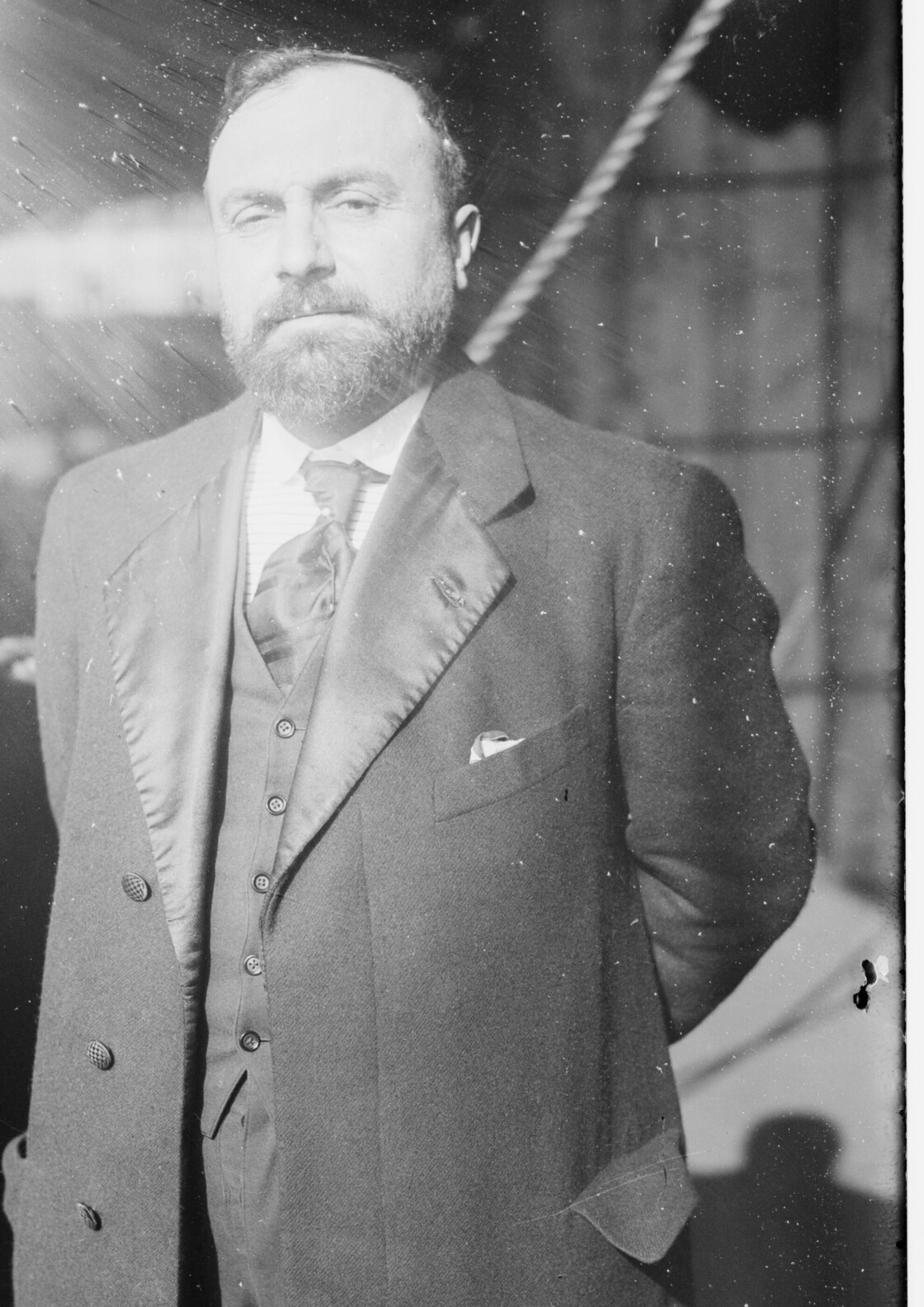
Huysmans settled his part on paper. In a written statement dated 14 January 1893, a day before Guaita’s letter was printed, he said he “had never thought of questioning” that Guaita was “a perfect gentleman”.
Bois fought twice. In April 1893 a new article of his, “Les histrions sacrés” (“The Sacred Play-Actors”), reopened the quarrel, and the first duel followed with pistols at the Tour de Villebon outside Paris. Guaita and Bois stood twenty-five paces apart, facing each other, and two shots were fired without hitting anyone.
Three days later Bois faced Guaita’s ally Papus with swords in the Pré Catelan, a park in Paris. In the second round Bois was wounded in the arm and asked to go on. He was hit again in the third, and the seconds stopped the fight on the doctors’ advice.
According to Papus’s son, Papus did his best not to wound his rival badly, and the two men later made peace. “We have shaken hands since,” Bois wrote.
The duels soon grew a legend. A year later one of Bois’s seconds, Paul Foucher, turned the drive to the pistol duel into a newspaper story in which one horse stopped and trembled, a second fell, and then the replacement carriage overturned, so that Bois reached the field “bruised and bloody”. “The devil,” Foucher wrote, “really seemed to have had a hand in it.”
Boullan’s friends kept the name the novel had given him. In April 1893 La Lumière carried a short notice headed “The tomb of Dr Johannès”: a book carved in marble would now stand on Boullan’s grave, a gift from women friends of the paper, with the inscription “J. A. Boullan (docteur Johannès), noble victime. 4 janvier 1893.”