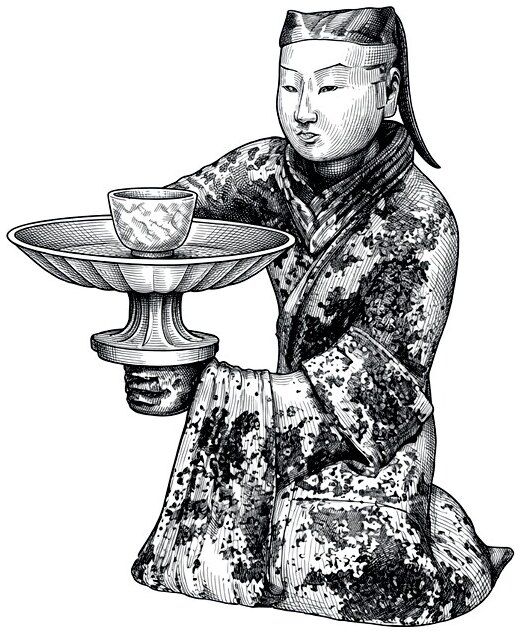
An emperor of China drank morning dew off a bronze plate, more than two thousand years ago. The plate stood on a tall pillar in the grounds of his newest palace, just outside the capital. Work on that palace began in 104 BC. On clear nights water gathered in the open plate, and it was mixed with powdered jade. He drank the mixture to escape death.
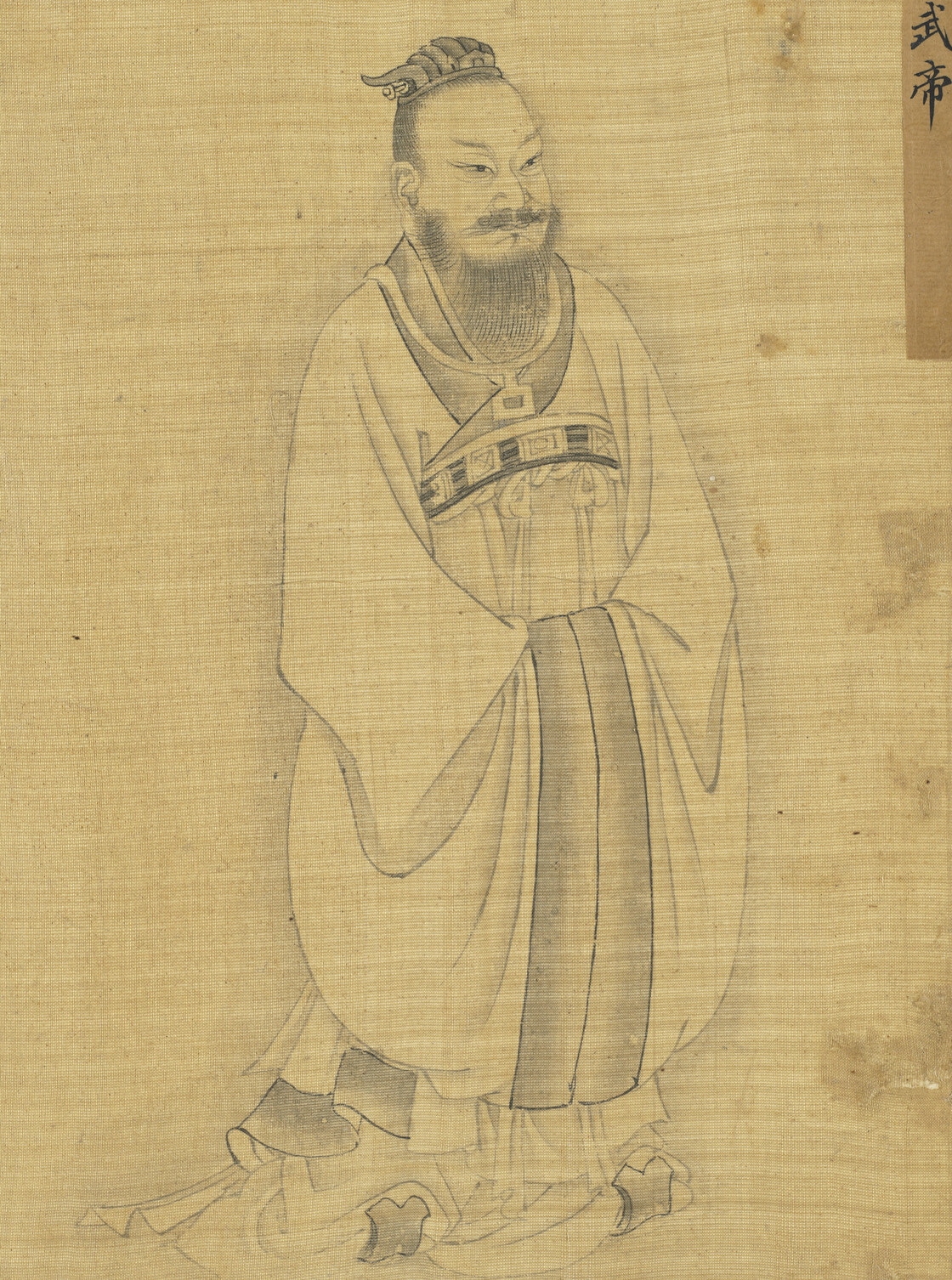
He is known as Emperor Wu of the Han dynasty. He sat on the throne for fifty-four years and never stopped looking for a way not to die. Two of the advisers who promised him one were executed when their promises failed.
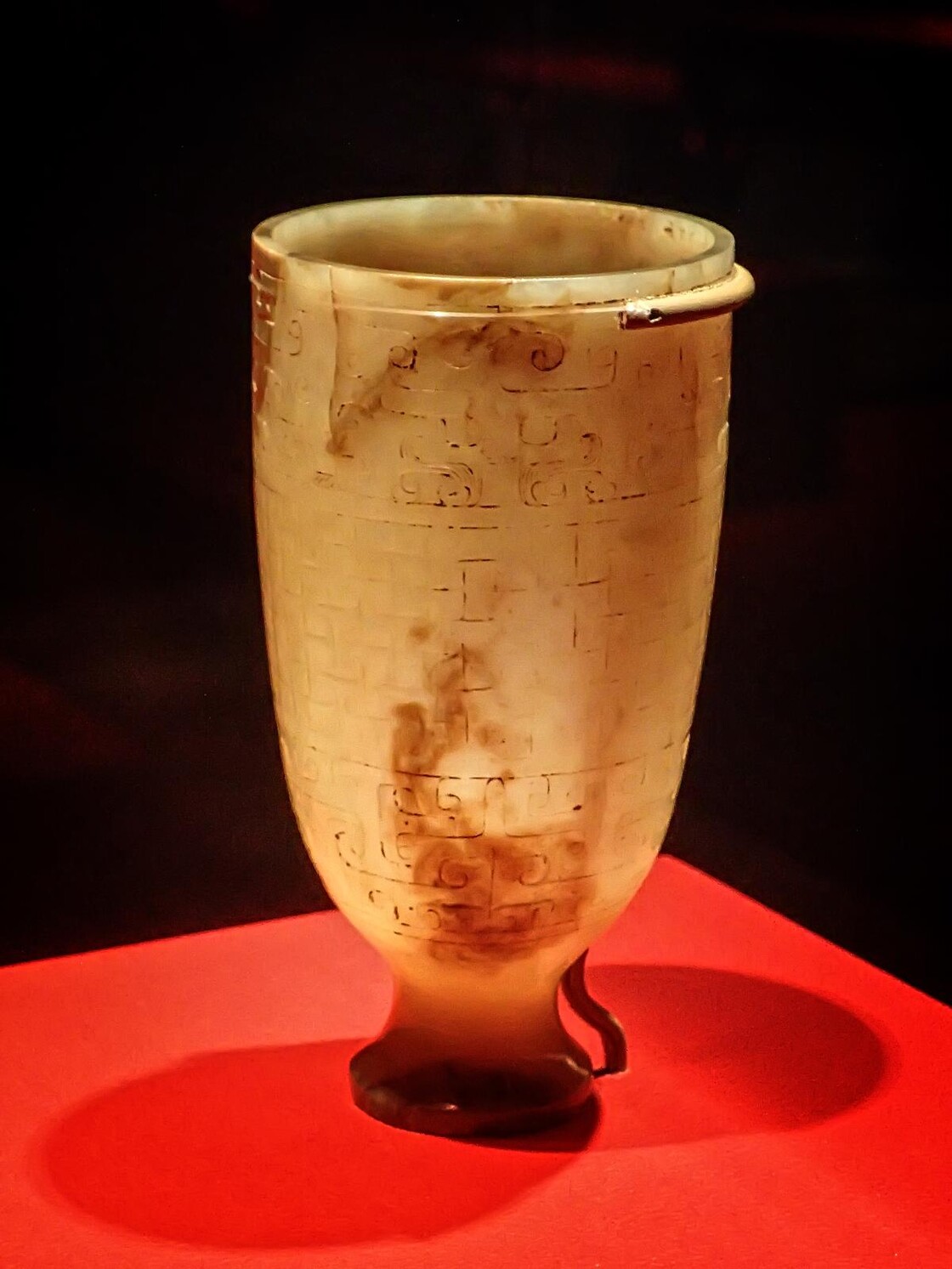
The plate was bronze, and so were the man holding it and the pillar under him. One other vessel stood beside them on the terrace, and it was jade.
Which Emperor Drank Morning Dew from Bronze Plates?
Emperor Wu ruled China from 141 to 87 BC. Late in his reign a great terrace he had built burned down. A shaman from the southern Yue country told him their custom: after a fire, build something bigger. So the emperor ordered a new palace, and the plans set out a thousand gates and ten thousand doors.
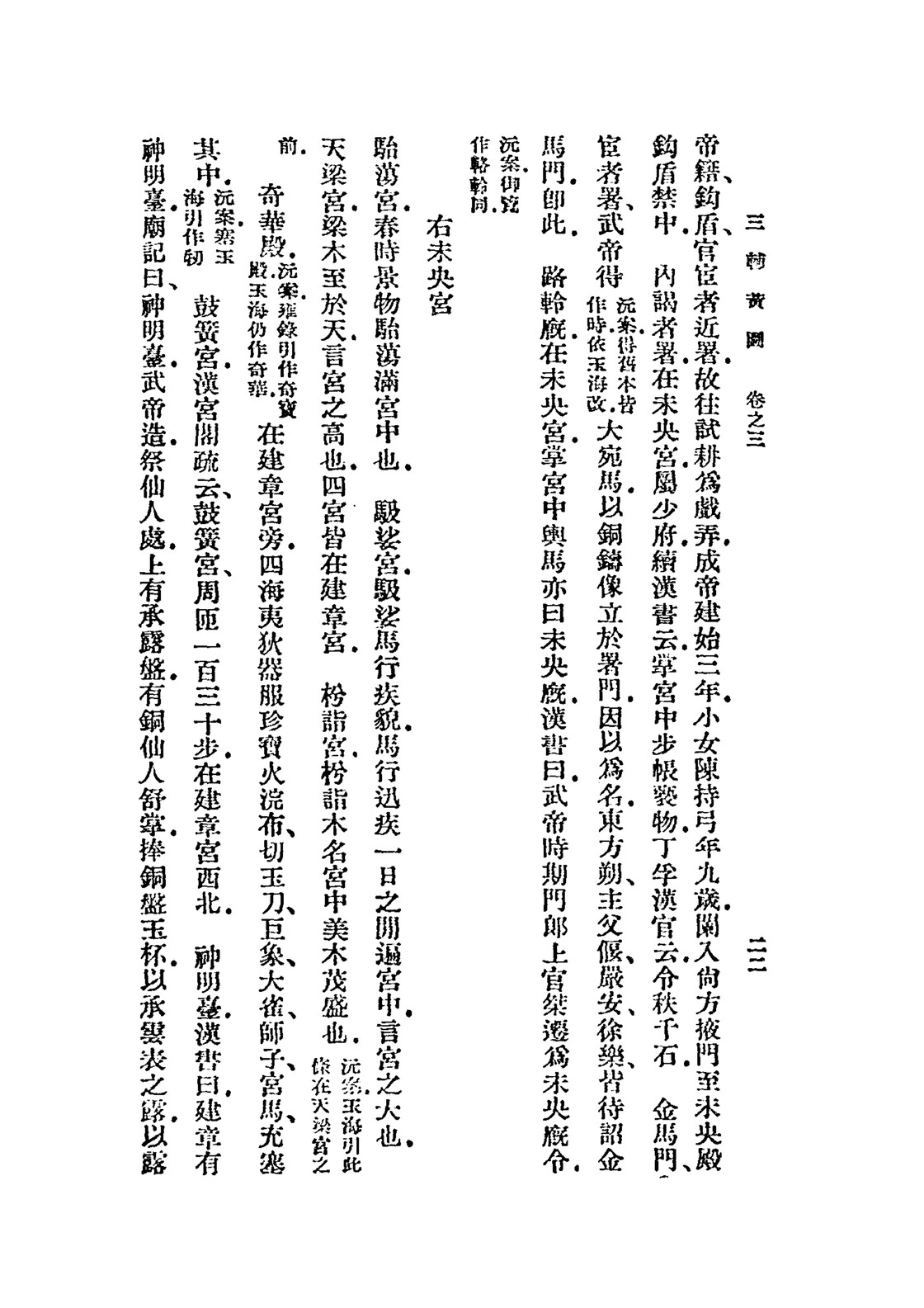
The new complex was named the Jianzhang Palace. Inside it rose a high platform, the Spirit-Bright Terrace, built as a place to worship the immortals. That is where the bronze man with the plate stood. An old book of stories about the capital region gives the reason for the dew drink plainly: the emperor wanted to become immortal.
What Was the Dew-Collecting Terrace, and How Did It Work?
The dew catcher was a tower with a bronze pillar on top. On the pillar sat a bronze figure, an immortal. He held a wide shallow plate up to the sky, and a jade cup stood beside it.
An old description of the capital region gives one measurement. The immortal’s bronze hand was “seven spans” around. The span here is an old Chinese unit with no fixed length, so the number cannot be turned into metres. The width of the plate itself is unknown. The text does say the plate faced the open sky, and that is the part that matters for catching water.
Another dew plate stood at Ganquan, one of the emperor’s other palaces, on a tower raised in 109 BC. There, too, the plate stood on top, and the bronze immortal held up a jade cup. Later writers gave that tower a strange end. Between 80 and 75 BC, under a later emperor, it is said to have torn itself apart. Its roof beams turned into dragons and phoenixes and flew off with the wind and rain.
The old histories also give heights. The oldest, the Records of the Grand Historian, puts the Spirit-Bright Terrace and a tower beside it at about 115 metres. The number is probably a court boast.
The tower is gone, but its base is still there. Chinese heritage accounts describe a mound of rammed earth about 52 by 50 metres and roughly 10 metres high.
Two Han poets of the first and second centuries AD mocked the dew plate. One named the emperor’s executed advisers in the same breath as the metal pillars. The other described the plate catching clear dew beyond the clouds, then recalled the magicians who came to nothing.
Why Dew, and Why Jade?
Dew and jade each stood for something that does not decay. The sources call the water “dew from beyond the clouds”. It had fallen out of the sky and never touched the ground. Anything that came down clean from heaven counted as heaven’s own substance.
Jade supplied the other half. It was the stone that did not rot, and the Han ruling class treated it as a source of life. One old recipe puts the two together. Catch the dew of heaven in a bronze plate, mix in splinters of jade, and drink it to seek immortality.
About four hundred years later, the alchemist Ge Hong counted jade among the medicines of immortality. He quoted an older Jade Classic: whoever takes gold lives as long as gold, and whoever takes jade lives as long as jade. He promised that jade powder taken with water keeps a person from dying.
He also gave two warnings. Jade ranks below gold, because it brings on fever again and again. And jade already carved into an object does harm. Only the raw stone will do.
The Man Who Was Executed Before the Plates Went Up
The emperor’s first bronze pillars and dew-catching palms went up right after his first magician was put to death, years before the Jianzhang Palace. That magician was Shao Weng, a spirit-caller from the east.
Shao Weng’s trick was a ghost. One of the emperor’s favourite women had died. At night Shao Weng made her figure appear behind a curtain, and the emperor watched from a distance. The show earned Shao Weng a title and a fortune. Spirits would not visit ordinary rooms, he warned next. The emperor built him painted cloud chariots and a hall painted with heaven, earth and the highest god.
A year passed and no spirits came. Shao Weng wrote a message on silk and fed it to an ox. Then he announced that the ox’s belly held a wonder. The ox was killed, the silk was read out, and the emperor recognised the handwriting.
The emperor had the magician executed and kept the affair quiet. In the court history, the very next sentence after his death tells of the bronze pillars and the immortal’s palms that caught the dew. The likeliest reading is that the plate went up in the middle of a cover-up.
The cover-up came with a story. A second magician arrived with the same promises and worried about what had happened to the first. The emperor told him the man had simply died from eating horse liver. The newcomer received noble ranks, an estate and a princess for a wife. When his arts failed, he was executed too.
A third adviser was asked to his face whether he planned to go the same way. He answered that immortals do not go looking for a ruler. The ruler has to go looking for them.
Does a Bronze Plate Actually Collect Dew?
A bronze plate does collect dew, and the physics is ordinary. On a clear night a surface sends its heat up into the sky and cools. Once it is colder than the dew point, the temperature at which the air gives up its water, drops form on it. Modern dew collectors work the same way.
The harvest is small. Physics caps it at well under a litre per square metre in a night. Field trials in dry climates rarely collect more than half a litre.
Say the plate at Jianzhang was about a metre across. That gives a surface of around four fifths of a square metre. On a very good night it would hold a few hundred millilitres of water. That is enough for a ritual dose, and not much more.
Bronze was not the best choice. Modern tests found that plain metal plates collect less than some plastic foils. How much heat a surface loses also depends on how dark and how oxidised it is.
How Is This Different from Qin Shi Huang’s Mercury Elixir?
The two emperors chose different drinks, and only one of them was poisonous. A century before Emperor Wu, the first emperor of a unified China chased the same goal. Qin Shi Huang, as the story is usually told, swallowed mercury. The idea was that a substance which outlasts everything would pass that quality on. Mercury damages the brain and the kidneys.
Emperor Wu drank water and a mineral powder. Neither is poisonous in those amounts. The two rulers usually get lumped together as one story about the folly of alchemy, and that blurs the difference.
Both died anyway. Qin Shi Huang died on tour in 210 BC. His sealed tomb, said to hold rivers of mercury, has never been opened, and it stands outside Xi’an as a mound of earth. His story is told in Qin Shi Huang: The Emperor Who Poisoned Himself Seeking Immortality, and the tomb has its own entry, The Mausoleum of Qin Shi Huang.
Emperor Wu died in 87 BC, at about seventy, in a palace away from the capital. The annals give the day and the place and say nothing about the cause. He was buried at Maoling. No record blames the dew and the jade for his death. They did not save him either.
The Bronze Immortal Leaves Chang’an
The bronze man outlived his builder by three hundred years. In AD 237 a ruler of a later dynasty, the Wei, ordered the bronze figures brought east from the old Han capital, Chang’an, to his own capital at Luoyang.
His officials went west with carts. They were to bring back the bells, the camels, the bronze figures and the dew plate, and set them up in front of his hall. The plate broke on the road. The crash, in one account, carried for miles. In another, some of the bronze figures wept.
The figures never reached Luoyang. They were too heavy to move and were left at Bacheng, a town just east of the old capital. The emperor had two new bronze men cast instead and seated them outside his palace gate.
One official objected to the whole programme. He wrote a memorial against the dragons, the dew plate, the artificial hills and the ponds. Wise rulers did not build such things, the memorial ran, and the work cost several times what the palace halls had. He bathed before sending it, expecting to die. The emperor read it and asked whether Dong Xun was not afraid of death. A prosecution was proposed and then dropped.
Old records disagree on the date of the move, and some put it years earlier. Six centuries later the poet Li He took up the story. In his poem the bronze man weeps tears like molten lead as he is loaded onto the cart.
The poem fixed the bronze man in Chinese memory. He leaves the Han palace for good while a bitter wind stings his eyes. Its best-known line: if heaven had feelings, heaven too would grow old. Decades earlier, the poet Du Fu had set the metal stems of the dew plates “between the sky and the Milky Way”, as a picture of the court.
Is There Still a Dew-Collecting Plate Anywhere?
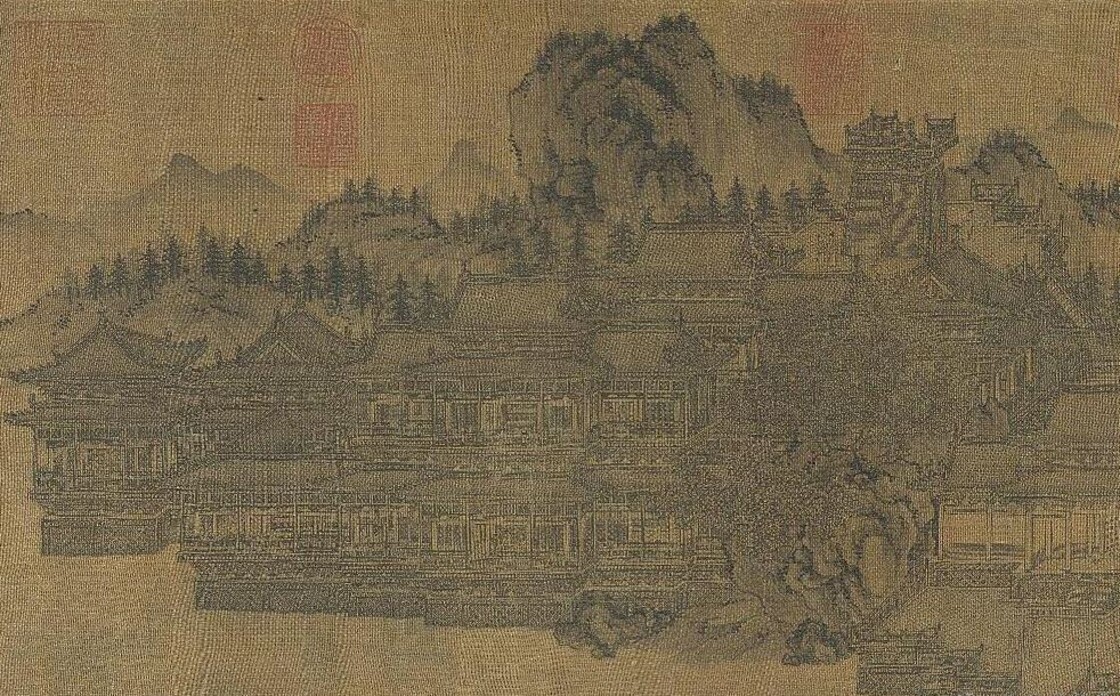
No Han dew plate has ever been found. Digging at the Jianzhang Palace site has turned up courtyards, stone pillar bases, roof tiles and pottery, along with coins and moulds for casting them.
The mound is what is left above ground. It lies in the Weiyang district of modern Xi’an, the city that grew up beside the ruins of Chang’an. The emperor’s search for a way not to die left a heap of earth about ten metres high.
Later emperors copied the idea twice. In the eighteenth century the Qianlong emperor had a bronze immortal set on a carved marble pillar on the island in Beijing’s Beihai Park. The whole monument is about six and a half metres tall. The figure faces north and holds a round bronze plate above its head with both arms. It is the only one left standing in Beijing.
A second copy went up in the Old Summer Palace outside Beijing around 1800. Its bronze figure was lost when the palace was destroyed in 1860. The carved stone base was moved to a city park in 1925, and a dark stone replica made in 1989 now stands on the old site.
The Beijing figure is easy to miss. It stands among trees on the north slope of the island, both arms raised, holding a plate that nobody fills.