In 1696 a Croatian baron turned a drinking party into a university. It had a dean and a chancellor, and its official language was Latin. There was one entrance exam. The candidate drank a pinta of wine in one go, and in return he became a doctor of wine.
The baron was Baltazar Patačić. His guests met at his castle at Krkanec, a village near the town of Varaždin in northern Croatia. The society was called the Pinta, and it ran for twenty-three years. About 175 of the kingdom’s counts, bishops, officials and physicians joined it.
Today these noble wine doctors are often called a secret society. Yet the Croatian accounts of the Pinta mention no oath and no punishment for talking. The word secret came much later, from writers who had the freemasons in mind.
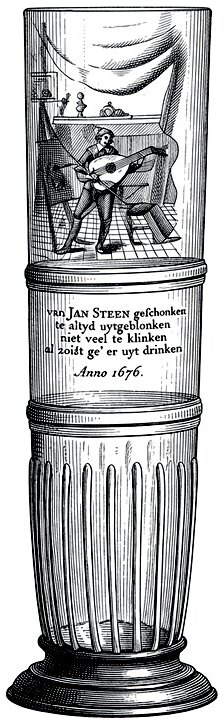
The name comes from a measure. A pinta was a Croatian unit for liquids, and a big one. The old Zagreb pint held about 3.124 litres before 1733 and a little more after that. Local accounts describe the exam glass as anything from a half-litre jug to “almost three litres”. Nobody has found the vessel. The accounts agree only that the wine went down in one go.
Almost everything known about the Pinta comes from one book: the society’s roll of doctors, kept in Latin. Its title page names the very famous neo-medical faculty, founded at Vidovec on 18 July 1696. The book survives in the archive of the Croatian Academy of Sciences and Arts in Zagreb.
Croatian Noble Secret Wine Doctors: Who Was Baltazar Patačić?
Patačić was a lawyer who rose high in the service of the Habsburg court. He was born at Vidovec in 1663 and studied law in Vienna and Graz. As a young man he fought in the war against the Ottomans, then served as deputy count of three Croatian counties.
In 1693 he became a councillor at the Hungarian Court Chancellery in Vienna, the office that ran Hungarian and Croatian affairs for the emperor. He kept that post until he died. In 1707 Joseph I made him a baron.
He founded the Pinta three years after the Vienna appointment. He also kept a diary, the Diarium, from 1687 to 1717, so the whole life of the society falls inside it.
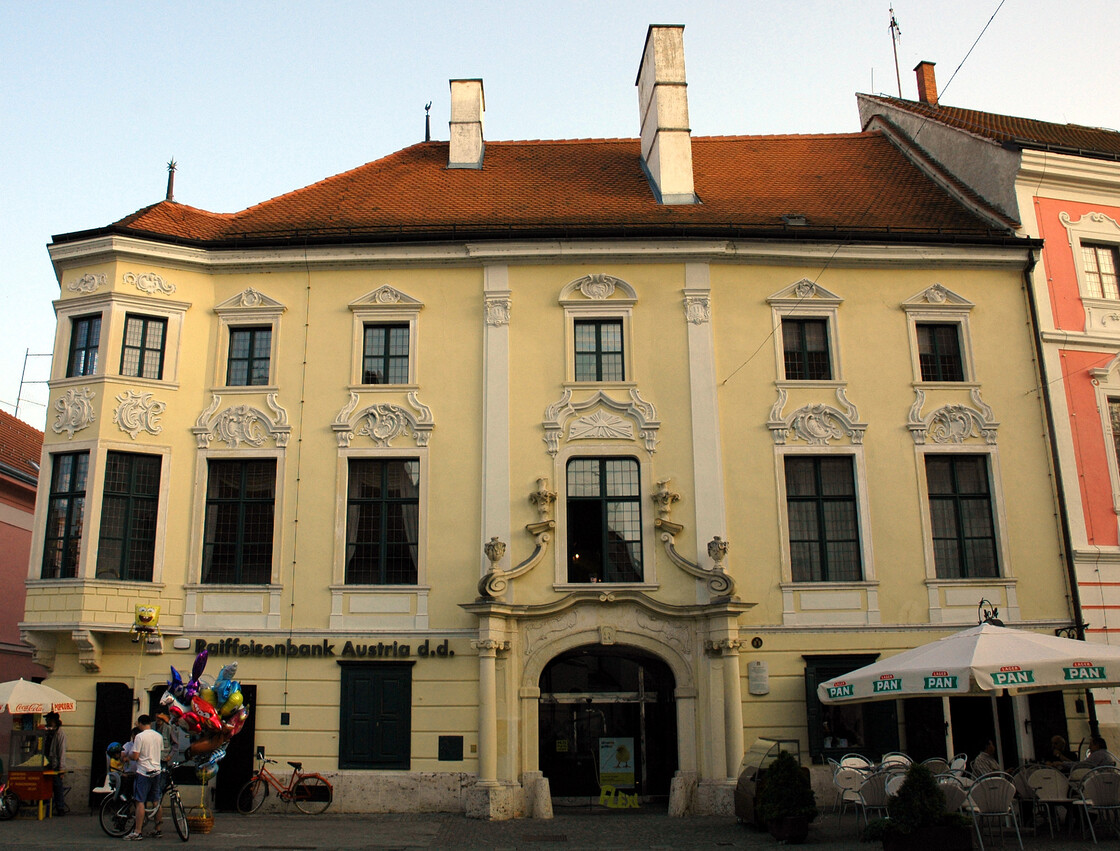
The castle at Krkanec, a village in the municipality of Vidovec, was built in 1616 by an earlier member of the family. The society also met at the family’s other houses nearby.
What Happened at Krkanec in 1696?
In 1696 Patačić gave his feasts the paperwork of a university. The society went by three names. Pinta came from the measure, and Pajdašija od pinte means the fellowship of the pint. The name most Croatian accounts use today is the Society of Wine Doctors, Društvo vinskih doktora. Local tradition calls Patačić simply the professor. His students were the most powerful men in the kingdom.
The rules were meant seriously. Latin was the official language, and members went into the book under borrowed names.
Local tradition hands down his welcome to new guests: “Raise your cups, gentlemen, and drink them dry! That is your condition for enrolling in the first semester!” The first lecture was titled In vino veritas, “in wine is truth”.
The clergy of Varaždin disliked all of it. The society answered with a joke dressed as a logic proof:
Whoever drinks well sleeps well. Whoever sleeps well does not sin. Whoever does not sin goes to heaven. Therefore whoever drinks well goes to heaven.
The Pinta kept an office that a parody faculty could have skipped: a chaplain. A dean and a chancellor ran the meetings. A third officer, the dušobrižnik or carer of souls, looked after the members’ spiritual side. The first dean was Stjepan Druškovečki. Each member was entered under the name of a famous physician. Patačić himself went into the book as Illamer, borrowing the name of Croatia’s chief physician of the day.
How Did You Become a Wine Doctor?
You drank the pint, and then you got a diploma that mocked the Sorbonne.
The classic European university had four faculties: theology, law, medicine and philosophy. The Pinta wanted to be the fifth. The exam was the pint, taken without a pause. After it came the promotion and a certificate. The certificate’s text is known from Croatian accounts of the society. It speaks to the Sorbonne by name.
In the Croatian rendering it begins: be quiet now, Sorbonne, and I say it without offence. The men you enrol as doctors, and for whom you open the road to honour, will barely become pupils in this house. This is the real school of doctors.
Then the certificate lists what the school gives. The learned Minerva of the drinking cups gives students science and physicians the art of healing. She opens the laws to lawyers and hands the priest his breviary. The soldier gets a shield and the people full security. She honours human rights and does not wish to break divine ones. At the end the certificate claims a rank: after a few others, the Pinta takes its place as the fifth faculty.
The joke leaned on medicine. Each member took the name of a physician, from Croatia or abroad, so the Pinta also called itself the neo-medical faculty. At least one real doctor sat in the book. Ivan Leopold Payer published Modicum medicum in 1709, a study of the healing waters at the Varaždin spa. Members also traded advice on how to keep clear of plague. A drinking club that used doctors’ names was making a claim about what wine was for.
Who Joined the Pinta?
The members were the people who ran the kingdom. They came from Croatia and from beyond it, from Styria, Bohemia, Austria and Hungary. The book also mixed ranks in a way no county assembly did.
Counts from the great Croatian families signed it. Two bishops of Zagreb belonged, and so did a bishop of Bosnia and Đakovo, Juraj Patačić, who carried the founder’s family name. So did a county prefect and the deputy of the ban, the viceroy who governed Croatia for the king.
Two members are still well known in Croatia: the historian and mapmaker Pavao Ritter Vitezović, and Marko Mesić, a frontier fighter who spent his life campaigning against the Ottomans.
The most quoted line about the Pinta is a member’s complaint. After one drinking bout, Vitezović wrote to Patačić. He was glad to have been made a Doctor, he said, but yesterday’s Falernian wine had done him real harm. He felt weak all over. If he kept drinking like that, he would not live long.
Women were on the roll too. The book gives a place of honour to Countess Barbara Falussy Pethő. One county account says she got in by emptying the pint, at a drinking in Hungary. Other descriptions mention several noblewomen among the doctors, but they do not agree on how many.
Was the Pinta a Secret Society?
The secrecy is a modern label. In 2025 a local newspaper series put it plainly: long before the freemasons and other secret societies reached the lands of the Monarchy, there was Patačić’s Society of the Pint. Lines like that are why the Pinta is remembered as a hidden academy, and less as a noble drinking club.
The records show nothing hidden. The members were the political class of the kingdom, and their names appear on every other official paper of the time. The Croatian accounts mention no oath and no penalty for telling outsiders. The society had its own member names and a Latin book, and a later writer looking for a lodge found exactly that.
The club did have a mild private language. To follow the doctors’ book, you had to know which physician each man was named after. Beside each name stood mocking verses about the man himself. From the outside, that looks like a club with secrets.
A Croatian folklorist, Ivan Lozica, read the custom as carnival. In a 1996 study he placed the Pinta among the wine statutes of northern Croatia, rules for drinking that parody serious institutions. He traced their roots to the Latin Middle Ages and the customs of monastery schools. One of those roots is the feast of fools, the medieval holiday when clergy mocked their own rites. The learned academies of the day were the thing being parodied. Read this way, the Pinta is a joke that kept minutes. The legend of the secret lodge came later, and it says more about the twentieth century than about the seventeenth.
Why Did He Give It the Shape of a University?
The likeliest reason is that the titles and rituals of a university kept the guests coming back.
Any noble could get a table of men drunk on a given evening. Bringing the great count of Zagreb, the bishop of Đakovo and the ban-deputy back to the same hall, year after year, took more than wine. Borrowing the shape of a university cost nothing. Each guest got a title and a name in the book, plus a joke to take home. Patačić got a standing network of the men who ran the kingdom, under his own roof.
The society also did real business in that hall. Members retold their military campaigns and traded medical advice, including how to protect a household from plague. They talked over the politics of the day. The Croatian encyclopedia gives the society and the castle at Krkanec a prominent place in the kingdom’s social life.
Europe had other learned academies, such as della Porta’s Academy of Secrets in sixteenth-century Naples. The Croatian writing on the Pinta never traces it back to that world. What travelled was the form of an academy. The content stayed local, and the local content was wine.
A local newspaper once offered a reason for the doctors’ titles: the plague spreading out of Graz in those years. No other source confirms it. The society did discuss how to avoid plague, so the idea has something behind it, but it stays a guess.
Northern Croatia has a second story about a school that hands out a dangerous degree. The Grabancijaš is a wandering scholar of Croatian and Slovenian folklore. He was said to have studied twelve years of theology and then a forbidden thirteenth year of black magic. The Pinta’s doctors earned their title with a glass of wine. The Grabancijaš earned his in a year nobody was supposed to take.
What Happened to the Wine Doctors?
The society ended when Patačić died in December 1719, after twenty-three years. Local accounts say the last name in the book belongs to Ivan Rauch, a ban-deputy, who walked behind the founder’s coffin that winter.
The book holds about 175 doctors, though some older local accounts say 173. The Croatian encyclopedia also counts 57 promotion ceremonies, the last one at Seketin in 1719.
The custom lived on long after the society. Patačić’s mock faculty was an early, aristocratic stage of the drinking rules that shaped social life in northern Croatia. Oral tradition takes those rules back towards the Middle Ages, but the written record begins with clubs like the Pinta.
Customs like these sink down the social scale over time. The wine rules of the nobles became the wine rules of the wine huts. They still sound at the St Martin’s Day feasts where the new wine is “baptised”.
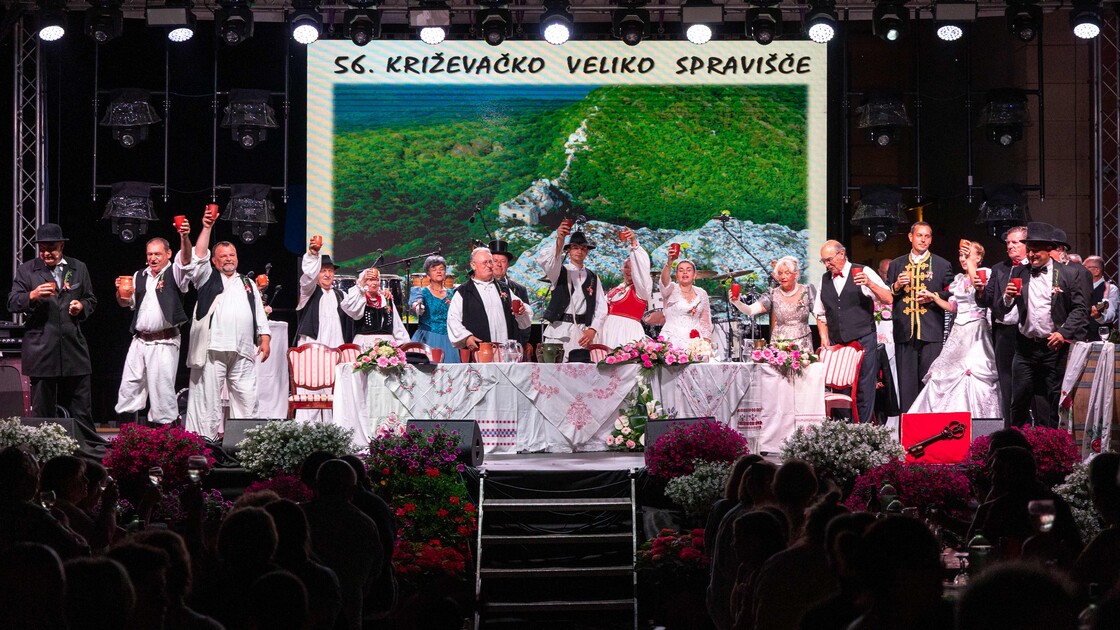
On 25 February 2026 Croatia’s Ministry of Culture listed one set of these rules as a cultural good. They are the Križevci statutes, the Križevački štatuti, customary rules for drinking wine. They are known across northern Croatia, well beyond the town of Križevci. People perform them on the feast days of the wine saints Vincent, George, John, Michael and Martin. Oral tradition dates their start to the fourteenth century, but the ethnographic record confirms them only from the nineteenth.
In 2024 Križevci held the fifty-sixth edition of its festival, the Veliko spravišče. Men in white shirts and women in festival dress stood along a banquet table with their glasses raised. The baron’s Latin book is still in an archive in Zagreb.