Among the animal bones dug up at a Stone Age village lies the skull of a young dog. A strong blow struck it on the forehead, and the broken pieces of bone are still in place. The village stood on the Danube near Belgrade, the capital of Serbia, more than six thousand years ago. Its dog bones speak to a question that sounds simple: did the first farmers of Europe bury their dogs, or did they eat them? In this village the bones show that people ate dogs at least now and then, though they do not tell us why this one dog was struck down.
Were dogs buried or eaten in the Neolithic?
Archaeologists call this time the Neolithic, the late Stone Age, when people in Europe had begun to farm, keep animals and live in villages, and the ground they left behind holds both answers.
In north-eastern Spain, between about 4200 and 3600 BC, people buried their dead in round graves and sometimes laid dogs inside, together with the humans or close beside them. In 2019 a team from Barcelona studied 26 of these dogs. One of the researchers, Silvia Albizuri, works on animal bones from excavations, and she pointed to the age of the animals: “Choosing young animals aged up to one year old suggests there was an intention in the sacrifice.” In southern Hungary, at the prehistoric cemetery of Alsónyék, people of the same broad era buried dogs next to particular people and also left dogs as offerings.
The village on the Danube, Vinča-Belo Brdo, points the other way, because its dog bones lay among the ordinary animal bones of the village and some of them carry the marks of a knife.
What kind of place was Vinča-Belo Brdo?
Belo Brdo means White Hill. The hill lies in the modern village of Vinča on the Danube, 14 kilometres downstream from Belgrade, and it grew out of the village itself. People rebuilt their houses again and again on the same ground, and the remains piled up into a mound ten and a half metres high. Such a mound is called a tell. Radiocarbon dates show that people lived on it from about 5200 BC until shortly after 4600 BC, for more than six hundred years.
The site gave its name to a whole Neolithic culture, the Vinča culture, yet for seventy years nobody kept its animal bones. The first excavator, Miloje Vasić, dug down through all the layers in several campaigns between 1908 and 1934 and left the animal remains uncollected. Vesna Dimitrijević, a specialist in animal bones from excavations, later noted that his memoirs did not give them “a single complete sentence.” The bones were first collected in a second round of digging from 1978.
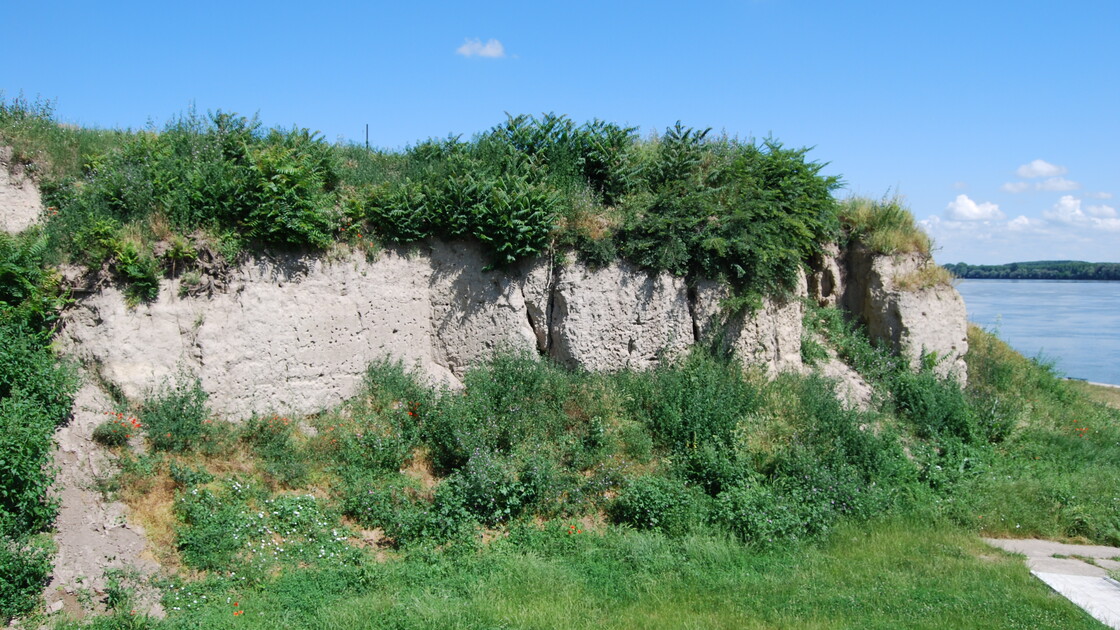
When the digging resumed in 1998, the team kept every bone fragment they saw. Dimitrijević studied more than 20,000 pieces of mammal bone from the seasons of 1998 to 2003. She published her report on them in 2006 in the archaeology journal Starinar. The dog skull is one of the finds she describes there, and so are all the other dog bones in this story.
What does the dog skull from Belo Brdo show?
Five dog skulls turned up in those seasons, and only one of them was complete. It belonged to a young adult animal. The bone of its forehead, which anatomists call the frontal bone, is broken where something struck it, with the fragments still in their places.
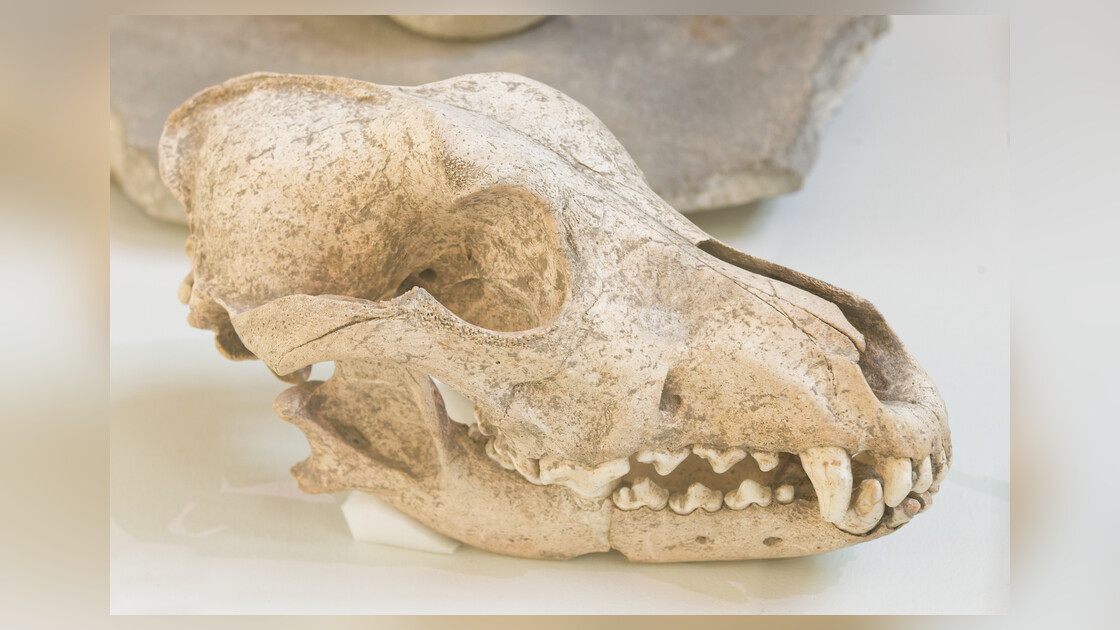
Dimitrijević calls the breaks at the point of impact old and judges it unlikely that they happened after the skull came to lie in the ground. From that she concluded “with quite a high degree of certainty that the animal died as a result of this probably deliberate blow.”
There her description of the skull ends. She leaves open who struck the dog and for what purpose. She also does not link this skull to the cut and burnt dog bones described below. The four other skulls survive only as fragments, three from young adults and one from an old dog with worn teeth, and that last one shows traces of burning.
Miloje Vasić dug at Belo Brdo on and off from 1908 to 1934 and kept none of the animal bones. So for the first digs, everything known about people and animals at Vinča comes from figurines, other art and cult objects, and from the tools.
How do we know people ate dogs at Vinča?
The clearest sign of butchery comes from a piece of a dog’s lower back: three vertebrae, the small bones of the spine, found still lying together as they had been in the living animal. That alone is rare at Belo Brdo, where hardly any bones were found joined to their neighbours. Each vertebra has a short spur of bone sticking out to the side. On one of the three, someone left a cut on that spur with a blade, the kind of mark a butcher makes when taking a body apart.
One of these three vertebrae is also burnt at the broken ends of its spurs, and Dimitrijević read this as a sign that pieces of dog meat had been roasted.
Fire marks turn up on dog bones more often than on the rest. About 14.5 percent of the dog bones show some trace of fire, from bones burnt right through to bones only partly scorched. Across all the animal bones from the site, the share is 6 percent. From the cuts and the burns together, Dimitrijević concludes that “it seems that dog meat was occasionally consumed.”
Still, she keeps dogs apart from the animals the village raised for food. She names four of them, cattle, pigs, sheep and goats, as the “food producing fund” of Vinča, her term for the animals people kept to eat. The dog stands beside them in her list as a fifth domestic animal.
Dog bones also break in their own way. People smashed the bones of cattle, pigs, sheep and goats, among other things to reach the fatty marrow inside. So the long leg bones of those animals almost never come out of the ground whole, while dog leg bones sometimes do.
Why are so many dog bones gnawed?
Tooth marks show up on 9 percent of all the bones from the site. Pigs gnaw on bones, and so, now and then, do goats and deer, but Dimitrijević found that at Belo Brdo most of the marks came from dog teeth.
Among the bones that could be assigned to a particular animal, most kinds show gnawing on 15 to 20 percent of their bones. Dog bones reach about 39.5 percent, roughly two of every five. Dimitrijević gives the figure without a reason, though it suggests that the remains of dead dogs ended up among the leftovers of the village, within reach of the living dogs.
The dogs of Vinča stood about 42 to 50 centimetres at the shoulder. Dimitrijević worked out this height from three leg bones, using the formulas that R. Harcourt published in 1974 in a study of prehistoric dogs in Britain.
Did anyone bury a dog at Vinča?
The dig of 1998 to 2003 found no dog burial. It found no complete animal skeleton of any kind either, and almost no bones still joined together. The reason is that the foundations, ditches and post-holes of later houses cut again and again through the older layers. A dog laid in a shallow pit may well have been dug up and scattered by the next builders, though no one can say whether such a grave ever existed.
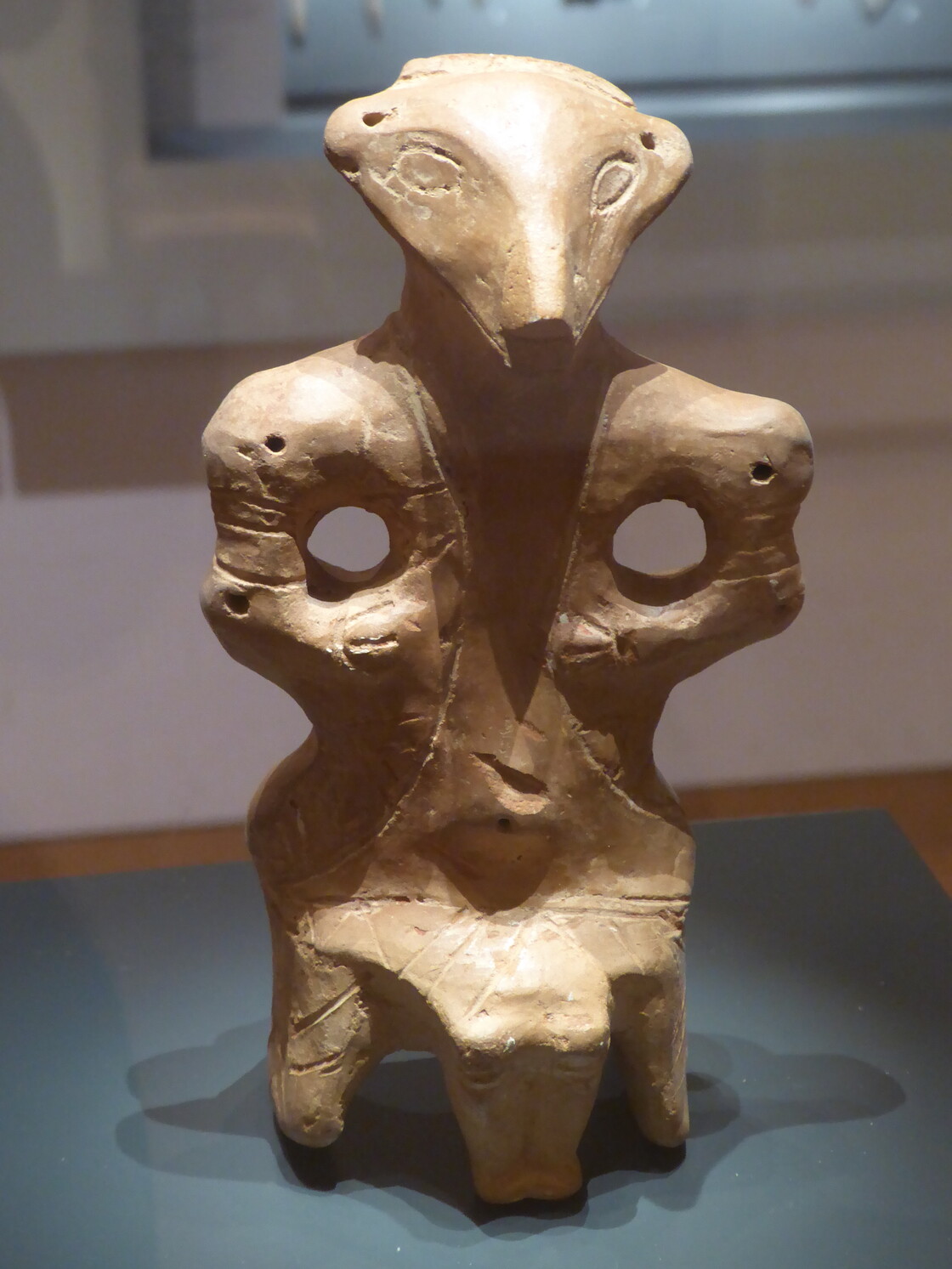
Elsewhere in south-eastern Europe, dog bones sometimes found a place inside a home. At Sultana-Malu Roşu in Romania, a village of about 4600 to 3950 BC, two dog jaws lay in one house. One was in the foundation trench dug when the house was built, the other in the layer left when it was abandoned, and the archaeologists who studied them read both as objects placed on purpose. The house itself took on a body farther south, in what is now North Macedonia, where Neolithic farmers made small clay houses whose roofs turn into a human figure, the Anthropomorphic House Model.
The young dog with the broken forehead
Dimitrijević describes the dogs of Belo Brdo as a clearly domestic form of small to medium size. They lived in the village and gnawed its bones, and now and then people ate them. One young adult among them died from a hard blow to the forehead, struck on purpose as far as the old breaks allow anyone to judge. Whether that blow came before a meal or for some other reason, the bone does not record. Its frontal bone still holds the splinters where the blow left them.