On 19 May 1634 a church inspector arrived in Komiža, a fishing village on the Adriatic island of Vis, to check on the parish in the bishop’s name. The village chaplain told him about two women who healed the sick with herbs and said that the fairies had taught them how. The people believed them, he said, called them often and paid them in clothes.
In the South Slavic lands such healers had a name: vilenice (singular vilenica), women who said their knowledge came from the fairies. The two from Komiža were questioned, but those records are lost and only the decision survives. The inspector forbade one of them to go on healing, and about the other the record says nothing more.
Who were the two herbalists of Komiža who learned from the fairies?
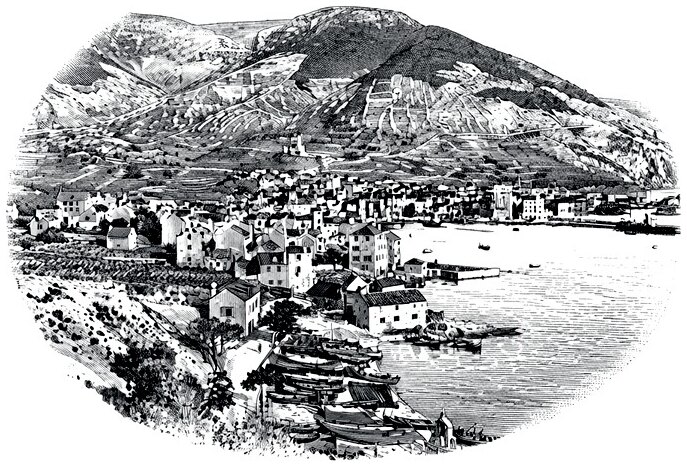
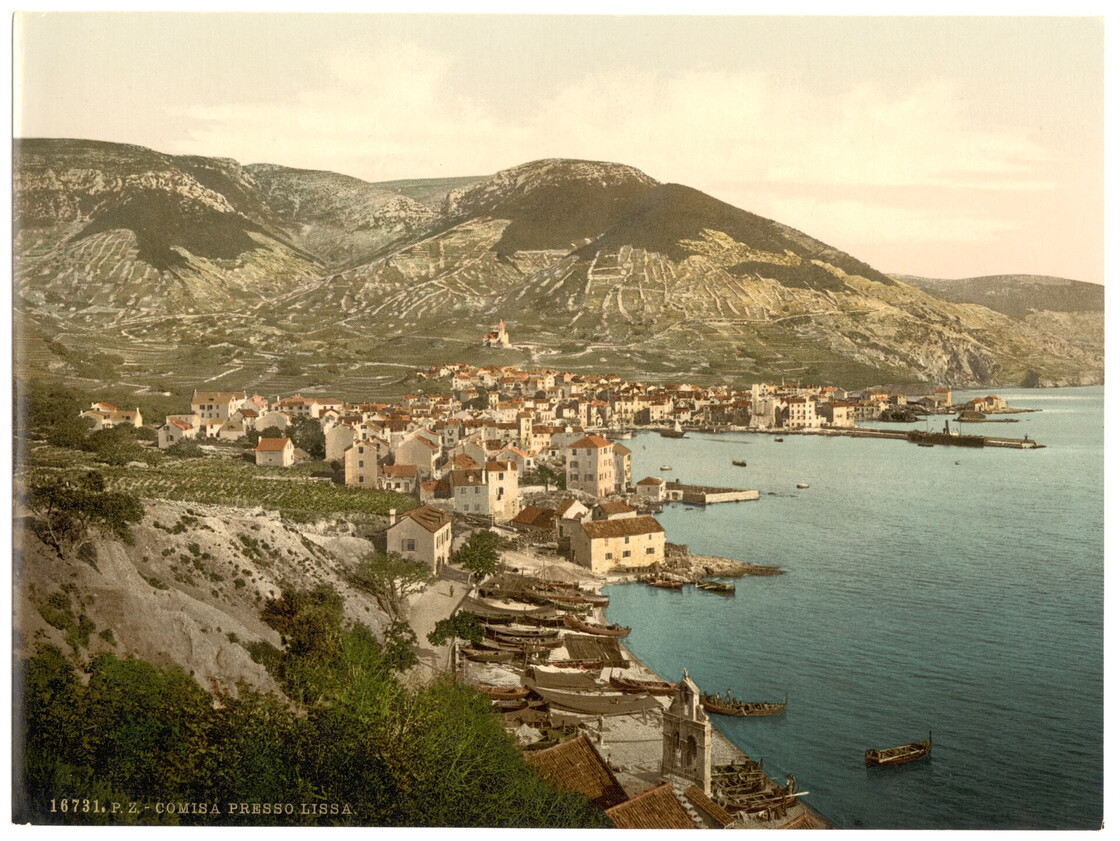
Komiža lies on the western shore of Vis, one of the islands of Dalmatia, the southern Croatian coast. In the 1630s the island belonged to Venice, and Komiža had been the island’s fishing centre since the sixteenth century.
The inspector’s visit was an episcopal visitation. On this regular tour a bishop or his deputy went from parish to parish and asked about the faith and morals of the people. Vis belonged to the diocese of Hvar, the bishop’s district named after the large island to the east. The bishop of Hvar had died in December 1633 and his successor was appointed only in February 1635, so in May 1634 the bishop’s seat was empty. The visitor who came to Komiža was a vicar, a priest acting in the bishop’s place, named Ivan Ivanišević.
The chaplain who spoke to him was Jakov Foretić. He named Lukrecija, the wife of Mihovil Mihatović, and Margarita, the daughter of Marko Brizgavac. Both healed the sick with herbs, and both said they had learned it from the fairies, whose company they kept. The people believed the stories the two women told, Foretić reported. They were often called for and well rewarded, though the only payment he named was clothing.
He also said how he knew all this: his own sister had told him, and she had gone to a vilenica for help herself.
What is a vilenica?
In South Slavic belief the vila (plural vile) is a female being of the mountains, woods and waters, beautiful and dangerous, who can also be generous to people she favours. Our Compendium entry on the vila follows her through the folk tradition. A vilenica was a woman who had received knowledge from the vile. A man with the same gift was called a vilenjak. The Croatian ethnologist Zoran Čiča, who studied these figures in a book of 2002, describes them as trusted people in the villages to whom others turned for help.
They were healers first of all, but because illness was often blamed on magic, their work also included countermagic, the undoing of a spell. That skill and the source of their knowledge set them apart in their communities.
What keeping company with the fairies meant to Margarita is told in a second record from around the same year. While she was rubbing oil into the daughter of a man named Mato Bogda, she talked about the fairies. She kept company with them, she said, and feasted with them on countless flavours, and the fairies helped her know the matters of the world.
These words reach us at second hand, through the historian Andre Jutronić. He read the visitation records of the islands in the bishop’s archive on Hvar and published what he found in 1969.
The only payment the chaplain of Komiža mentioned for the two healers was clothing. In the same visitation records, a vilenica from the village of Pitve on Hvar treated ulcers and stiff legs with figs, almonds, eggs, wine and powders.
What did the Church do to the two women?
The records of their questioning have not survived, only the decision. It concerned Margarita Brizgavac alone: she was forbidden to carry on with such practices. The record does not say why only she was banned, and about Lukrecija it says nothing more.
Other cases in the same records ended in similar ways. The next bishop of Hvar held office from 1635 to 1644. During one of his visitations he allowed a woman in the village of Vrisnik on Hvar to take up her healing again. Earlier, in 1594, a woman in the town of Jelsa on the same island had been reported as a witch because she healed with herbs. The records do not say what became of her.
In 1678 a woman named Katarina, who suffered from skin ulcers and a painful knee, went for help to a vilenica in the village of Pitve on Hvar. Her priest punished her by refusing her absolution, the forgiveness of sins that a priest grants in confession. On 20 October 1678 she appeared before the bishop of Hvar, most likely to complain, and how her case ended is not recorded.
Čiča read these cases as a sign that priests and vicars on the islands took mild measures, much milder than in similar cases elsewhere in Europe. He warned, though, that the evidence is thin and his conclusion should be taken with reserve.
The visitors asked about a different kind of witch: the one said to fly to the Sabbath, the witches’ night gathering, to worship Satan. The island villages worried about other things. In 1668 the priest of Nerežišća on the island of Brač told his visiting bishop: “I do not know if there are any witches and warlocks. Certainly not in public.” What the islanders feared, he went on, were “tied knots”, spells said to stop a marriage or bring one about.
Why did the Church see fairy healing as a problem?
A book printed six years after the visitation gives the Church’s own answer. In 1640 the Croatian Jesuit Bartol Kašić published Ritual rimski in Rome. It was a Croatian version of the Roman Ritual, the handbook that gave parish priests the texts for sacraments, blessings and exorcisms.
In the chapter on exorcism, Kašić writes that a demon may sometimes reveal who cast a spell and how to undo it. Nobody, he warns, should for that reason turn “to vileniks or vilenicas, or other evil doers”, but to the servants of the Church. Vilenik is his word for the vilenjak, the man taught by the fairies.
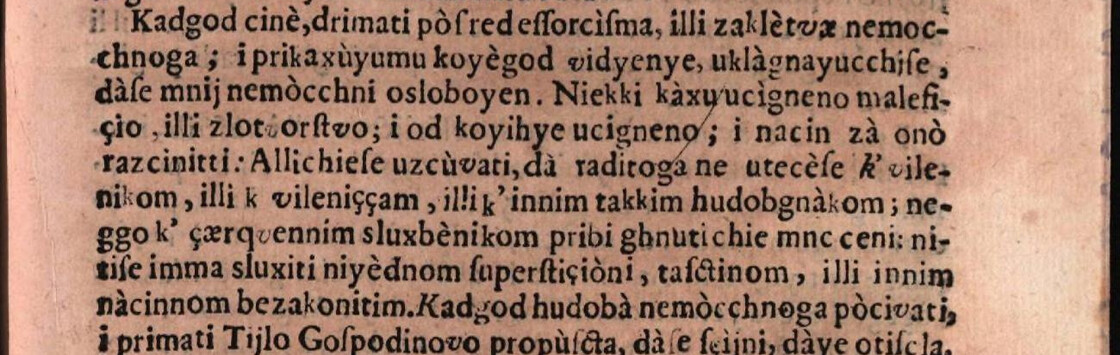
Čiča pointed out what this sentence reveals: the vilenice held a place that the Church claimed for itself, because they were the ones people turned to when they believed magic had made them ill. Two pages later, Kašić’s manual names the work of a vilenica alongside that of a magician and a sorcerer as one of the ways a demon might have entered a possessed person.
Forty years later the language had grown harsher. In 1681 the Bosnian Franciscan Ivan Ančić wrote in Ogledalo misničko, a book for priests, that “those slatterns, beguiled by the Devil, called witches and vilenicas” were the Devil’s creatures, and that if they did not repent, they were burnt.
When Kašić’s ritual was reprinted in 1827, in the form revised under Pope Benedict XIV in the eighteenth century, the exorcist was told to ask only whether a possession was the work of a vilenica or vilenjak. The magician and the sorcerer of the 1640 text were gone.
How does the Komiža case compare to the benandanti of Italy?
About sixty years earlier and some 400 kilometres to the northwest, another village priest had made a similar report. It happened in Friuli, the region of northeastern Italy around Udine. On 21 March 1575 the priest came before the inquisitor, the Church’s judge in matters of faith, at Cividale. He told him about a miller whose son was dying. The miller had turned to a man named Paolo Gasparutto, who cured bewitched people.
Gasparutto and his companions were good witches, the priest gathered, “called vagabonds and in their own words benandanti”, a name that means “good walkers”. On the Thursdays of the Ember Days, the four seasonal fast weeks of the Church, they went out at night with the witches. There the women beat the men with stalks of sorghum, a tall grass, while the men had only bunches of fennel. Our Compendium entry on the benandanti tells their beliefs in full.
The inquisitors first let the matter drop. Then, in 1580, a new inquisitor reopened it and questioned Gasparutto again, along with Battista Moduco, the town crier of Cividale. Moduco told him: “I am a benandante because I go with the others to fight four times a year, that is during the Ember Days, at night; I go invisibly in spirit and the body remains behind; we go forth in the service of Christ, and the witches of the devil; we fight each other, we with bundles of fennel and they with sorghum stalks.”
Under questioning, both men came to say that the devil had deceived them. In 1581 they were condemned as heretics, people who hold beliefs against Church teaching, to six months in prison, a sentence that was soon lifted.
The Italian historian Carlo Ginzburg found these trials in the archives and published them in 1966. He showed how, “in the span of a century” and under pressure from the inquisitors, the benandanti were transformed into witches and their night gatherings into the Devil’s Sabbath.
Ginzburg also looked across the Adriatic, to witch trials held in the late seventeenth century in Dubrovnik, then the Republic of Ragusa. Defendants there declared that they were “villenize”, the Italian spelling of vilenice, and that they had learned their remedies against spells from the “Vile”. He called this “undoubtedly a tradition parallel to the Friulian one of the benandanti.”
The two traditions differ in what their members said they did. The benandanti said they fought at night in spirit, for the harvest, while the vilenice of Komiža were women who healed with herbs and said the fairies had taught them. Čiča kept the two apart. One was a cult of female fairy beings who teach and give. The other was a cult of fighters who went out for the harvest in trance, and their spirit left while the body slept. In Croatia both existed side by side, and the second one lives on in the krsnik, the Croatian and Slovenian figure born to fight witches at night. What followed was different too: in Friuli inquisitors questioned the benandanti and passed sentence on them, while in Komiža a visiting vicar issued one ban.
All the Dalmatian evidence that Carlo Ginzburg cited in 1966 dates from the late seventeenth century. The Komiža record of 1634 is older. But it was printed only in 1969, three years after his book appeared.
Did the women of Komiža really meet the fairies?
The scholars who know the records best have left that question open. Čiča named three possible explanations for what the vilenice said: that they lied, that they were ill, or that they spoke the truth. He chose none of them outright, and he refused to call such accounts “female hysteria” or “peasant superstition”, as older historians had done. He leaned toward a cult of visions and trances, like those Ginzburg found in Italy. Yet he added that the exact nature of the experiences could not be established.
The historian Gustav Henningsen, who studied similar fairy healers in Sicily, voiced doubts in 1988 about rational explanations of such accounts, his own included.
From Margarita herself there is only the sentence about the feasts with the fairies, spoken while she rubbed oil into Mato Bogda’s daughter. It is not certain that the wording is hers. Jutronić quoted the visitation records loosely, sometimes in the first person and sometimes in the third, so we do not know exactly what the visitor wrote down.