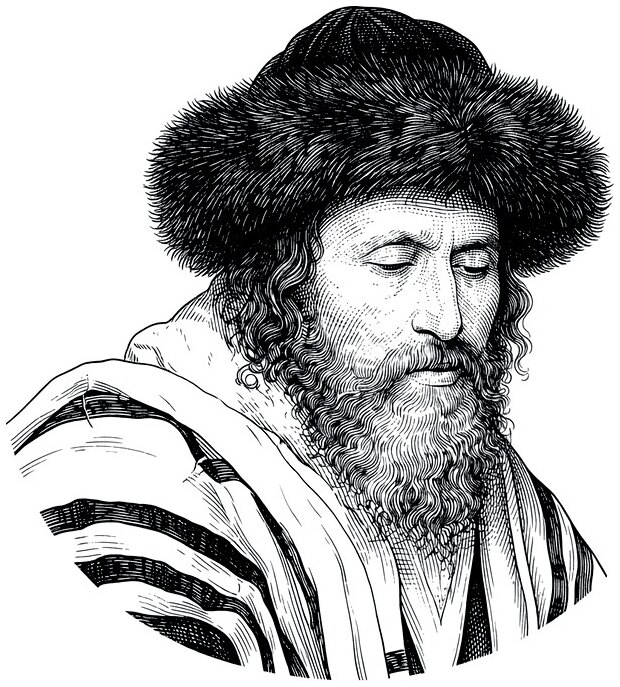
The prayer shawl comes out at dusk, which it does on no other evening of the year. On the night of Yom Kippur the tallit is worn for the evening service while there is still light in the sky, and the chant that opens the day, Kol Nidre, is said three times over so that anyone who arrived late has heard it.
What the day is
Yom Kippur is the tenth of Tishrei. In the year 5787 it begins at sundown on Sunday 20 September 2026 and ends at nightfall on Monday 21 September.
The Torah calls it a day of self-denial and a shabbat shabbaton, a sabbath of complete rest, on which no work is done by citizen or resident alien. The word fast does not appear in the command; the Mishnah reads the phrase instead and turns it into five prohibitions: eating and drinking, washing, putting oil on the skin, wearing leather shoes, marital relations. The rest of the tractate goes to the exceptions, where children are not made to fast, a pregnant woman overcome by a craving is fed, a sick person is fed on medical advice, and a man trapped under a collapsed building is dug out on the day, since saving a life overrides everything the day asks.
Two rulings stand near the end of Yoma. Death and Yom Kippur atone for sin when repentance goes with them, and Yom Kippur does not atone for a wrong done to another person until that person has been appeased. The tractate closes with Rabbi Akiva, who asks how fortunate Israel is and answers with the ritual bath: as the bath purifies the impure, so God purifies Israel.
Five services, and the man in white
The day has five services, and the fourth, Musaf, rebuilds the Temple in poetry. The Avodah walks through the high priest’s work in order, from the white linen to the incense and the confession. Its earliest named composer, Yose ben Yose, wrote in Palestine in the fourth or fifth century. Four times during it the congregation goes down with its face to the floor, and in the Sephardic rite the fourth prostration comes when the goat is designated by lot for God.
In Yoma 39b, Shimon HaTzaddik, high priest for forty years, says that every Yom Kippur an old man dressed in white met him, entered the Holy of Holies with him and came out again. In the last year the old man wore black, went in with him and did not come out. He fell ill after Sukkot and died seven days later. The same page lists what else stopped in the forty years before the Temple fell: the lot for God no longer came up in the high priest’s right hand, and the strip of crimson tied to the goat sent to Azazel stopped turning white. The goat, the cliff it was pushed from and the name Azazel are the subject of Why Was the Scapegoat Sent Into the Desert on Yom Kippur?.
The day is the one fast in the Jewish year that is not postponed when it falls on Shabbat. Other fasts move to Sunday; Yom Kippur is kept on the tenth of Tishrei whatever day of the week that is, on the strength of the name shabbat shabbaton. In 2026 the tenth falls on a Monday, so nothing has to be moved.
The night: Kol Nidre
Kol Nidre is Aramaic, and it works as a legal formula rather than a prayer. It declares annulled every vow and oath a person has taken, and the whole chant is repeated three times. The Shulchan Arukh records the custom and the reason for the repetition, which is the latecomer. The service opens with a sentence that explains who is standing in the room: with the consent of God and the consent of the congregation, we are permitted to pray together with the transgressors. The word has been read as a memory of the Marranos, the Jews who had converted under duress and could not be sure their Judaism counted.
The earliest trace of the formula sits in the responsa of the Babylonian Geonim in the eighth century, and they did not like what they found. Amram Gaon called it a minhag shetut, a foolish custom, in his own prayer book. The Karaites attacked the whole idea, which pushed the Geonim to narrow what the formula covered. Rabbenu Tam, in twelfth-century France, changed the tense so that his version covers the vows of the year ahead. Ashkenazi congregations use his wording and most Sephardic ones keep the older text. The Zohar reads the moment mystically, as a plea that God annul His own decrees of judgment the way the congregation annuls its vows.
Reform Judaism spent a century trying to remove Kol Nidre. The Rabbinical Conference at Brunswick in 1844 declared it not essential and asked its members to work toward its abolition, and the prayer books followed for a while. The Aramaic text returned in later editions, including the 1961 Union Prayer Book. In 1880 Max Bruch, a Protestant composer in Berlin and a friend of the family of the cantor Abraham Jacob Lichtenstein, finished a setting of it for cello and orchestra. The Nazi ban on Bruch’s music rested on the assumption that he was Jewish, which he was not.
The eve, and what people do with a chicken
Before the fast begins, the day has its own birds and money. Kapparot comes first: a rooster for a man, a hen for a woman, held and swung around the head three times while the person says, this is my substitute, my vicarious offering, my atonement; this cock shall meet death, but I shall find a long and pleasant life of peace. The fowl goes to the poor, and anyone who prefers can swing a sum of money instead and give that away. The custom’s first trace is a responsum of the ninth century, and it stands outside the Torah and the Talmud. Nahmanides and Solomon ben Adret called it a gentile practice; Joseph Karo, whose Shulchan Arukh became the standard code, ruled that it should be dropped, and Moses Isserles, writing the Ashkenazi glosses into the same code, kept it because the communities did it.
The argument is still running: in September 2026, thirteen Israeli municipalities, among them Tel Aviv-Jaffa and Beersheba, barred live chickens from the ritual through their veterinary permit powers, and the former Sephardic chief rabbi Yitzhak Yosef ruled that where cruelty is involved the ritual should be done with money, since causing suffering to animals may breach the biblical prohibition of tza’ar ba’alei hayim.
White marks the day too, and the Jerusalem Talmud has Israel wearing white on Yom Kippur, tied to Isaiah’s line about sins becoming white as snow, and Ashkenazi men wear the kittel, the white robe that is also the garment of the dead. In the afternoon comes Yizkor, the prayer for the dead, and the widespread Ashkenazi habit is that anyone whose parents are living leaves the room. The leaving is a habit rather than a rule, and the explanations differ: the evil eye, the wish to spare the feelings of the bereaved, and an older tie that links the memorial prayer to pledging charity in the dead person’s name.
The year carries a small copy of the day as well: from the sixteenth-century kabbalists of Safed comes Yom Kippur Katan, a minor day of atonement kept before each new month, with fasting and penitential prayer, read against the waning moon as the exile of the Shekhinah. It is skipped in four months of the year, and it is absent from the Talmud and the Shulchan Arukh.
The same chapter, kept three other ways
Two communities read the same text and keep it differently. The Samaritans hold Yom Kippur as the most sacred day of their year, a twenty-five-hour total fast centred on Mount Gerizim, with the whole Pentateuch read through and women in the synagogue, though at other services they pray at home. The Karaites, who take the plain text with no rabbinic addition, fast from sunset of the ninth to nightfall of the tenth and have no Kol Nidre.
Islamic tradition carries a further echo: in the hadith collections the Prophet arrives in Medina, finds the Jews fasting on Ashura, hears that it is the day Moses was saved from Pharaoh, and says the Muslims have a closer claim on Moses. Encyclopaedia Iranica notes that the name may come from the Hebrew asor, the tenth, and lays out the scholarly discussion of whether the fast began as an answer to Yom Kippur, though the two observances have long since diverged.
English owes the day a word: in 1530 William Tyndale read Azazel as ez azal, the goat that departs, and wrote “escape goate” into his Pentateuch. The King James Bible printed scapegoat in 1611, and English has used it as a metaphor ever since.
The day today
In Israel the country stops: almost nobody drives for the twenty-five hours of the fast, though no law requires it, the roads lie empty, and the state broadcasters go quiet. Secular Tel Aviv fills those roads with bicycles, and for families who keep nothing else, the day has become a children’s bike festival. The name of the day also belongs to a war: on 6 October 1973 Egypt and Syria attacked while the fast was on, and the inquiries afterwards blamed a fixed idea of what the enemy would and would not do.
Nightfall ends it: the last service is Ne’ilah, whose name means the locking of the gates, and it closes with one long blast of the shofar that lasts as long as the blower has breath.
The ten days that opened with Rosh Hashanah (Day of Cosmic Judgment) end here, and four days later the year turns to Sukkot (Festival of Booths / The Ushpizin). The greeting that travels between them is gmar chatima tova, a good final sealing. The month of turning has its own page: Rosh Chodesh Elul (Beginning of the Month of Repentance).