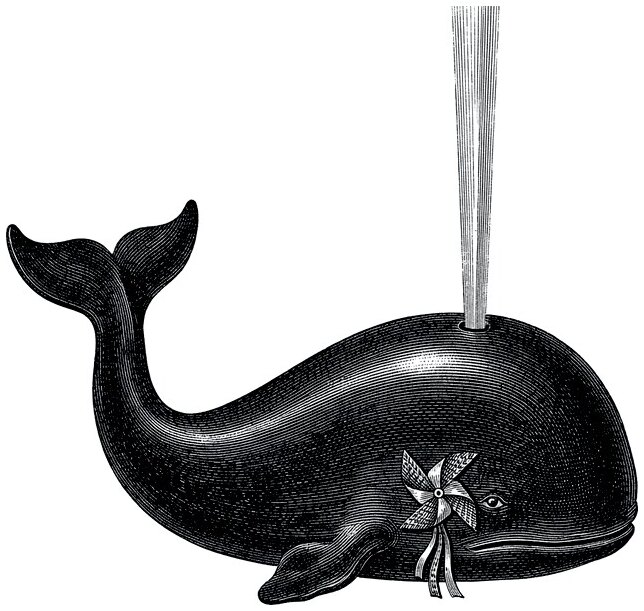
Nagasaki Kunchi is the autumn festival of the guardian shrine of Nagasaki, a port city in southwestern Japan, held from 7 to 9 October each year. Around half a hundred neighbourhoods take turns dancing for the shrine’s god, and when a team finishes, the crowd shouts “Motte kōi!” (“bring it back!”) and the dancers turn back to perform again. The festival has repeated itself since 1634, and in two paintings now in European museums (one attributed to Kawahara Keiga around 1830) the same whale keeps appearing: boys pull a cart carrying what Engelbert Kaempfer, a Dutch-trading-post doctor who watched around 1690, described as “a whale under a rock, half cover’d with water.” In Keiga’s later rendering, men haul the huge black whale through the crowd while it shoots a jet of water into the air.
How Kunchi works
Kunchi is a shrine festival where the city’s people, not the shrine itself, put on the show, and that is what makes it Kunchi. The Suwa Shrine holds three gods: Suwa and two companions. On 7 October bearers carry all three in portable shrines, the mikoshi, down from the hill to a temporary shrine in the town center, where they stay two nights before climbing back on the 9th. In 2026 the first dancers perform at 7 a.m., and the procession descends at 1 p.m.
The name itself is a date. Chinese custom marks the ninth day of the ninth month as a feast; locally “kunichi” (ninth day) wore down to “kunchi” over centuries. When Kaempfer watched around 1690 he heard it as “Kunitz” and placed it on that lunar day, but the festival now holds fixed dates in October. It traces its start to 1634, when two courtesans of the pleasure quarter, Takao and Otowa, performed a sung dance called Komai before the shrine. Japan designated the Kunchi dances an Important Intangible Folk Cultural Property on 3 February 1979.
The Shinto revival after ban
The city itself had been Christian; in the late 1500s Nagasaki stood under Jesuit control, and many of its old shrines and temples were destroyed by the order. After Japan’s military government banned Christianity in the seventeenth century, a shrine priest refounded the Suwa Shrine in 1625, and it moved to its present site in 1648. The governors encouraged Kunchi from its earliest years, watching it grow each year, and local tradition assigns a sharp reason: taking part in a shrine festival was a public way to show you were no Christian, and the governors may have used Kunchi to find believers still hiding their faith.
One custom feeds this reading. Around 3 October the dancing neighbourhoods open their houses and set out costumes and props for anyone to see. This practice, called niwamise or “showing the garden,” opens the doors to scrutiny. The open doors get tied to the old search for Christians: the theory runs that governors could peer into houses during this week and mark those who refused entry. But that reading, while plausible, has no documentary support we could find.
The neighbourhoods and their shows
Close to sixty neighbourhoods share the work, each taking its turn once every seven years. A team parades behind a decorated umbrella float called a kasaboko, then performs at the Suwa Shrine and at the temporary shrine in town, before moving on to two other shrines and the city hall. Kaempfer watched around 1690, a German in the service of the Dutch traders, and recorded how each street opened with a silk canopy or umbrella he called “the palladium of the street,” its name on a shield. Masked musicians came next, the props and actors, then every resident in their best clothes, with each show running three-quarters of an hour. “All the streets strive to outdo one another,” he observed.
The actors Kaempfer saw included young girls from the pleasure houses, along with boys and children from paying streets, and at the head stood the two courtesans of 1634, Takao and Otowa, whose dance had started it all. The shows could never repeat an old story without a new production, for to do so “would be thought beneath the dignity and majesty of that great God.” Nagasaki once had 77 neighbourhoods performing; many pieces died out, and only about ten carry a tradition from before the Second World War. In 2026 six neighbourhoods dance, one bringing the dragon and another a Chinese ship.
Around 1690 only two of the three gods went down into town. The third, a companion god named Morisaki, stayed at home, because nothing in his life story suggested that “he delighted in walking and travelling.” Today all three mikoshi make the journey.
The dragon and the god’s music
The dragon dance came from the Chinese merchants’ Lantern Festival in Nagasaki, held on the first full moon of the year; a Japanese neighbourhood eventually adopted it, and in 1886 a second neighbourhood offered its own dragon to Suwa. The dance moves through five parts: the jewel is hidden and the dragon sleeps, then wakes to chase the jewel, and the dancers finally pass through the coils of its body. Suwa himself is known as a hunter and god of protection, and on the 8th boys beat drums and bells in his honour. These same drums and bells, people said, were once the music that coaxed the sun goddess out of her cave, where she had hidden in anger and left the world dark. But Kaempfer noticed something else: the temporary shrine was built of bamboo and straw, “according to the sorry architecture of their indigent ancestors,” and a priest poured amazake, a sweet rice drink, into an unglazed clay dish for the governors’ deputies in memory of ancestors. The crowd threw so many offerings at the procession that Kaempfer thought it looked “as if they had a mind, out of a meer Charity, to stone them.”
Across traditions
Two Chinese feasts live in this festival of Shinto, Japan’s native religion of shrines and gods: the Double Ninth, the feast of the ninth day of the ninth month (which gave Kunchi its name), and the Lantern Festival, which gave it the dragon. Kaempfer, when comparing the ninth-day feast to Rome, noted that on that day “one would imagine that the Bacchanals of the Romans had been brought over into Japan.” The Bacchanals were wild Roman feasts of the wine god. The silent dances that told stories through gesture alone reminded him of “the Mimic Actors upon the Roman Stage,” and he judged the dancers to be “little inferior to our European dancers,” though he found the music “poor and lamentable,” easier on a god’s ear than on a trained one.
Kunchi stopped for three years during the pandemic. The dances were cancelled from 2020 to 2022 and came back in 2023, the first dances in four years.
The day today
The festival still fills three days, as it did in Kaempfer’s time. On the 7th the gods descend from the hill into town; on the 9th they climb back, and the teams dance at homes and shop doors around the neighbourhoods. A team that dances in 2026 will not dance again until 2033. The crowd at the shrine knows its ritual calls: “Shomō yare!” asks for more, and “Motte kōi!” (“bring it back!”) brings a team back to perform once more.