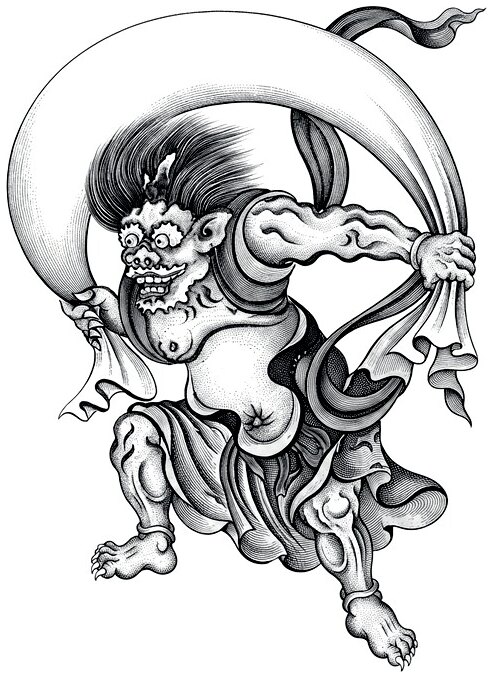
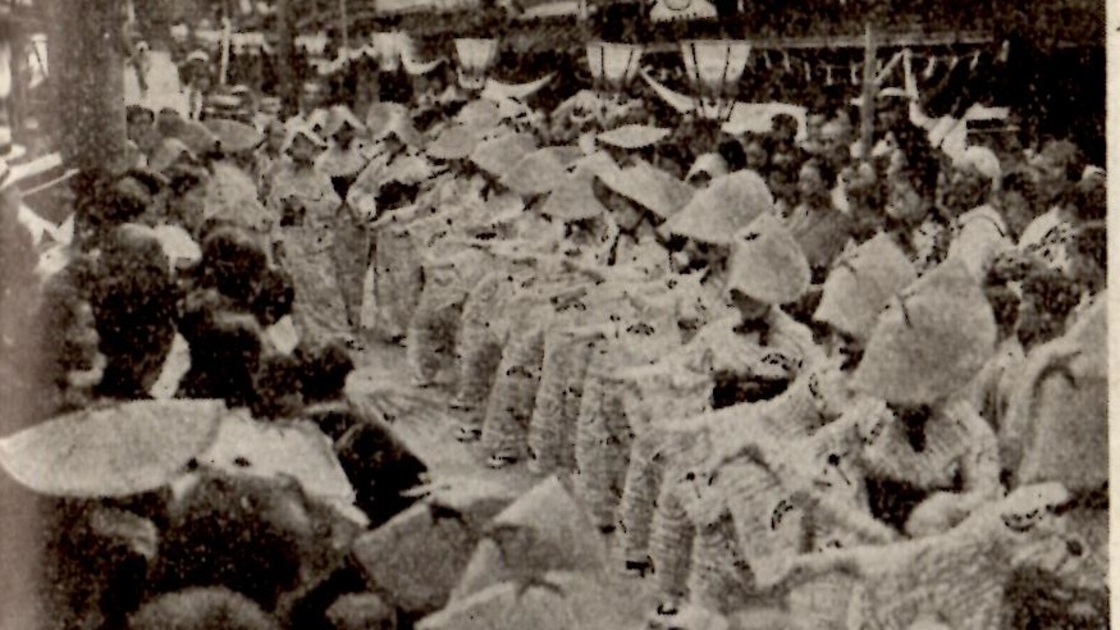
On the first three nights of September, the mountain town of Yatsuo in Toyama puts out hundreds of paper lanterns and dances. Men and women in braided sedge hats that shade their faces move through the narrow streets to the Etchu-Owara-Bushi, a folk song played on shamisen and taiko with the thin, wailing kokyu, a bowed fiddle you seldom hear in Japan. The festival is the Owara Kaze no Bon, the wind’s Bon. It has run on September 1 to 3 for about three hundred years, and it exists because of a day farmers once dreaded: the two hundred and tenth day after the beginning of spring.
Counting from Risshun
The Japanese count it from Risshun, the first day of spring, which comes around February 4. Two hundred and ten days forward brings you to the opening of September. In 2026 the count lands exactly on September 1. The date is a zassetsu, one of the seasonal markers Japan layered onto the old Chinese solar terms, and it shifts by a day or two from year to year; in 2024 and 2025 it fell on August 31.
The day falls at the tender point of the rice year. The ears are flowering and the grain has not hardened; the typhoon season is opening. One storm can flatten the crop a family lives on all winter. So farmers marked the day as unlucky, a day to watch the sky, and grouped it with two others: the two hundred and twentieth day, around September 11, and Hassaku, the first day of the eighth lunar month. The three were known together as the farmer’s great unlucky days.
Since Japan adopted the solar calendar in 1873, the date has wandered: the 210th day fell on September 2 only from 1902 to 1951, with the next occurrence in 2203.
The customs
Against those days people held wind festivals. Shrines ran kazamatsuri, rites to calm the wind and keep the harvest safe, and Yamato Shrine in Nara still holds its wind-calming rite three days before the 210th day. Asahi-machi in Yamagata parades floats and fires rockets at its Ōtani Fūjin-sai on August 31. In parts of the Chūbu region farmers kept an older, blunter magic: a sickle hammered into the trunk of a sacred tree, or fixed to a pole in the garden. The wind god, so the reasoning ran, would stay clear of a blade.
The grandest survival is the dance in Yatsuo. The town grew rich as a post town on raw silk and Japanese paper, and its eleven neighbourhoods each dance their own route. The old song verses carry the day’s logic, and one runs: if no wind blows on the 210th day, we’ll eat early rice and dance Owara.
Legends and beliefs
The official history is a legend, and Japanese sources retell it with a raised eyebrow. Shibukawa Harumi, the astronomer who compiled the Jōkyō calendar in the 1680s, once set out fishing. An old boatman stopped him. Today is the 210th day, the boatman said; the weather always turns on it. The clear morning broke into a thunderstorm by afternoon, and Shibukawa wrote the day into the calendar.
But the record does not quite support the story. A seamanship manual from 1634 already warns that the autumn wind called nowaki blows within the seven days around the 210th day, and the Ise calendar, a private almanac, carried the date from 1656, when Shibukawa was still a young man. The legends agree only on the shape of the belief, that the sea and the sky were known to break on such a day.
A wind god with a plain, family name stands behind the day. Saburō, third son, is one of the old names for the wind in Japan, and the cold mountain winds of Tōhoku and San’in are still called Saburō-kaze in places. Miyazawa Kenji built his strange children’s story Kaze no Matasaburō on the name. It opens on September 1, the 210th day, when a red-haired boy called Takada Saburō transfers to a rural school. The children come to believe he is the wind spirit, and he leaves on a stormy morning just after the 220th day.
In Hokuto City, Yamanashi, a small shrine to the wind god Saburō still stands in a district called the village where the wind is cut. Kenji learned the name from a friend who grew up near it.
Across traditions
Japan’s own writers kept returning to the date. Natsume Sōseki’s short story Nihyaku-tōka, from 1906, sends two young men up Mt. Aso; the storm of the day turns them back, and the talk moves to money and resentment of the rich. His novel Nowaki took its title from the classical word for the field-dividing autumn wind, the same wind the day fears. Sōseki set the story on September 2, where the count actually landed in 1906.
A folk reading of the old myths finds the same storm behind the day. Susanoo, the third of the three precious gods, was told to rule the sea and raged instead, until he broke the order of heaven. The wind-god essayists who untangle the Saburō name treat that rage as the template for the September storm, a third son who blows in from the sea and ruins what people built. His story is told on the Amaterasu page, where he plays the thunderous brother.
Farming peoples who live on one harvest tend to personify the wind that can break it. The Slavs had Stribog; the people of Jeju in Korea had Yeongdeung Halmang, a grandmother wind whose mood set the weather. Japan’s version is unusual only in being pinned to arithmetic.
The day today
The weather statistics soften the day’s menace. The 210th day is not especially stormy; the worst typhoons cluster in late August and mid-September, and this date falls between the peaks. The fear had a real anchor in the rice fields. Horiguchi Yoshiki, the meteorologist who studied the belief, argued that it worked as a warning aimed at the heading period, when wind damage cuts the harvest most.
September 1 is now also Disaster Prevention Day, set in 1960 after the Great Kantō Earthquake of September 1, 1923, when a typhoon wind fanned the fires that consumed much of Tokyo; the approach of typhoon season was part of the point. In 1923 the 210th day fell on September 2. The earthquake struck a day early, on the 209th day.