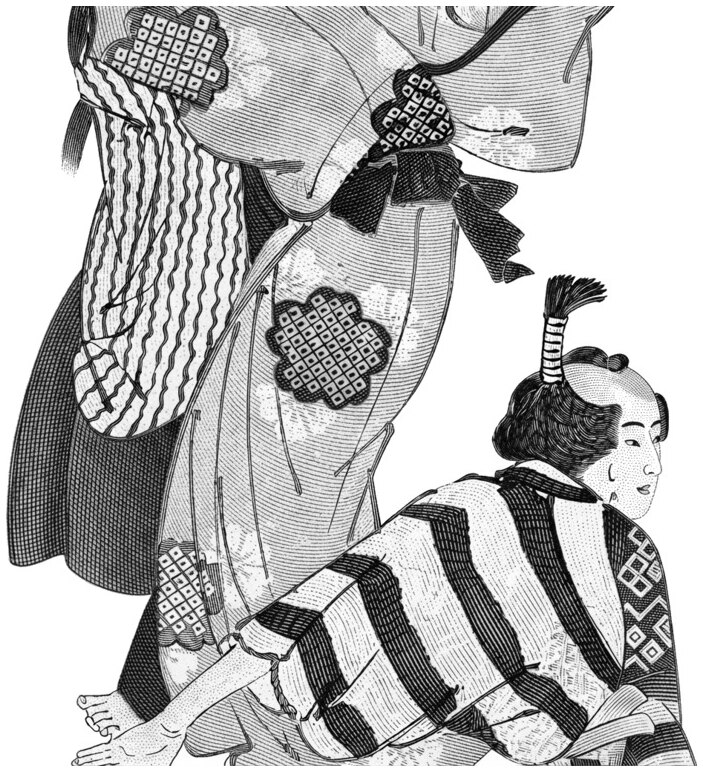
On the nights of the festival the streets of Tokushima close to cars. The troupes come out to the shamisen and the taiko drum, men low to the ground in happi coats, women upright under woven straw hats, and the dancers shout the chant as they go: odoru ahou ni miru ahou, onaji ahou nara odoranya son son. A fool who dances, a fool who watches; both are fools alike, so not dancing is the loss.
What the day is
Awa Odori is Japan’s largest dance festival, held every August in Tokushima on the island of Shikoku. The name comes from the old province of Awa, and odori means dance. The festival belongs to the Obon season, the Buddhist days when the ancestral dead come home, and it is counted among the three great bon dances of Japan, beside Gujo Odori in Gifu and Nishimonai Bon Odori in Akita. Over a million people come to watch it, and more than a hundred thousand dancers pass through the streets in groups called ren.
In 2026 the festival opens on August 11 with indoor performances in the city’s halls, and the main street dance runs from the 12th to the 15th. The evenings run from about six to past ten, and the center of the city closes to traffic.
The customs
Each ren wears its own colors and dances its own arrangement of the steps; there is no one correct way. The basic rule runs on two beats: right hand and right foot together, then the left. Men dance low, knees spread and arms above the shoulders, the steps wide and stomping. Women move upright with small steps, balanced on the ends of high wooden geta, a woven straw amigasa hat tilted over the face, hands raised. In the daytime the dancing is quiet, a form called nagashi; at night the same steps turn wild and are called zomeki. Some large troupes add the yakko odori, a performance with an acrobat tumbling at the end of a line of crouching dancers who form the string.
Shamisen and taiko drum carry the rhythm, along with a bamboo flute and small hand bell; the dancers often carry wooden clappers. Anyone can dance: the Niwaka Ren, an open troupe, takes in whoever shows up, including visitors, in the evenings at the plazas near the station.
The tune the festival dances to, Awa Yoshikono, is a local version of an Edo-period popular song. Its melody is traced to Kumamoto on Kyushu, then travelled to Awa by way of Ibaraki and Nagoya, passing through the Kansai region.
Legends and beliefs
Where the dance came from is a matter of legend, and the legends disagree. The story on the brochures says the lord Hachisuka Iemasa gave sake to the people of the new Tokushima Castle town in 1586 or 1587, and the drinking townspeople staggered into the dance. The local historian Miyoshi Shoichiro traced that story to a newspaper article of 1908 and found no older evidence for it. Another tradition holds that the dance grew out of the bon odori kept in Tokushima since the sixteenth century, when the town’s bon festivals were already famous for their size and exuberance. A chronicle of 1663 records a Furyu Odori performed at Shozui Castle in 1578, and the older Buddhist dances, the nembutsu odori of the Kamakura period, stand behind the style. The dancing needed rules early: an edict of 1671 allowed bon odori on three days only and forbade samurai to attend the public dance, and one of 1685 banned dancing after midnight.
The first verse of Awa Yoshikono credits Hachisuka Iemasa with leaving the dance to the people. The chant about the fools is the festival’s joke at itself, and its point is that the watcher holds no advantage over the dancer. Dancers also shout wordless calls, ayattosa, hayaccha yaccha, yoi yoi yoi yoi, that carry the beat when the instruments rest.
When Studio Ghibli’s Pom Poko (1994) staged the great parade of the shape-shifting tanuki, the raccoon dogs of Japanese folklore, the creatures danced the Awa Odori.
The same dance under other names
The festival is one branch of a larger season. Obon is the season when the ancestral dead come home: families clean the graves, light welcoming fires and put out food, and the bon odori is danced to receive the spirits and later to see them off. The word behind it is urabon’e, from the Sanskrit ullambana, an image of the hungry dead hanging upside down in torment. The founding story tells of the disciple Mokuren, who found his mother reborn among the hungry ghosts and, on the Buddha’s advice, fed the monks on the fifteenth day of the seventh month to free her; overjoyed, he danced. That same story, under the same scripture, is kept in Vietnam as Vu Lan, the festival of filial gratitude. Awa Odori is the Japanese branch of that dance, and Tokushima the place where it grew loudest.
The day now
The festival in its present form is young. The old Awa dance faded in the Meiji years as the indigo trade that made Tokushima rich collapsed against chemical dyes, and the prefecture revived it from 1926, giving it the name Awa Odori and promoting it as the region’s main tourist attraction. Since then it has spread. Migrants from the province started an Awa Odori in Koenji, Tokyo, in 1956, now the second largest in Japan, and troupes have danced it in the United States, Brazil, France and Taiwan. The town of Naruto, up the coast, keeps its own smaller Awa Odori on the nights before the main festival.
In 2026 the official poster was drawn by ufotable, the animation studio behind Demon Slayer, and a Demon Slayer troupe dances on the evening of August 14 with two of the anime’s voice actors. The year-round Awa Odori Kaikan by the station holds daily demonstrations. A visitor can rent a happi coat from a stall, walk into the Niwaka Ren, and learn the whole dance in two beats.