Aleister Crowley, the English occultist who called himself the Great Beast, was born late on the night of 12 October 1875. The hour was between eleven and midnight, and the house stood in Leamington, an English spa town. His parents named him Edward Alexander. Decades later he set down the hour himself and added that the zodiac sign Leo was just rising, “as nearly as can be ascertained.”
The baby, by his own account, carried “the three most important distinguishing marks of a Buddha”: a tied tongue (surgically released when he was two days old), another mark requiring surgery some fifteen years later, and four hairs over his heart curled “from left to right in the exact form of a Swastika.”
A birthday in a Bible house
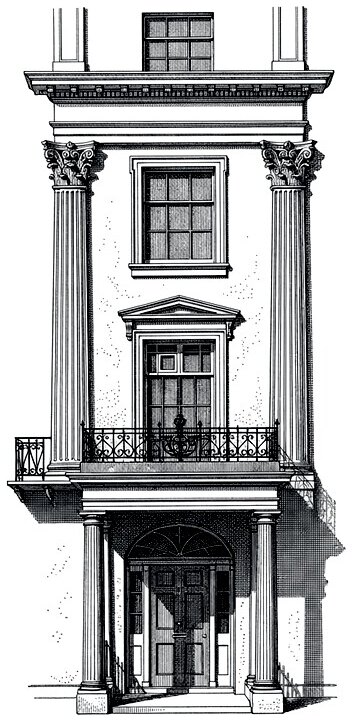
The family lived in a row of tall stucco houses. His father had trained as an engineer but never worked as one. A share in the family brewery, Crowley’s Alton Ales, let him retire before his son was born. He had been born a Quaker. As an adult he joined a strict Protestant sect, the Plymouth Brethren, which read the Bible as the exact words of the Holy Ghost.
The father travelled as a preacher for the sect. His wife, Emily Bertha Bishop, came from a family in Devon and Somerset. She joined the Brethren when they married, in London in November 1874.
The customs of the house
Every morning after breakfast the household met for prayers. Family and servants sat in a fixed order, and each person read one verse of a Bible chapter in turn. The boy could read well by the age of four.
His father’s favourite sermon came from the fifth chapter of Genesis. The patriarchs lived for centuries, and every one of them died in the end, so his listeners had better make sure of Heaven. The boy listened mostly for the sound of the long Hebrew names.
The Brethren held Christmas to be a pagan festival. They sent no Christmas cards and destroyed any that arrived. The boy liked turkey, so the family ate it on 24 and 26 December. Turkey on the 25th was no sin, the reasoning went, but one had to “avoid even the appearance of evil.”
At home he was called Alick. He hated the name, partly because his mother used it. As a young man he took Aleister, the Gaelic form of Alexander. His mother had another name for him. She called him “the Beast”, and he loved it.
The Beast and the baptism
In his autobiography, published in 1929, Crowley told his childhood in the third person, as “he”. The Bible was the boy’s only book, and its stories and poems left him cold. He liked the prophecies, above all Revelation.
There his sympathy went to the other side: “the Dragon, the False Prophet, the Beast and the Scarlet Woman.” He liked to picture himself as the Beast “whose number is the number of a man, six hundred and three score and six.”
He also claimed to remember his own baptism. The Brethren baptised babies by dipping them in water, so he can have been at most three months old. The scene was a bathroom on the first floor of the Leamington house, with a small group of “brethren” around him. He wore a long white gown, and the dip and the lift out of the water took him by surprise.
He could not follow the words, but he kept their solemn tone. He thought the moment left him two things for life: a dislike of cold baths and “a vivid passion for ceremonial speech.”
His other Leamington memories are plainer. An old woman called Miss Carey brought him oranges. His first remembered words were “Ca’cy, oraage,” because he could never say his R’s. The river Leam and its weir stayed with him, and so did the white peacocks on the terrace of Warwick Castle. When he was about six the family moved to Redhill in Surrey, and he never went back.
At about eight Crowley was sent to an evangelical boarding school at St Leonards, by Hastings. He died in Hastings on 1 December 1947, at 72.
A pudding and a past life
Another English boy grew up under the same Christmas rule. The writer Edmund Gosse told his Brethren childhood in a memoir of 1907, Father and Son, and Crowley set his own beside it. The details shift between the two accounts: Crowley recalled Gosse throwing out a Christmas turkey, but the text Gosse published describes a plum-pudding instead. On Christmas Day 1857 the servants made a small one in secret and gave the boy a slice. Sick with guilt, he burst into the study crying that he had “eaten of flesh offered to idols.” His father ran with what was left of the pudding to the dust-heap and raked it deep into the ashes.
The second echo comes from Paris. Four and a half months before the birth in Leamington, on 31 May 1875, a French writer on magic died there. He wrote as Éliphas Lévi, and his books shaped the English magical order Crowley later joined, and Crowley himself.
Crowley came to believe that he had been Lévi in his last life. One clue was a play he wrote in 1899. In it a priestess marries her own son, and then their son, to breed an heir who is almost wholly herself.
Later he found the same scheme in Lévi, credited to the ancient magicians of Persia. “That was one of the facts,” in his words, “which led me to the discovery that in my last incarnation I was Eliphas Levi.”
The day today
Crowley founded a religion, Thelema, whose one law is “Do what thou wilt shall be the whole of the Law.” Its holy book is the Book of the Law, which he wrote down in Cairo in April 1904.
The second chapter of that book says: “There are rituals of the elements and feasts of the times.” Verses later come these lines: “A feast for fire and a feast for water; a feast for life and a greater feast for death!”
Thelemites call 12 October “Crowleymas”. The day he died, 1 December, is his Greater Feast. His words also live on in Wicca, the modern witchcraft religion. One of its best-known texts still carries his lines, as Doreen Valiente and the Charge of the Goddess shows: about a quarter of the version Wiccans use is still Crowley.
In Berkeley, California, a lodge of the O.T.O., the magical order Crowley headed in his last years, keeps his birthday each October with food and readings from his works. The lodge itself was chartered on Crowleymas afternoon in 1977, under a solar eclipse.
For the 125th birthday, on Thursday 12 October 2000, the lodge held a feast at seven in the evening. Members were asked to bring a dish and to mark a favourite poem or a few paragraphs to read aloud together. They were also asked for photographs and portraits of Crowley, for a small exhibition.
Local folklore in Leamington says that later in life Crowley put a curse on everyone born in the town, so that none of them could ever escape it.
The house at 30 Clarendon Square still stands and has been divided into flats. On 3 November 2026 the town’s history café holds a morning talk about him, “Do as thou wilt!”, at the Band Factory on Althorpe Street, from half past nine to eleven.