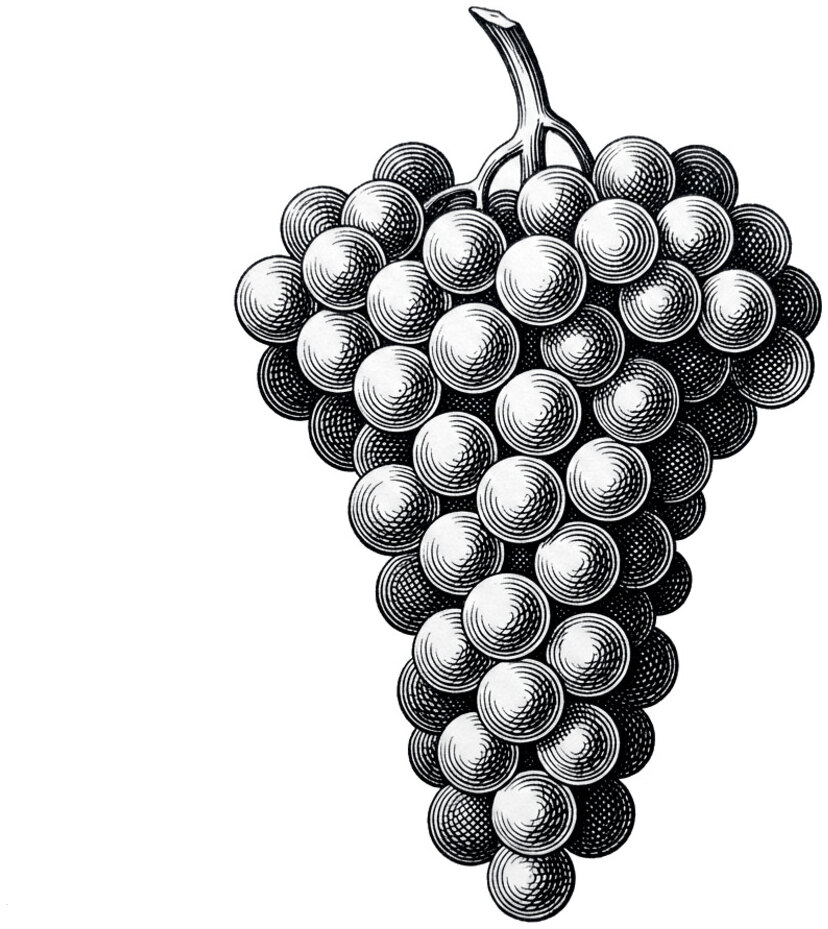
In the old villages of Serbia the first grapes of the year were carried to church on the morning of Preobraženje, wrapped in a cloth and blessed, and the first share went to the children. Anyone who tasted the new grapes before the feast, people said, was eating their own luck.
What the day is
Preobraženje, the Transfiguration of Christ, is one of the Twelve Great Feasts of the Orthodox church. The Western church keeps the same feast on August 6, and the gospel story behind it, the mountain and the light, has its own page: Feast of the Transfiguration. The churches on the Julian calendar keep the feast on August 6 by the church reckoning, which in our century falls on August 19. The Julian calendar runs thirteen days behind the Gregorian one, and the gap widens to fourteen in the year 2100.
The feast falls inside the Dormition fast, the two weeks of fasting before the Dormition of the Mother of God on August 28, and it opens at the moment the grapes ripen. The church took the ancient offering of first fruits and tied it to this day. Where grapes grow they are blessed; elsewhere apples and other fruit take their place.
The blessing of the grapes
At the end of the Divine Liturgy the priest reads a prayer over the new fruit of the vine. The prayer gives thanks for the grape that “through temperate weather, through showers of rain and times of calm, has attained to ripeness at this hour,” and asks that eating it be for gladness. A second prayer, said for those who offer the first fruits, asks for “an abundant harvest of Thine eternal good things.”
The gesture predates the church: in ancient Greece the first portion of the harvest, the aparche, was set aside in thanks before the rest was gathered in and sold or eaten, at Eleusis among other places. The Christian rite kept it and aimed it at a different god.
Across Serbia the new grapes waited for the church’s blessing. On the day itself they were said to transfigure and gain their full taste, while tasting them early meant eating your luck and spoiling the year’s yield. The blessed grapes were shared, first with children, then with the household and the neighbours, and a few grains might be left in the vineyard as thanks for the next year. In some regions the blessed grapes were carried to the cemetery and set on graves, so that the dead received their share of the first harvest. Families who had lost a child that year, it is told, carried the first grapes to the grave instead of the church.
The year turns
Preobraženje is also a boundary in the folk calendar. The Serbs said that on this day “the leaf in the forest and the stone in the water transfigure,” and that the sun “turns its back on summer and smiles at winter.” After the feast nobody swam in the rivers; the water had turned, and cold, illness or a snakebite could follow. The days shorten and the mornings turn fresh, while the swallows start to gather for the south.
In Serbia and in North Macedonia people say that at midnight before the feast “God’s doors” open in the heavens. At that moment a person should look at the starry sky and make a single wish. Mothers kept the children awake so they would not miss the opening. The day has its prohibitions: a woman who cried on Preobraženje was believed to cry all year, and whoever slept during the day would be drowsy all year. In the Homolje villages women rose before the sun and did a little of each kind of women’s work, so that God would turn them to be industrious.
The Eastern Slavic saying runs that from the Spas-Transfiguration the weather transforms: a clear, dry August 19 promised a sunny autumn and a harsh winter, and “the Second Spas has come, take the gloves in reserve.”
The same feast, other names
The fruit blessing is part of the feast across the Orthodox world. In Bulgaria people pick the first grapes and bring them to church, where they are given out for health and fertility in the year ahead. There too the sky is said to open on the day, and the summer turns toward autumn.
Bulgarian folk legend sets the grape against the blackberry, which it calls “devil’s grapes”: the Devil made it ripen earlier than the grape, so it is unlucky to eat blackberries on the feast before tasting the grape first.
In Georgia the feast is Peristsvaleba, the transformation, kept on August 19. It was forbidden to eat the new grapes before the feast, and the blessing is the starting signal for Rtveli, the grape harvest, which never begins earlier. There the grape reads as the feast’s own symbol of change: the wine made from it becomes the blood of Christ in the liturgy.
Romanians call the day Schimbarea la Față; the new grapes were kept for the feast there, and swimming stopped after it. A quarrel on the day was avoided, for it would last all year.
The prophet Elijah, one of the two witnesses on the mountain, has his own storm feast earlier in August: Ilindan. The Dormition fast ends two weeks after, at Velika Gospojina.
The day today
Churches across the Orthodox world still bless grapes on August 19 and hand them out after the liturgy, in villages and cities, and among the diaspora. The blessed bunch is kept on some tables for the days that matter, a journey or the start of school, and a few grains go back to the vineyard in thanks.
On August 19, 1903, on the feast day itself, the Thracian wing of the Ilinden-Preobrazhenie Uprising rose against Ottoman rule and held the Strandzha Mountains for about twenty days. Historian Georgi Khadziev counts 201 villages and 12,400 houses burned and some 30,000 refugees in the reprisal.