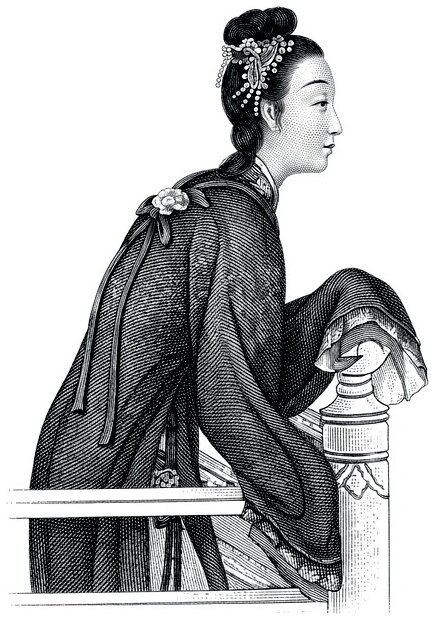
On the evening of the autumn equinox, an emperor of China walked out to a white altar west of his city. The gate, the pillars, the steps and the roof tiles were white, the colour of moonlight. At the you hour, between five and seven, he knelt twice and bowed six times while officials read the prayer and six sections of music played. The god of the place was the spirit of nocturnal brightness, and the rite belonged to the moon.
Half of autumn
On this day the sun passes over the equator. Day and night come out even, and the harvest is in. Chinese calendars divide the year into twenty-four solar terms, each one a step along the sun’s path. Qiufen (秋分) is the sixteenth of them, and the fourth of the six that fall in autumn. The moment itself arrives in 2026 on 23 September at 08:05 Beijing time.
The name means the autumn cut in half, since autumn in the old Chinese year runs from the start of autumn to the start of winter and the equinox stands halfway between the two. A Han-dynasty text on the seasons gives the balance its own words: yin and yang half and half, so day and night are equal and cold and heat are level.
The sun has width, and the air bends its light, so the edge of the sun shows before the centre does, and day and night are not evenly divided. Astronomers at the Purple Mountain Observatory give Beijing about twelve hours and eight minutes of daylight on the day itself.
The old calendars divide these fifteen days into three pentads. Thunder stops sounding, the insects seal their holes with fine earth, and water begins to dry up. In the fields the term opens the “three autumns”: harvest, ploughing and sowing at once. Maize ripens in the north China plain, and rice along the Yangtze.
In 2016 UNESCO added the twenty-four solar terms to its list of humanity’s intangible heritage: a way of keeping time by watching the sun.
The emperor’s moon
The Book of Rites pairs the two equinoxes, and the Son of Heaven faces the sun in spring and the moon in autumn. The same text puts the sun’s altar on a terrace and the moon’s in a pit, the sun to the east and the moon to the west. Older writings name the animals for the autumn sacrifice: a pig, and in one account a sheep with it.
Beijing’s Altar of the Moon was built in 1530, in the ninth year of the Jiajing emperor’s reign. It stood outside the Fucheng Gate, faced east, and served one deity, the spirit of nocturnal brightness. Everything about the place was white: gate, pillars, steps, tiles, offerings and robes.
Under the Qing the rite was held on the equinox at the you hour. Officials laid out jade and silk as offerings and spoke the prayer aloud, and the music ran to six sections. The emperor came in person in years of the ox, dragon, goat and dog, and in other years he sent a military official.
The Qing writer Pan Rongbi records the catch: the spring sacrifice to the sun and the autumn sacrifice to the moon were state rites, and commoners were not allowed to hold them.
The Qianlong emperor wrote a poem for the day in 1748, titled “Autumn Equinox Moon Worship on the First of the Eighth Month”.
Where the moon went
People wanted the moon too, and the equinox rarely obliged, since it falls inside the eighth lunar month but seldom on the night of the full moon. The celebration moved to the fifteenth of that month, the full moon night, and the court reserved the altar and the equinox sacrifice for itself.
Mid-Autumn took the festival, and Qiufen kept the rite. Out in the country, worship and moon viewing merged and settled on the Mid-Autumn date, while the court held to the equinox; the folklorist Xu Yiyi reads the split that way. Moon viewing is older still, recorded in the Jin dynasty centuries before the festival fixed its date, and a Song-dynasty account of Kaifeng describes how the wine houses filled and the music never stopped on the fifteenth of the month. Mid-Autumn Festival carries that evening on this site.
What the day kept
Qiufen had farming customs of its own: in Lingnan, the region around Kaiping in Guangdong, families picked a wild amaranth called qiubi hao on the day and boiled it with fish slices into the autumn soup, and the rhyme that went with the custom wished the household safety and health.
A picture went from door to door, printed on red or yellow paper with the year’s solar terms and scenes of ploughing, and the man who brought it sang an improvised line for each household about the farming year ahead. The trade had its own name, speaking autumn, and the singer was the autumn official. Householders paid him for a good line.
Small dumplings without filling were speared on bamboo sticks and planted at the edge of the fields, where the sparrows filled their beaks and left the grain alone. The custom is called sticking the sparrows’ beaks.
The egg
The last custom is a game: when Qiufen comes, the egg is pretty, the saying goes. Children try to stand a fresh egg upright on a table.
The game is older than the equinox and began at the first day of spring, in early February, six weeks before the March equinox. A correspondent for Life magazine watched people stand eggs in Chongqing in 1945 and photographed the ritual for the issue of 19 March. The six-week gap was lost on the journey west, and readers in the United States got the equinox instead. Albert Einstein, asked what he made of the claim, called it rubbish.
Two years later a Japanese physicist, Nakaya Ukichiro, settled the question with eggs and a table. His essay “Eggs on the First Day of Spring”, published in 1947, reported what his experiments showed: eggs stand on any day of the year. The shell is uneven at a scale the eye cannot see, and those small bumps hold the egg until it tilts about one degree. Few people had tried it, because everyone assumed eggs could not stand.
Across the water
Japan keeps the same astronomical moment as a public holiday. Autumnal Equinox Day falls on 23 September in 2026, and the holiday law defines its purpose as respecting ancestors and remembering the dead. It is the middle day of the autumn Higan week, 20 to 26 September, when families clean graves and leave offerings. Aki no Higan covers that week, and Chunfen, the spring equinox, is its mirror on this site.
The day today
In 2018 China attached a new holiday to the old term, when the State Council approved a Chinese Farmers’ Harvest Festival on the autumn equinox, the first national festival made for farmers, which fell on 23 September 2018. The choice was a practical one: most of the country brings in its grain in autumn, and a dozen minority peoples already held harvest festivals in that half of the year.
The sky does part of the work: around the equinox the sun rises almost due east and sets almost due west, and the east-west avenues of Beijing line up with the sunset at about six in the evening, where people stop on the bridges to photograph it.
The altar is a public park now, and its northern ritual layout was rebuilt between 2004 and 2007 from the Qing record; the site has been a National Key Cultural Relics Protection Unit since 2006. In the north China plain the maize is in, and farmers are turning the ground for next year’s wheat in the same week.