In the first minutes of You Won’t Be Alone, a witch comes to a house in a Macedonian mountain village of the 19th century, where a woman has just given birth. The mother begs for her baby’s life. The witch, Maria, agrees on one condition: she will come back for the girl when she turns sixteen. She takes the child’s voice, and the mother hides her daughter in a cave, where the girl, Nevena, grows up alone. On her sixteenth birthday Maria returns, kills the mother and turns Nevena into a witch with a scratch and a witch’s spit.
What follows is the film’s strangest idea. A witch in this world becomes someone else by killing them, opening a cavity in her own chest and putting the dead body’s insides into it. Nevena lives on in this way as a young mother, as a young man and as a child, and she learns, one borrowed body at a time, what a human life is. The villagers call the old witch Maria the “Wolf-Eateress”.
The film looks and sounds old. It is spoken in Macedonian, the director Goran Stolevski wrote it in an old regional dialect, and although the story is set in Macedonia, it was shot in a mountain village across the border in Serbia. So the question many viewers ask is a fair one: is any of this real?
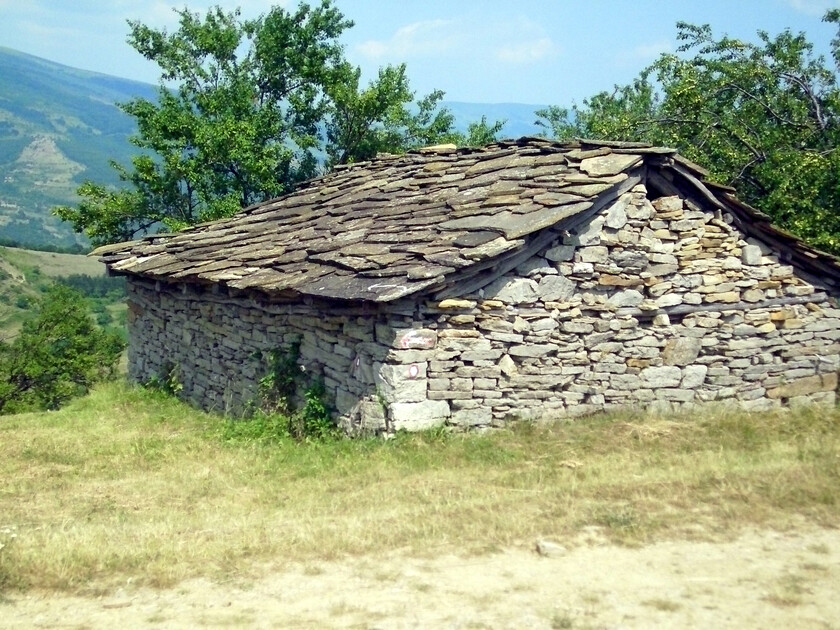
You Won’t Be Alone is set in Macedonia but was filmed in Serbia, in the village of Pokrevenik on Stara Planina, at the Tupavica waterfall and in Petnica Cave near Valjevo. It premiered at the Sundance Film Festival on 22 January 2022.
What the director says
Stolevski, who grew up in Macedonia and moved to Australia at twelve, has answered that question in several interviews. “It’s literally all made up!” he told the British site Eye for Film in 2022. He said that he first went looking for “whatever folktales I could track down from the region”, but that “none of the ones I found were very inspiring. There weren’t that many of them that were recorded.”
So he turned to history instead. He told the horror site Daily Dead that he read about “real life as it was in past centuries in that region, and not just legends”, and about the witch trials of those centuries. One thing caught him, and he built his film on it: in the Balkans, as elsewhere, women accused of witchcraft “routinely were accused of taking the shape of other human beings or animals.”
Even the name of his witch came to him almost by chance. In an interview with the film site Klassiki he said that while reading about everyday life in the region in the 19th century he found “some mention of a figure called the ‘Wolf-Eater’ or ‘Wolf-Eateress’”, with nothing more than that: “just a generalised bogeyman.” He told Eye for Film that “all the Serbians I was working with assured me that it came from a legend or from something very specific.” When people in Serbia asked him which superstitions he had borrowed, he told Klassiki, his answer was: “That’s the aim!”
Both sides had a point. The South Slavic witch had in fact been recorded, village by village, with names, places and page numbers, in a book Stolevski does not mention in any of these interviews.
The book that recorded the witch
Tihomir Đorđević (1868–1944) was a professor of ethnology in Belgrade who spent his life collecting what the villages of the Balkans believed. For his study of the witch he gathered what local collectors had published in the ethnographic journals of Belgrade, Sarajevo and Zagreb, and he put their reports side by side, place by place. The book was found among his papers after his death and appeared in 1953 under the title Veštica i vila u našem narodnom verovanju i predanju, “The Witch and the Fairy in Our Folk Belief and Tradition”.
The witch in that book is the vještica. The word has several local forms: veštica in Serbian spelling, veštarica or vešterka in the Macedonian reports. All of them mean the same figure, and her first definition comes from Vuk Karadžić, the 19th-century reformer of the Serbian language, whose dictionary, first published in 1818, recorded folk belief alongside words. A vještica, Vuk wrote, is a woman “who possesses within herself a kind of demonic spirit which departs from her and transforms into a butterfly, a hen, or a turkey, and flies around houses eating people, especially young children.”
Our site’s entry on the Vještica tells her whole story. For the film, three parts of it matter most.
An old woman whose soul walks at night
The closest parallel to the film comes from the very region where it is set. Đorđević quotes two reports from villages in today’s North Macedonia. In Slepče, near Kruševo, “the veštice are usually old women whose soul departs by night and walks through the village,” eating lard and cheese wherever they find it. In Katlanovo, in the Skopje basin, a witch “is the soul of an old woman which leaves her after she falls asleep and moves about like a light.”
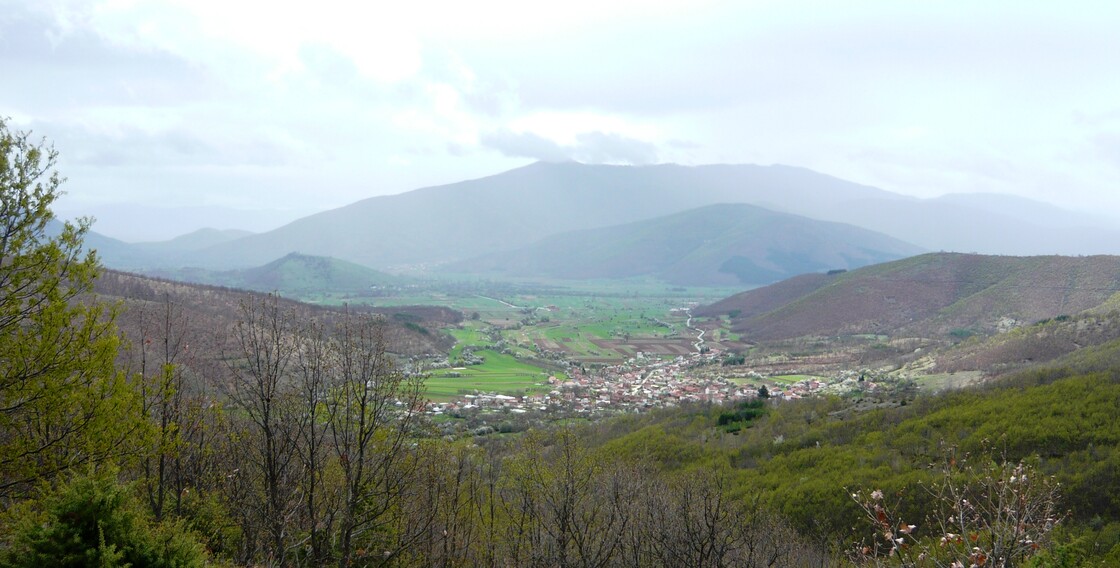
In these villages the witch’s body stays behind in bed while she goes out, and that body is in danger. In Slepče people said that “if a man turns an old vešterka in bed to the other side at night, upside down, she remains dead, because the soul cannot find her to re-enter her.” Vuk Karadžić knew the same belief: while the spirit is away, the woman “lies as if dead.”
A report from Kola, in Bosnia, tells the belief as a story. A man caught a hen that had come out of his sleeping wife, and the next day his wife was dead. He understood what he had done, felt sorry and let the hen go. It “went into the wife’s mouth,” and the woman sat up and said how soundly she had slept.
Witches in the same region could also do harm without leaving the body at all. In Skopska Crna Gora, the hills just north of Skopje, people believed that witches and male sorcerers “can kill a person merely with a glance,” a report Đorđević placed in his separate study of 1938, The Evil Eye.
The film keeps the core of the Macedonian belief, a self that can leave its own body and live elsewhere for a while, and takes it one step further, because Stolevski’s witches stay in the other body.
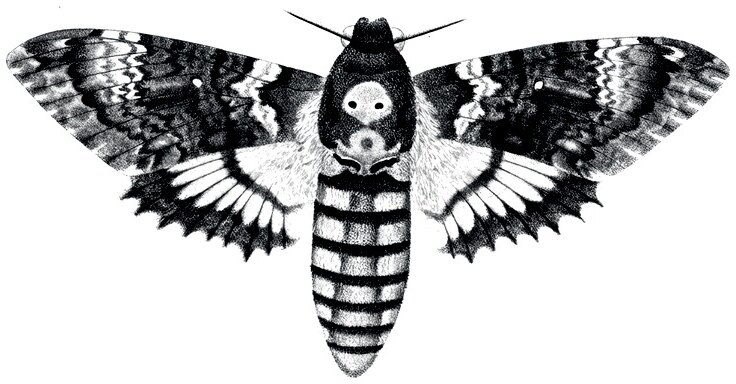
In Herzegovina, people were told to catch any moth that flew into the house at night and circled the candle, and to singe its wings in the flame, because the moth might be a witch who had turned herself into a moth.
A chest that opens and closes again
The film’s most shocking image is the open chest. Here, too, the records come close. Vuk Karadžić wrote that when a vještica “finds a man sleeping, she strikes him with a kind of rod across the left breast, and his chest opens while she removes his heart and eats it, and then the chest grows back together again.” In Gacko, in Herzegovina (today part of Bosnia and Herzegovina), people added that the witch decided at that moment “what kind of death he will die and within how many days.” The victim could live on for a while, carrying a death already chosen for him.
The difference from the film lies in the direction. In folk belief the witch takes something out of the chest of another person, the heart, and eats it. In the film the witch puts something into her own chest and becomes the other person. Đorđević’s collection has many witches who turn into moths, hens, cats and birds, but none who takes on the shape of a person she has killed. That central idea, as far as these records go, is Stolevski’s own.
How a girl became a witch
In the film, Maria makes a witch of a stranger’s child. The village records know other ways. In Kuči, a tribal region of Montenegro, a witch was born “in a red caul,” the membrane some babies are born in, “which the mother conceals from everyone and hands over to her daughter when the latter reaches full age.” In Nevesinje and Gacko a woman could become a witch because she was conceived “in an evil hour,” or because she “learned the ‘devil’s craft’ from some old vještica.” That last line comes nearest to Maria and Nevena: an old witch teaching a young one. But no report in Đorđević’s book describes a witch who takes a stranger’s baby and makes her a witch.
What the records do describe is the witch’s hunger for her own family, which the film turns into Maria’s threat to Nevena’s child. In Kuči and Vasojevići, both in Montenegro, people said that “a vještica first exterminates her own kin and only then others,” and they had a saying for anyone who turned on their own family: he turned on them “like a vještica on her own kin.” A collector in Herzegovina wrote in 1867 that “no true vještica can rear a single child of her own.”
The reality behind the film
Stolevski told Klassiki that he wanted Maria’s life grounded in “a reality that a lot of women had to live with.” Đorđević’s book records that reality too, with names.
In Bukovica, in Dalmatia, when children in a house began to die suddenly and an old woman lived there, the whole household turned on her: “Go immediately and confess, you old vještica!” The woman would go to the priest and beg him “by the sun and the moon” to tell her whether she was one.
Some accusations ended in death. In the village of Žabari in Serbia, during the uprising against the Ottomans led by Karađorđe in the early 19th century, a woman named Pauna, the wife of Pavle Stanojević, was “tied to a spit, roasted between two fires,” and finally burned when she would not confess. In Mokrinje, in the Bay of Kotor, villagers, among them their priest Jeftimije, stoned a woman they believed to be a witch. On 16 March 1795 Petar I, the Orthodox Metropolitan who led the church in Montenegro, shut everyone who had taken part out of the church and its communion “as willful murderers.” Her name was Anđa Perlain, and in 1922 the cairn over her grave was still called Anđina gomila, “Anđa’s heap of stones.”
The book also shows the gentler side of the same fear. In Kuči, people killed the moth they believed had come out of the witch, instead of the woman herself.
On the Dalmatian coast, men fired blessed wax bullets at the lightning to bring down the witches in the storm, as our article on Klek and the wax bullets tells, and The Werewolf of Pleternica follows a Croatian woman who was said to roll three times by a stream and become a wolf.
A child called Wolf
The film’s witch is the Wolf-Eateress, and Stolevski found nothing about what the name meant. Đorđević’s book contains a custom that shows how the wolf and the witch were tied together in the same villages, although no source connects it to his name.
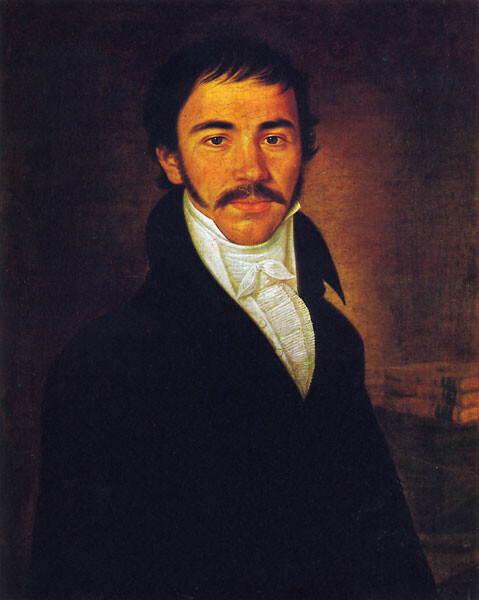
Where a family’s children kept dying, people believed that witches were eating them. So they gave the next child the name Vuk, “wolf,” because, as people said in Nevesinje and Gacko, the witches “dare not attack a wolf.” Vuk Karadžić himself got his name this way. His mother had already buried five children, “all five, one after another,” and the village was sure that witches had eaten them. When he was born in 1787 his family named him Wolf, and he lived to write down in his dictionary what a vještica was.