The best films about angels borrow from a short shelf of old texts. The archangel Michael, the angel who fights the devil, comes from the biblical books of Daniel and Revelation, and Gabriel, the angel who brings God’s messages, from Daniel and the Gospel of Luke. The angels who leave heaven for human women come from the Book of Enoch, and the idea that angels stand in ranks comes from a Greek writer of about AD 500. What the films add is often the part people remember best, such as angels who earn their wings or envy the humans God loves.
Below are ten films, in the order they came out. Each one puts an angel, or a fallen angel, at the centre of its story.
What theology do films about angels draw on?
Four kinds of text come up again and again. The first is the Bible. In the Book of Daniel, a prophet’s book in the Old Testament, Michael is “one of the chief princes” and “the great prince which standeth for the children of thy people”, and Gabriel is sent to “make this man to understand the vision”. In Revelation, the last book of the New Testament, “there was war in heaven: Michael and his angels fought against the dragon”, and the dragon, “called the Devil, and Satan”, is thrown down to earth with his angels.
The second is 1 Enoch, a Jewish book that most churches left out of their Bibles; the Ethiopian Orthodox Church kept it. It is called 1 Enoch because later, different books also carry the name of Enoch, a man from the generations before the great flood of Genesis. It tells of two hundred angels, called Watchers, who came down on Mount Hermon, took human wives and taught forbidden arts. The story is told in full in our article The Book of Enoch: The Angels Who Taught Too Much.
The third is a book called The Celestial Hierarchy. Its author presented himself as Dionysius, an Athenian whom the apostle Paul converted, according to the Acts of the Apostles in the New Testament. In fact he wrote between about 485 and 528, perhaps in Syria, which is why scholars call him Pseudo-Dionysius. He sorted the angels into nine orders in three groups of three: Seraphim, Cherubim and Thrones; Lordships, Powers and Authorities; Principalities, Archangels and Angels. The highest orders stand nearest to God, and each passes what it learns from God down to the next, until the lowest, the plain Angels, bring it to humans.
The fourth is the medieval theologians who asked exact questions, above all Thomas Aquinas in the thirteenth century. In his Summa Theologiae he asks whether angels have bodies (they do not, though they can take one on to be seen), whether they eat, and whether a fallen angel, one thrown out of heaven, can ever turn back.
1. A Matter of Life and Death (1946): who comes to collect the dead?
In May 1945, an RAF pilot named Peter Carter jumps from his burning bomber over the English Channel without a parachute. A guide from the other world, Conductor 71, is sent to escort him there, but he misses Peter in the thick fog. So Peter wakes up alive on a beach and falls in love with June, the American radio operator who heard his last message. He then demands an appeal, and a court in the other world tries his case.
Michael Powell and Emeric Pressburger, who wrote and directed the film, never called that other world heaven. They filmed that world in a pearly black and white, and kept colour, shot in Technicolor, for Earth. As the Conductor comes down, he sighs that up there one is starved for Technicolor. Yet in an early scene the newly dead airmen are measured for angel wings. In the United States the film was released as Stairway to Heaven.
Measuring the dead for wings treats them as angels in the making, and the old texts mostly keep the two apart. Jesus says that in the resurrection people “are as the angels of God in heaven”, which makes them like angels, and Aquinas treats angels as a separate kind of creature with no body at all. The job of collecting the dead is older, though. In the Testament of Abraham, a Jewish text of the first or second century AD, the archangel Michael guides Abraham into the afterlife.
The film itself keeps both readings open: a doctor explains Peter’s visions as the result of a brain injury, and the opening title says that the other world exists only in the mind of an airman shaped by the war.
Powell and Pressburger had to wait nine months for film stock and Technicolor cameras to shoot A Matter of Life and Death, because the US Army was using them to make training films.
2. It’s a Wonderful Life (1946): can an angel earn his wings?
On Christmas Eve 1945, a small-town banker named George Bailey is about to take his own life. The prayers of his family and friends reach heaven, and an “Angel Second Class” called Clarence Odbody is sent to save him. If he succeeds, he gets his wings. “I’ve been waiting for over 200 years now,” Clarence says. At the end, when a bell rings on the Christmas tree, George’s small daughter Zuzu explains that “every time a bell rings, an angel gets his wings”.
Frank Capra’s film rests on two old ideas. The first is the guardian angel, sent to one person in trouble, in the spirit of the Letter to the Hebrews in the New Testament, which calls angels “ministering spirits, sent forth to minister”. The second is rank. Pseudo-Dionysius gives each of his nine orders a name that describes its work, and he puts the lowest order, the plain “Angels”, closest to us. They are, he writes, “more particularly concerned with the things of the world”. A low-ranking angel sent to one small town fits that picture.
The climb itself, a promotion won by one good deed and marked by a ringing bell, is the film’s own. In the Bible, wings come with the creature: in the prophet Isaiah’s vision of God’s throne, the seraphim, whom Pseudo-Dionysius later put in the highest order, “each one had six wings”.
It’s a Wonderful Life began as a short story, “The Greatest Gift”, which Philip Van Doren Stern wrote in 1939. After several publishers turned it down, he had it printed as a 24-page pamphlet and mailed it to 200 family members and friends for Christmas 1943.
3. The Bishop’s Wife (1947): why would an angel arrive as a stranger?
A bishop named Henry Brougham is struggling to raise money for a new cathedral, and he prays for guidance. An elegant angel named Dudley, played by Cary Grant, turns up and tells only the bishop who he is. Dudley charms everyone else, and he grows fond of the bishop’s neglected wife, Julia. He even hints that he would like to stay. Then he leaves, and the memory of him is wiped from everyone’s mind. Before he goes, he reminds the bishop that he had prayed for guidance, not for a cathedral, and that guidance is what he got.
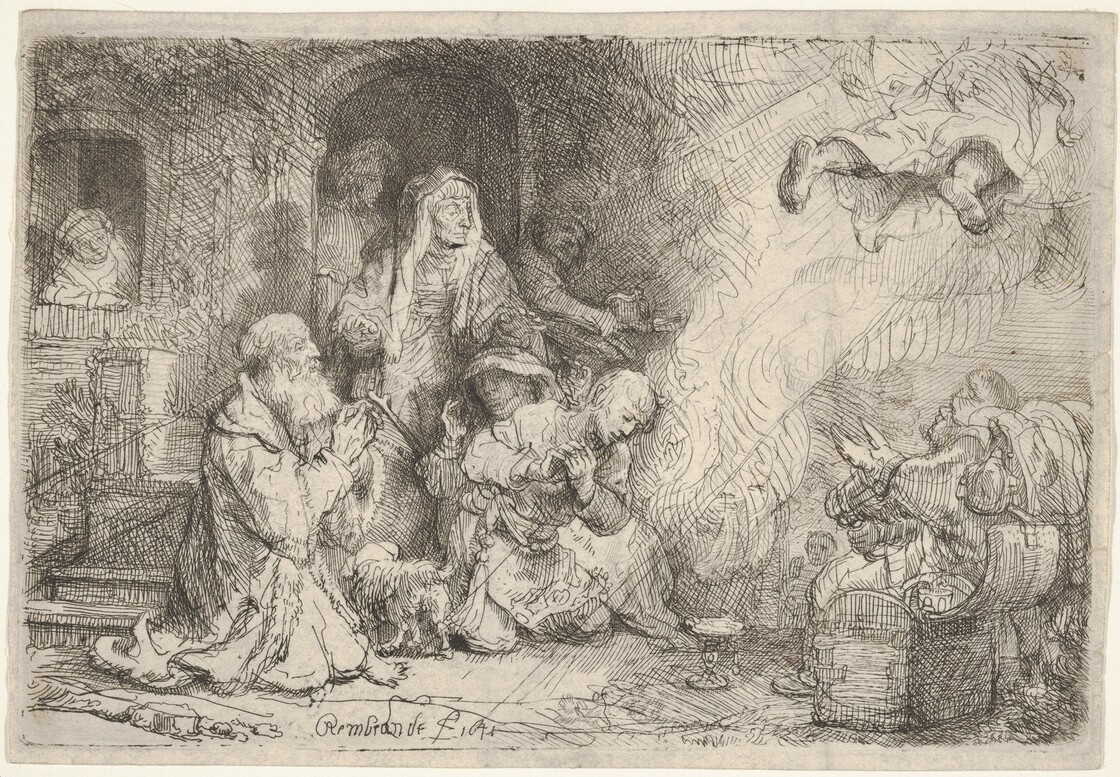
The oldest model for this kind of angel is the Book of Tobit, which is part of the Catholic and Orthodox Bibles. A young man named Tobias needs a travel companion and finds “Raphael that was an angel”, though he takes him for a man. Only at the end does Raphael reveal: “I am Raphael, one of the seven holy angels.” The Letter to the Hebrews draws the lesson: “some have entertained angels unawares.” Our pages on Raphael the Archangel and on the fish gall that cured the blindness of Tobias’s father, Tobit follow that story further.
Dudley’s attraction to Julia touches a darker text. In 1 Enoch, God asks the Watchers, the angels who came down for human wives: “Wherefore have ye left the high, holy, and eternal heaven, and lain with women?” Dudley does the opposite of the Watchers: he feels the pull, tells the bishop that it is rare for an angel to envy a mortal, and goes back.
4. Wings of Desire (1987): what would it cost an angel to become human?
In Berlin, still divided by the Berlin Wall, two angels named Damiel and Cassiel walk the streets unseen. They listen to people’s thoughts, comfort the desperate, and only children can see them. The director, Wim Wenders, had their view of the city filmed in black and white, because he felt that angels who had never lived in the physical world would not see colour. Damiel falls in love with Marion, a lonely trapeze artist, and gives up his immortality. As a man he bleeds, sees colours for the first time and drinks coffee.
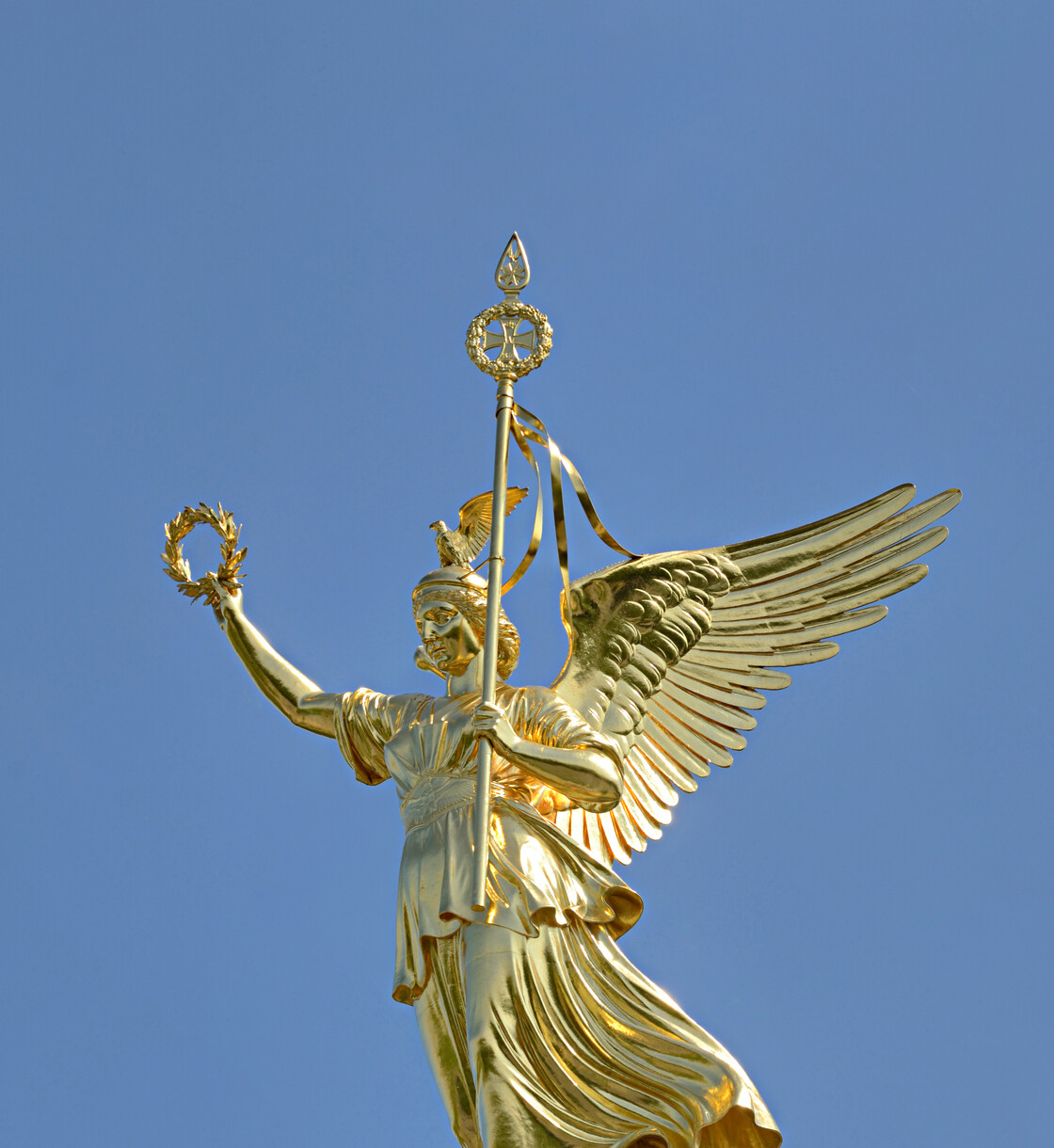
Wenders said the poetry of the German-language poet Rainer Maria Rilke partly inspired the film, and he found the names Damiel and Cassiel in an encyclopedia about angels. Rilke’s Duino Elegies of 1923 open with a cry: “Wer, wenn ich schriee, hörte mich denn aus der Engel Ordnungen?” (“Who, if I cried out, would hear me among the orders of the angels?”) The orders are Pseudo-Dionysius’s idea, and Wenders’s angels seem to behave like his lowest rank, the one busiest with “the things of the world”.
Damiel’s choice is the Watchers’ choice in 1 Enoch. God reminds them there: “you were formerly spiritual, living the eternal life, and immortal … therefore I have not appointed wives for you.” In Enoch that choice leads to giants who devour mankind and, in the end, to the flood. In Wenders’s film it leads Damiel to Marion, and his time with her teaches him to feel amazed.
In an early treatment of Wings of Desire, Wenders thought about a backstory in which God had exiled his angels to Berlin as a punishment, because they had defended humans after the end of the Second World War in 1945. The finished film leaves this out.
5. The Prophecy (1995): why is Gabriel the villain?
A Los Angeles detective who once trained for the priesthood, Thomas Dagget, investigates the body of a dead angel, which has no eyes. Among the angel’s belongings is an ancient Bible whose Book of Revelation describes a second war in heaven. Every real Bible ends Revelation at chapter 22, so the film wrote itself an extra chapter. Then the archangel Gabriel, played by Christopher Walken, comes to earth. He is hunting the soul of a dead war criminal, which could tip that war his way, and in the end it is Lucifer, the devil himself, who stops him.
The writer and director Gregory Widen wanted to show a darker side of angels, closer to the way the Old Testament portrays them. In scripture, though, Gabriel is the explainer and the bringer of news. He interprets Daniel’s visions, and in Luke he says: “I am Gabriel, that stand in the presence of God”, and six months later he is sent to Mary, the mother of Jesus, in Nazareth. The nearest thing to a warlike Gabriel is in 1 Enoch, where God sends him against the giants, the Watchers’ children, to set them “one against the other that they may destroy each other in battle”.
The film’s angels “constantly resent God’s love of humans”, as Witney Seibold put it on the film website SlashFilm, and that jealousy, which comes back in two more films on this list, has an old source.
In the Life of Adam and Eve, an ancient retelling of the story of the first humans, the devil tells Adam why he fell. When God made Adam in his image, Michael ordered the angels to bow, saying: “Worship the image of God as the Lord God hath commanded.” The devil refused: “I will not worship an inferior and younger being.”
The Qur’an tells the same scene. When the angels are told to bow to Adam, Iblis, the Qur’an’s name for the devil, refuses: “I am better than him. You created me from fire and created him from clay.” In both texts the jealous angel becomes the devil, while The Prophecy gives the part to Gabriel.
6. Michael (1996): does an archangel eat sugar?
In Nora Ephron’s comedy, three tabloid reporters are sent to Iowa to check a story about a woman who has an angel living in her house. The angel is Michael, played by John Travolta. He has wings and smells of cookies, but he also smokes, has a taste for sugar and gets into fights. His landlady boasts that he beat Lucifer in the War in Heaven, and he explains that archangels on a mission are free to enjoy the pleasures of a body.
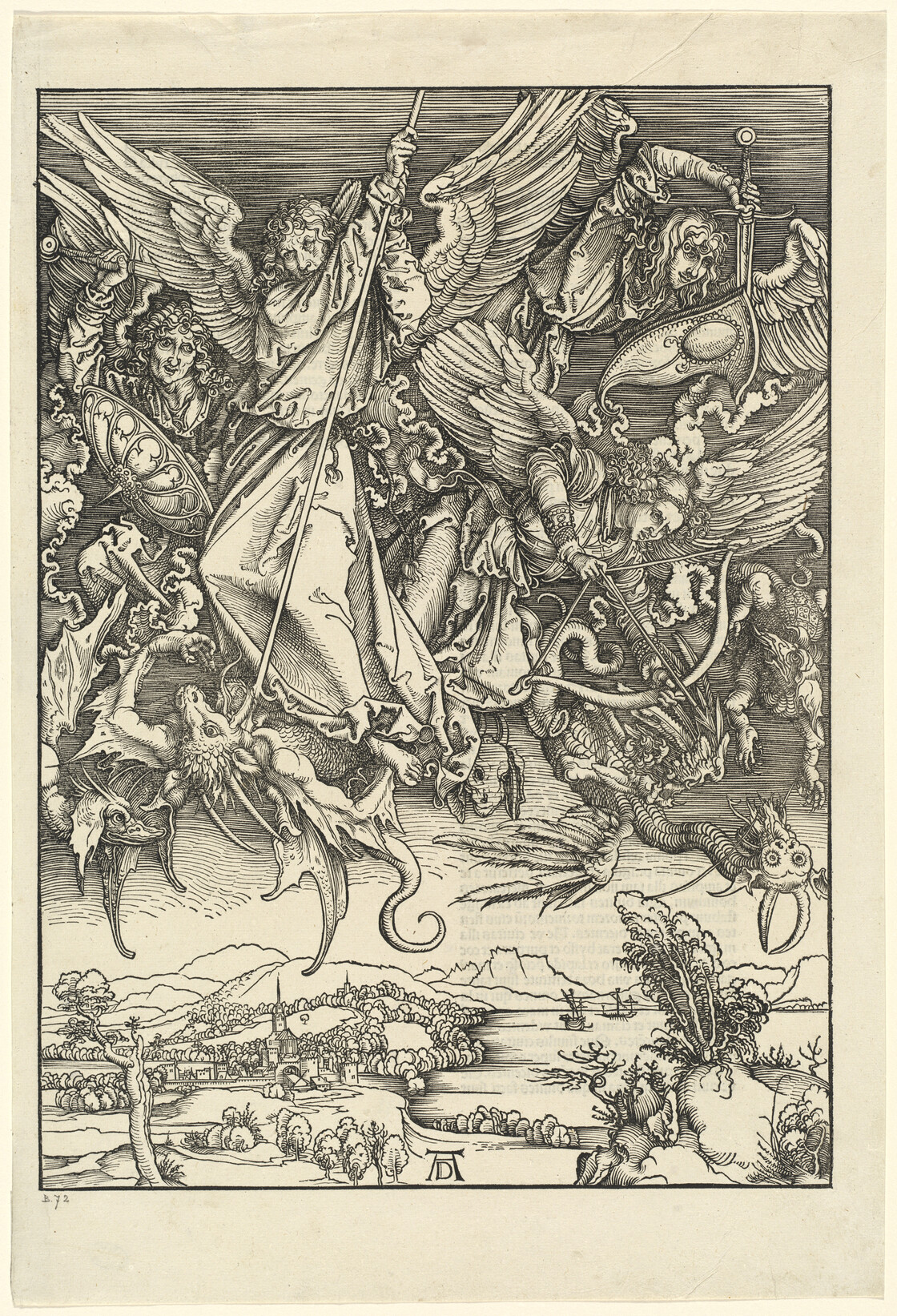
The war comes from Revelation 12, where Michael and his angels throw down the dragon. The text there calls the dragon “the Devil, and Satan”, but never Lucifer. That name comes from the Book of Isaiah, 14:12: “How art thou fallen from heaven, O Lucifer, son of the morning!”, which was first a taunt against the king of Babylon and was later read as being about Satan.
The title “archangel” comes from the Letter of Jude, a short letter near the end of the New Testament, and its ninth verse is the only one in the New Testament that calls Michael “the archangel”. For more on Michael in scripture and art, see our entry on Michael the Archangel.
Michael’s taste for sugar goes against the old texts. When Raphael says goodbye to Tobias’s family, he tells them that he never ate or drank with them, and that what they saw was a vision. Aquinas builds on this verse: “Properly speaking, the angels cannot be said to eat.” An angel can take on a body so that people see him, Aquinas says, but through it angels only “appear to be living men, although they are really not”.
7. Fallen (1998): who is Azazel?
Denzel Washington plays John Hobbes, a Philadelphia detective. He watches the execution of a serial killer he caught, and soon afterwards the same kind of murders start again. In an abandoned cabin he finds a name hidden under layers of paint: Azazel. A woman explains that Azazel is a fallen angel who moves from body to body by touch. Outside a body, he can survive only the length of a breath.
The name comes from the Bible. In Leviticus 16, the high priest Aaron casts lots over two goats on the Day of Atonement, Yom Kippur, the holiest day of the Jewish year, and one goat is sent into the wilderness for Azazel. Our article Why Was the Scapegoat Sent Into the Desert on Yom Kippur? follows that ritual. In 1 Enoch, Azazel is one of the Watchers, the one who “taught men to make swords, and knives, and shields, and breastplates” and showed women how to paint their eyelids.
Enoch’s Azazel does not walk free, though. God orders Raphael to bury him in a desert place called Dûdâêl: “Bind Azâzêl hand and foot, and cast him into the darkness: and make an opening in the desert, which is in Dûdâêl, and cast him therein.” He is to lie there under “rough and jagged rocks”, with his face covered so that he “may not see light”, until the day of judgement, when “he shall be cast into the fire”.
8. Dogma (1999): can a fallen angel go back to heaven?
Kevin Smith’s comedy is about two fallen angels, Bartleby and Loki, who were thrown out of heaven and sent to Wisconsin. They find a loophole. A church in New Jersey is offering a plenary indulgence, a Catholic pardon that in the film wipes away all sins, to anyone who walks through its doors on a certain day. If the two angels walk through and then die as men, they will go straight back to heaven. But that would prove God wrong, and if God is wrong, all of existence ends.
The loophole needs a real teaching to work against. Aquinas writes that “the will of the good angels is confirmed in good, and that the will of the demons is obstinate in evil”. He quotes John of Damascus, a Greek theologian of the eighth century, to explain why: “death is to men, what the fall is to the angels.” A human can repent until death, but an angel’s fall is final the moment it happens. Bartleby’s grievance also sounds like the jealous angel of the Life of Adam and Eve. He is angry that God gave humans free will and asked only obedience of the angels.
The film’s Metatron, played by Alan Rickman, is a seraph and the voice of God. In the Talmud, the great collection of the teachings of the rabbis, Metatron is the angel “whose name is like the name of his Master”. A later Hebrew book, known as 3 Enoch and different from 1 Enoch, adds that Metatron was once the man Enoch, carried up to heaven and turned into the angel whom Dogma makes the voice of God.
9. Constantine (2005): why does Gabriel want hell on earth?
Keanu Reeves plays John Constantine, a dying exorcist who drives demons out of people and can see half-angels and half-demons as they really are. Tilda Swinton plays Gabriel, described in the film as a half-breed angel, who refuses to give Constantine more time to live. At the climax Gabriel turns out to be behind the plot to let Lucifer’s son into the world. Gabriel resents that God forgives even the most wicked humans, and wants to let hell loose on earth so that the survivors become worthy of God’s love. In the end Lucifer himself destroys Gabriel’s wings and leaves Gabriel mortal.
This is the third time on the list that an angel turns against humans out of jealousy. The motive is the devil’s in the Life of Adam and Eve and Iblis’s in the Qur’an, given once more to Gabriel, the angel who in Luke brings the news of Jesus’s birth.
10. Legion (2010): would Michael disobey God?
In Legion, the archangel Michael, played by Paul Bettany, falls to earth in Los Angeles and cuts off his own wings. God has lost faith in mankind and sent his angels to wipe it out. Michael has refused God’s order to kill a waitress’s baby, who is meant to save humanity. He defends mother and child in a desert diner against crowds of possessed people. Then Gabriel arrives, still obeying. At the end, Michael returns restored to his rank. Michael explains that God was testing his angels’ blind loyalty. Gabriel gave God what he asked for, but Michael gave him what he needed.
A God who regrets making humans appears in Genesis 6, near the start of the Bible: “it repented the LORD that he had made man on the earth”, and God decides to destroy what he made. In 1 Enoch, God sends Raphael to bind Azazel, while Gabriel is sent to turn the giants against one another.
The disobedient Michael is the film’s own invention, and it runs into Aquinas, for whom a good angel’s will is “confirmed in good”, so that an angel who refused God would no longer be a good angel. Legion solves this by calling the order a test, and it gives Michael a new enemy: Revelation sets him against the dragon, the film against Gabriel, the angel who in Luke stands “in the presence of God”.
Can an angel taste coffee?
In 1 Enoch, God reminds the Watchers that they were spiritual and immortal, so he appointed no wives for them. Aquinas holds that angels have no bodies of their own and cannot really eat, even when they take on a body to be seen.

When Damiel becomes mortal in Wings of Desire, he bleeds and drinks coffee. Raphael, at the end of his journey with Tobias, tells the family: “I did neither eat nor drink, but ye did see a vision.”