A woman and a man shut themselves into an isolated house she has rented for a year. They fast, pray at fixed hours, sleep badly and wait for something on the other side to answer. That is the plot of A Dark Song, a horror film from 2016, and it is also a fair description of a real ritual.
The source behind the film is the Book of Abramelin, named after the teacher in its own story. Its ritual promises that months of prayer will bring the reader face to face with an angel, and that with the angel’s help he can then command spirits.
The film gets the shape of the rite right: a grieving woman hires an occultist, they lock themselves into a rented house in the country, and they work the operation for a long time until something answers. They also drink blood and stay inside a salt line. Neither comes from the book, which tells the magician not to eat blood at all.
Abramelin Ritual Accuracy in A Dark Song: The Short Answer
As occult procedure, the film holds up better than most. It has the seclusion and the renunciation, the months of prayer before anything answers, and the goal, which is an angel rather than a demon.
What it changes, it changes to be watchable. A rite made of prayer and housekeeping gives a camera little to film, so the film adds salt on the ground, blood in a glass and marks across the walls, all of which the book rejects in a single sentence.
The operation is a household manual for one man, with rules about clean bedding and two sets of clothes.
What the Operation Actually Asks For
The book is specific about the building. The magician keeps a room for prayer with an altar in the middle and a window he can open, and next to it an open terrace whose floor is covered with river sand two fingers deep. The prayer room has a floor of white pine, and an incense burner and a lamp of olive oil stand on the altar.
The rules for the man himself are domestic. The bed has to be new, the linen changes every Sabbath eve, and no dog or cat may enter the bedroom. He eats and drinks in moderation and lets nothing make him angry, and for the last four months he is to avoid sex as he would the plague. He is also told to leave company behind and live quietly.
He does not finish alone. The closing days need a child no older than seven, who puts the perfume on the censer, signals when the angel appears and afterwards forgets everything he did.
The book also says who may try it at all. The operator should be between twenty-five and fifty. A domestic servant will struggle, because he answers to somebody else, and among women only virgins qualify, though the book would rather keep the operation from women altogether.
Sophia, the woman at the centre of the film, is a mother who has lost a child and hires a man to run the rite for her, so on the book’s terms she is no candidate. The house is wrong in a smaller way too: the book never calls for salt, and its terrace is covered with river sand.
Does the Film Show the Guardian Angel Correctly?
In the book the angel arrives after the months of prayer, in a light that fills the room. It talks with the magician, promises never to abandon him and writes a sign on a small silver plate. The book gives it no armour. The name Holy Guardian Angel is missing from the older German manuscripts too, which say dein Engel, your angel; the grander title came out of the occult revival of the 1890s.
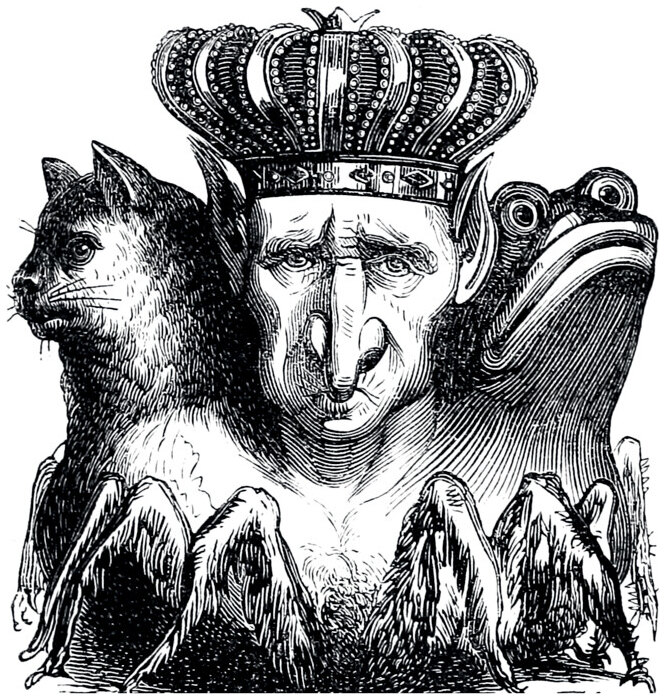
The book lists eight ruling spirits under four princes. One of them is Paimon, an entity drawn from the same manuscripts and featured in the demonology of Hereditary.
Only after the angel has come does the operator turn to the spirits. Four ruling princes stand at the top of the hierarchy, and under them eight sub-princes, each with a crowd of lesser spirits. The angel comes first because its help is what gives the magician power over them. A Dark Song turns this round: demons reach Sophia first and drag her down to the cellar, and the angel turns up at the end, in armour, sword pointed at the floor, to grant her one request.
Circles, Salt, and Blood
One chapter of the book is a list of things to throw away: characters, extravagant figures, circles and conjurations, all filed as “works full of Diabolical Inventions”. The operation is meant to run without any of them. Traditional spellbooks such as the devil-binding manual known as the Grand Grimoire put the magician inside a magic circle to call up spirits, and Abramelin rejects the circle.
It runs on letter squares instead, small grids of letters in several sizes, each listed under the result it is for.
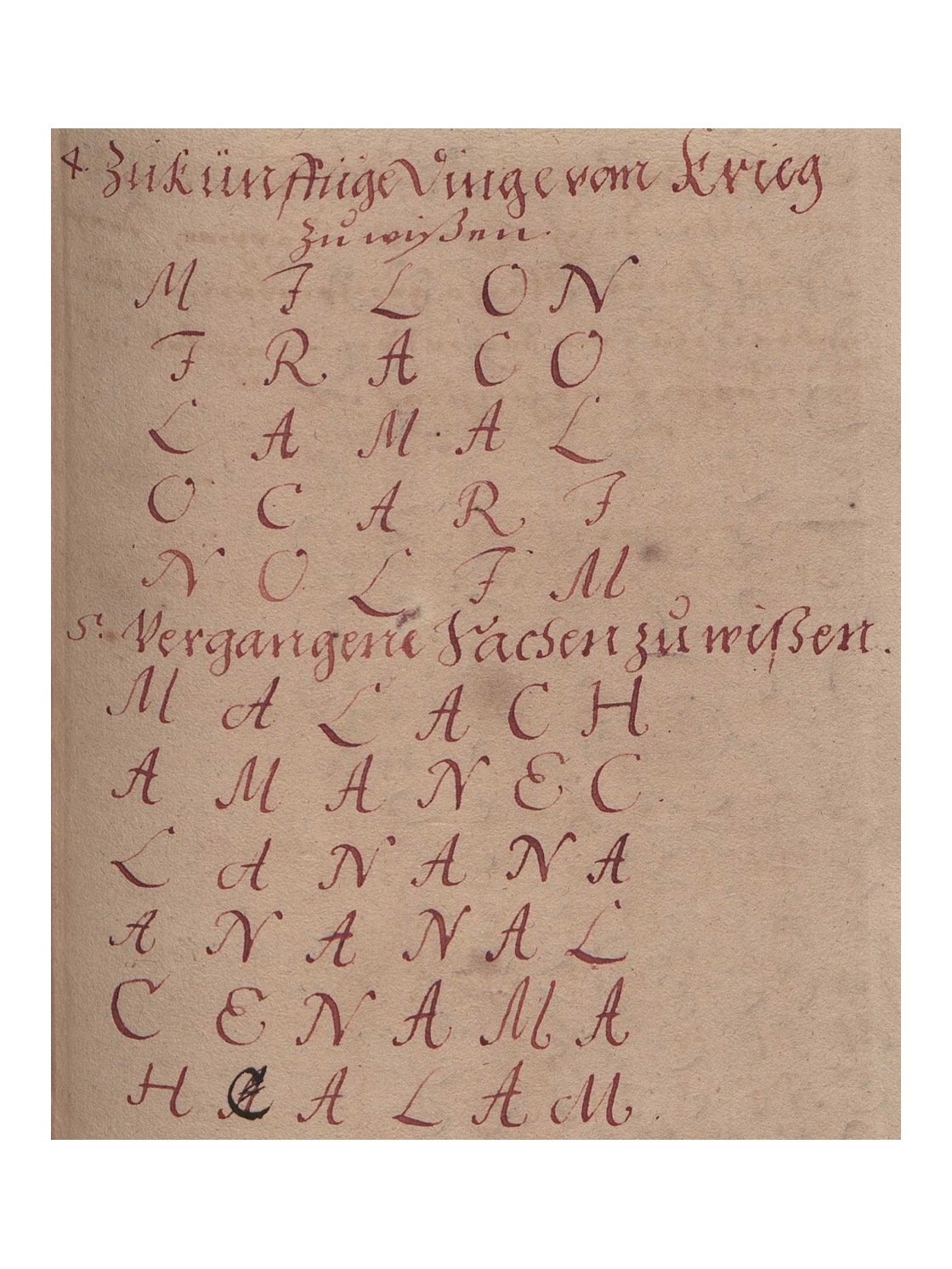
The film goes the other way. Circles go on the floors and marks up the walls, and a ring of salt goes around the property; Sophia is told that stepping over that line will trap her there forever.
The blood is the other addition. The occultist cuts his forearm, has her drink from the glass and calls it a blood sacrifice. The book’s own rules point elsewhere: it bans sex for the last four months and forbids using one of its workings to aid what it calls ‘Rapes and Violation of Women’. That clause reads oddly beside a film in which the man leading the ritual tells the woman who hired him that it will involve ritual sex.
How Long Does the Abramelin Operation Take?
In the film, Sophia rents the house for a year. The manuscripts disagree about the length: one early branch asks for six months of seclusion, another for eighteen.
The six-month version counts the work in moons and ties it to festivals rather than to the stars. It starts the day after Passover, the spring festival (Mathers’ English calls it Easter), and ends at the autumn Feast of Tabernacles. Choosing a special day of one’s own, it says, is a pagan idea.
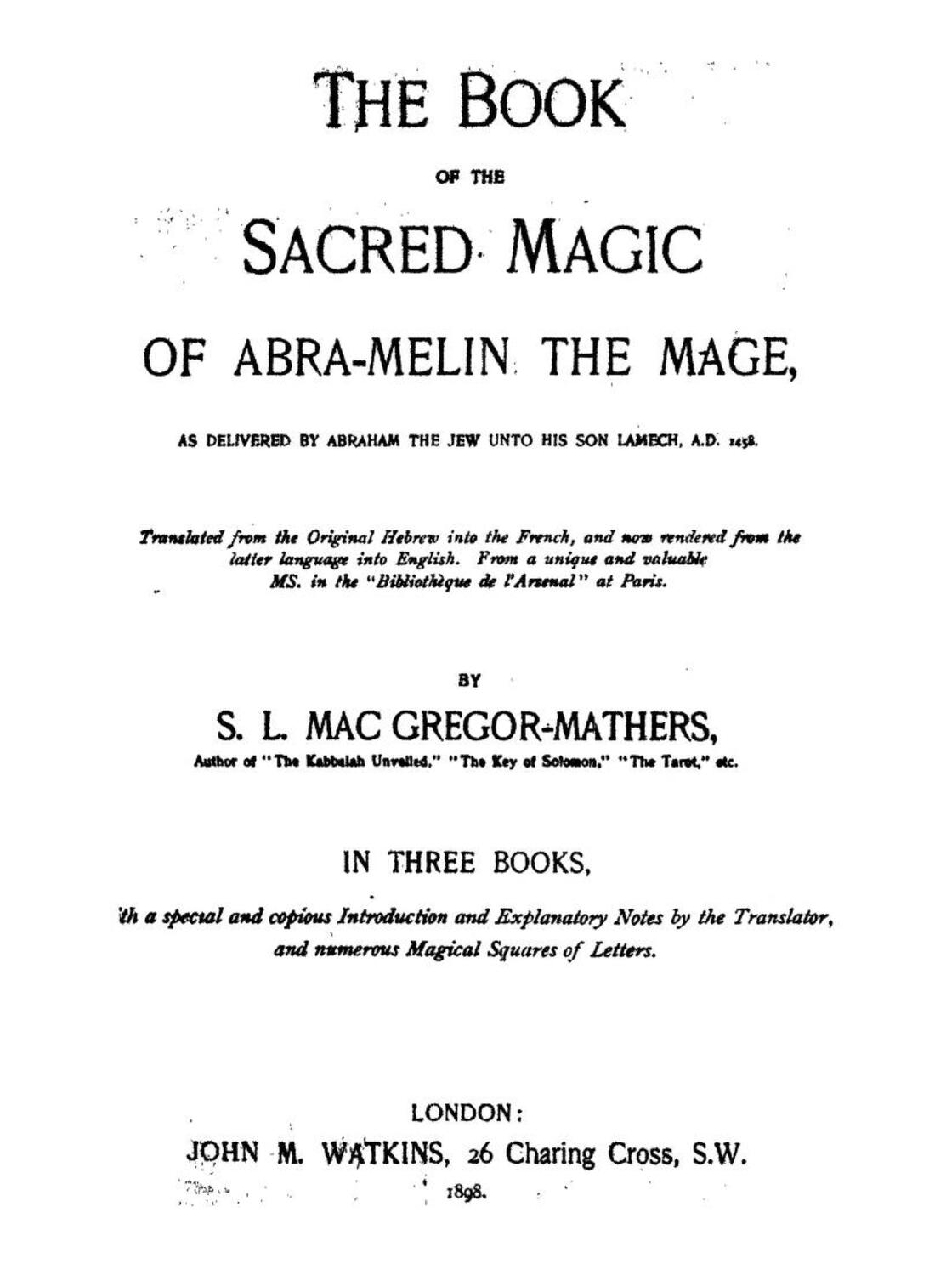
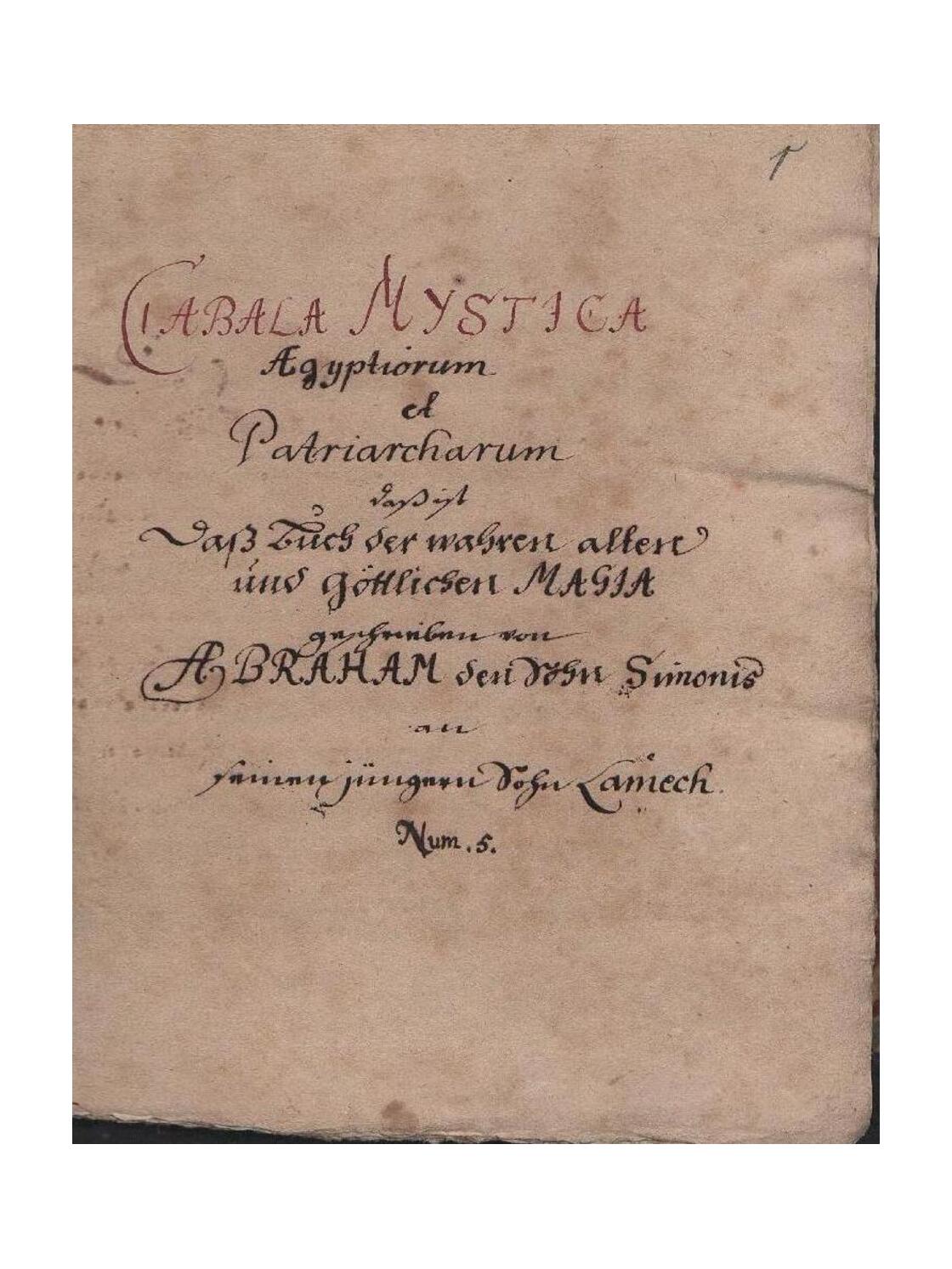
The shorter number became famous first, because the first English translation, in 1898, relied on a French copy that had already cut the retreat from eighteen months to six. The older German manuscripts keep the full eighteen months, and modern editions based on them restore the complete four-part text.
So two versions of the book, both in print, disagree by a factor of three, and anyone arguing about what the ritual “really” required has to pick one first. The film’s year of rent falls between them.
Where the Book Came From
The legend claims an Egyptian origin in 1458, but the surviving copies begin in Germany in 1608. Modern readers met the book through two branches, the French copy behind Mathers and the German manuscripts.
Did Anyone Ever Finish It?
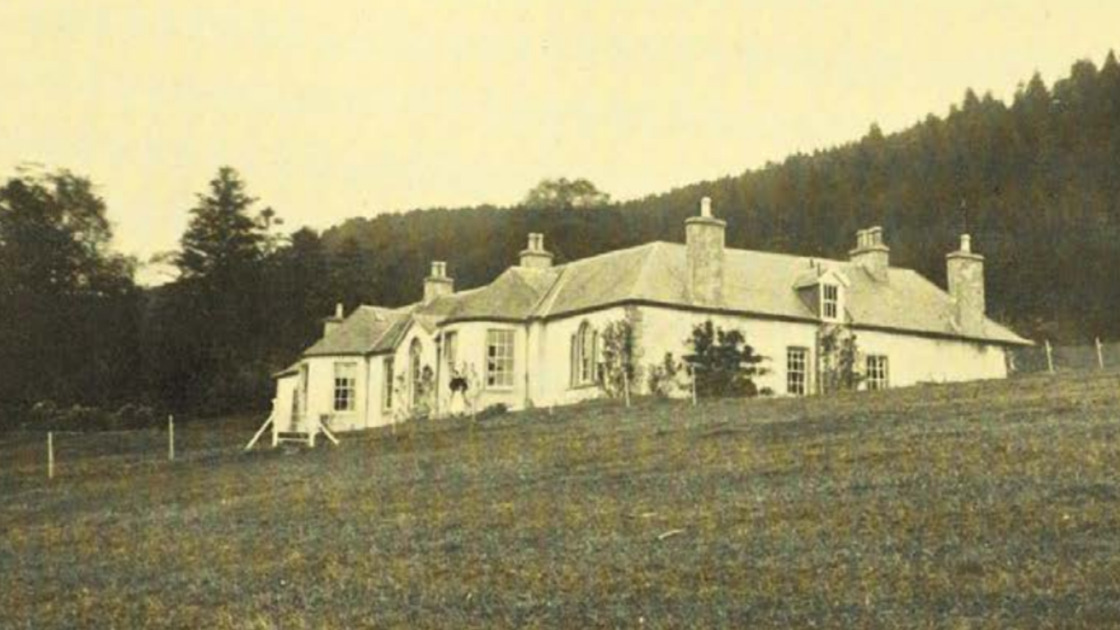
The film reaches its angel. In real life, magicians who tried the long Abramelin retreat usually broke off before the end. The writer Aleister Crowley bought a secluded manor on Loch Ness in 1899 to carry out the rite and abandoned the seclusion halfway through.
Near the close of its instructions, Mathers’ translation tells the reader what the work consists of: “watch, work, and you will see.”