Around two thousand years ago, travelers in western Turkey gathered around a stone opening that breathed poison. Small birds tossed toward it dropped dead mid-air, and bulls led into the enclosure collapsed at once. Yet the local priests walked right up to the mouth and came back unharmed. The site was called the Ploutonion, sacred to Pluto, the lord of the dead. Today we know it as Pluto’s Gate, where volcanic gas creates a deadly natural trap.
Appearance
Hierapolis stood beside the mineral springs of Pamukkale, famous for their white limestone terraces. Ancient visitors noted how quickly the mineral-rich water formed solid rock. The geographer Strabo left the earliest full account of the cave. He described a small opening fenced off with a wooden rail roughly fifteen meters around, keeping spectators back from the vapor.
Two centuries later, the historian Cassius Dio tested the site with birds. He found the vapor still lethal. By then, builders had enclosed the opening in masonry and added rows of seats above it like a small theater. The fumes still killed every animal that entered.
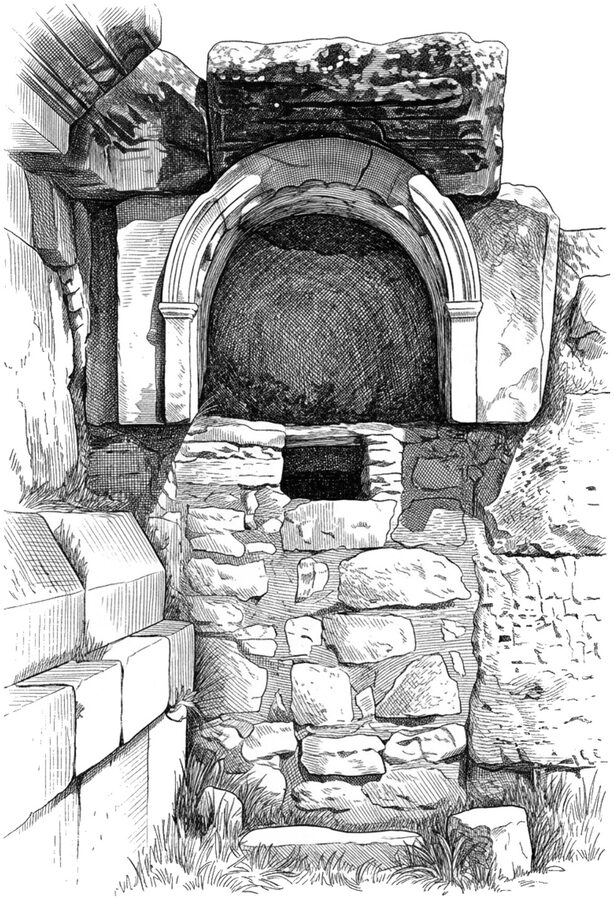
Excavations begun in 2007 confirmed Dio’s description. Archaeologists uncovered a complex built directly over an active geological fault. The site featured a vaulted cave beneath a marble arch, an arena floor, and tiered stone seating. A carved inscription dedicated to Pluto confirmed the identification. The drawing above shows the surviving arch, with the rectangular cave opening below it.
Function
The sanctuary functioned as an open-air theater for death rituals. Spectators sat on the stone tiers while priests conducted ceremonies below. Visitors could buy small birds to toss toward the opening, watching them perish instantly. Excavators also found statues of Cerberus, the underworld hound, and a coiled snake near the springs.
Ancient writers wondered how the priests survived. Strabo debated whether castration gave them physical immunity, whether they used secret herbal antidotes, or whether the gods protected them. He could find no clear answer.
Modern research solved the puzzle in 2018. Biologists measured the invisible gas seeping from the fault and identified it as pure carbon dioxide. Inside the cave, carbon dioxide makes up about 90 percent of the air. Because this gas is heavier than air, it pools on the arena floor like an invisible lake. The gas layer reaches about forty centimeters deep, becoming most lethal at dawn and dusk. Dead birds and insects still litter the ground around the mouth.
This gas lake explains the miracle. A bull has its nostrils barely sixty centimeters above the paving, right in the thickest poison. An adult human standing upright breathes well above the forty-centimeter threshold. By standing on raised stones and watching the wind, priests could linger safely while animals suffocated beneath them. Whether the priests understood the physics or genuinely believed in divine favor remains unrecorded.
Cross-Cultural Connections
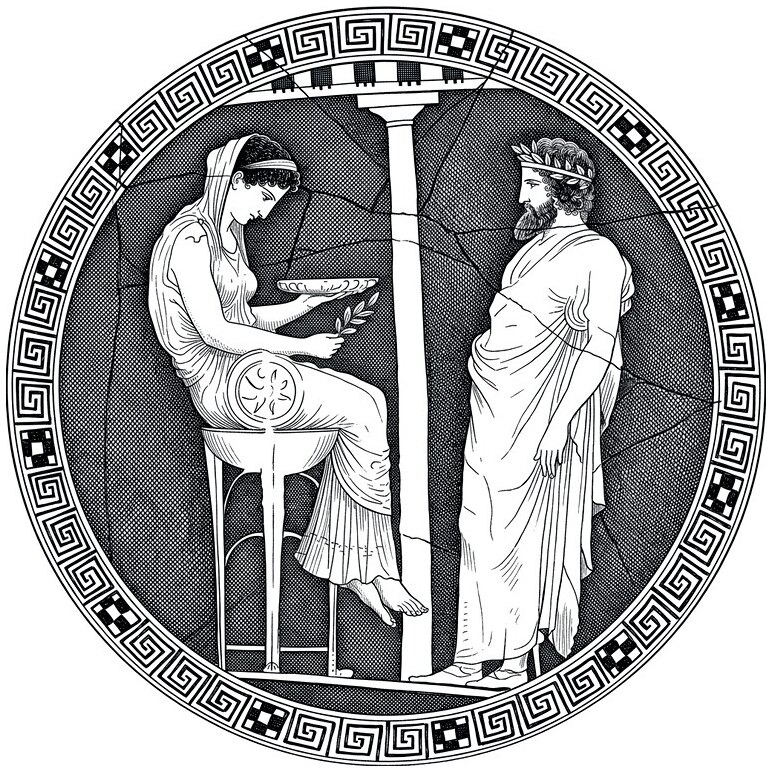
The god of the cave was Pluto, the name the Greeks and Romans gave the lord of the dead whom the poet Homer called Hades, and the inscription pairs him with Kore, the Persephone he carried down to the underworld. The priests who walked into his gas belonged to another deity. The Galli served Cybele, the Phrygian Mother Goddess, and their castration repeated the myth of her young consort Attis, who castrated himself for her. Strabo does not explain why her priests served at a cave of Pluto, and the excavated sanctuary does not settle it either. The cave also had a neighbour: the sanctuary of Apollo at Hierapolis stands beside it on the same fault, and Pfanz’s team measured high levels of carbon dioxide at both.
Hierapolis was one of several such caves in the region. Strabo describes another, the Charonium at Acharaca, a cave named after Charon, the ferryman of the dead, less than a hundred kilometres to the west, where sick people came to be healed and young men carried a bull inside at a yearly festival until it collapsed from the fumes. In 2026 the classicist Yulia Ustinova argued that the gas there was probably hydrogen sulphide, the gas that smells of rotten eggs, and that the cave served both healing and initiation (Toxic Gas and Initiation Rituals at Acharaca Charonium). Pfanz himself has said that the ancient “gates to hell” he studies in southern Italy, western Turkey and Greece sometimes sit directly on such vents.
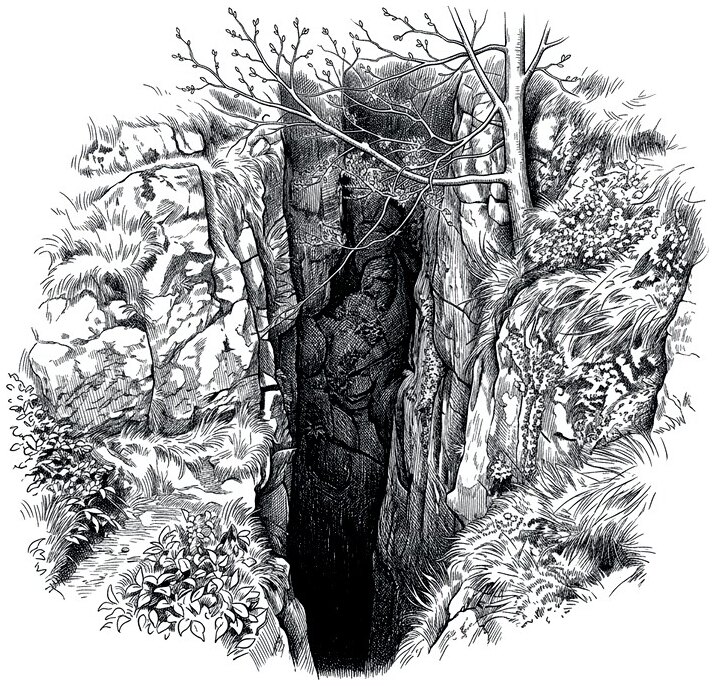
The pull of a gas from below on Greek religion is older than Hierapolis. At Delphi, a geologist and an archaeologist argued in 2001 that a gas rising through a fault under the temple of Apollo helped put the Pythia, the priestess who spoke for Apollo, into her trance (The Oracle at Delphi). The Greeks also went to the dead at places with no gas at all, like the Necromanteion of Ephyra on the river Acheron in northwestern Greece, where the living came to question the dead, and England had its own “gate to hell” in a Derbyshire pothole (Eldon Hole). The modern crater in Turkmenistan that tourists call the Door to Hell shares the name and none of the history: it is a gas field set on fire by Soviet engineers in 1971.
Modern Survival
The sanctuary remained in use until the fourth century AD. As Christianity spread, conflicts arose between pagan visitors and Christian pilgrims visiting the nearby tomb of the apostle Philip. Christians eventually defaced the statues of Cerberus and sealed the entrance. Later earthquakes buried what remained, and Byzantine builders turned part of the complex into a public fountain.
When the find was announced in 2013, the reports called it the Gate to Hell, and the name has stuck to the cave at Pamukkale. D’Andria said that during the excavation “several birds died as they tried to get close to the warm opening,” exactly as Strabo’s sparrows had two thousand years earlier.