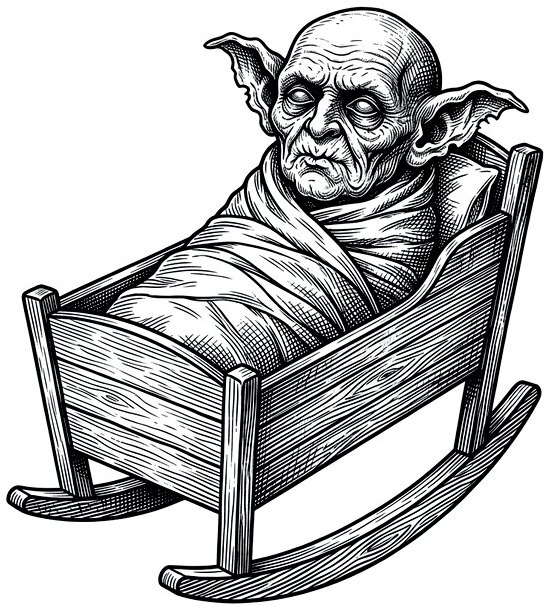
In a village in western Brittany, a mother put her first baby to bed one evening. He was a healthy boy. By morning, the child in the cradle was deformed and hunchbacked. The mother believed a fée, a local fairy, had stolen her baby in the night. The strange infant left behind was what folklore calls a changeling: a fairy substitute left in the cradle.
The same loss struck her second child, and then her third. Each time, a sickly infant lay in the cradle instead. A neighbour finally offered a remedy: place a little sprig of box-wood, blessed by a priest on Palm Sunday, into the cradle of the next baby.
When her fourth child was born, the mother laid the blessed evergreen sprig beside the newborn. That child was never taken.
The story was written down by Goulven Le Scour, a Breton writer from the parish. He recorded it for W. Y. Evans-Wentz, an American folklorist then gathering Celtic fairy traditions across western Europe. Evans-Wentz translated the account into English and printed it in 1911 in The Fairy-Faith in Celtic Countries (Oxford University Press). Evans-Wentz is better known today for his later edition of the Tibetan Book of the Dead. Because the people in the story were still alive, Le Scour asked him to leave out their names, so the book gives the mother only her first name, Yvonna.
Appearance
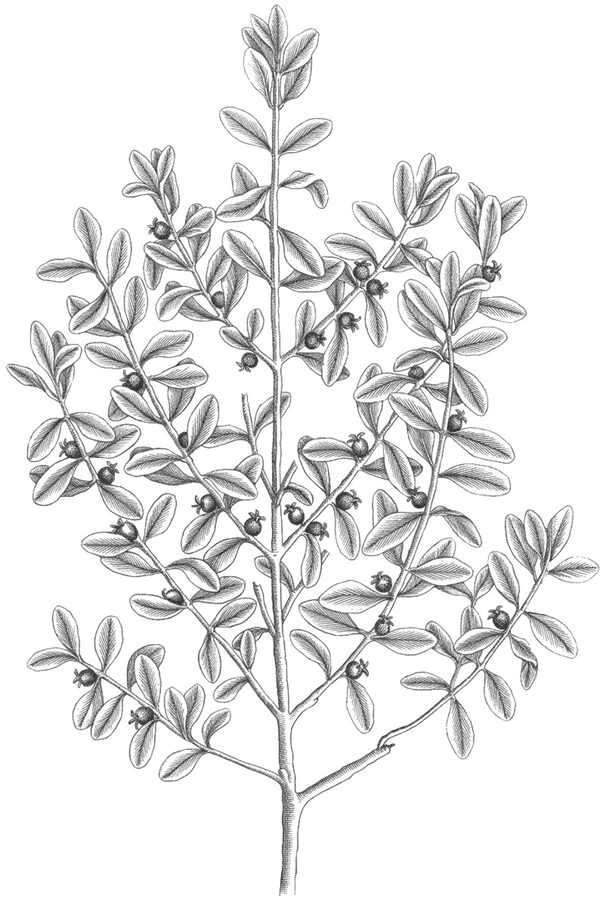
The charm is a small branch of common box (Buxus sempervirens). This evergreen shrub grows small, leathery leaves and is common in hedges across Europe. Le Scour’s account calls it only “a little sprig”. It gives no size and no shape, and it describes no ribbon, knot or prayer.
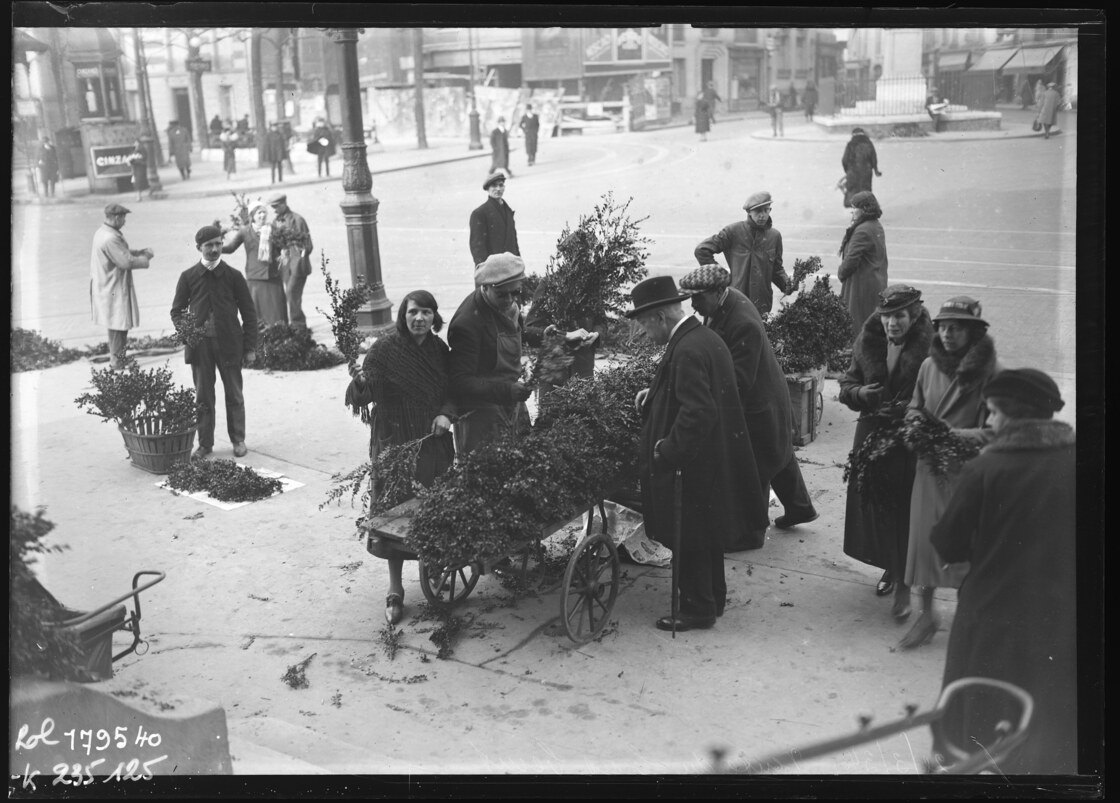
The advice insisted on one thing about the sprig: it had to be blessed by a priest. The one that saved the fourth child had been blessed on Palm Sunday, the Sunday before Easter. On that day the Church remembers the crowd that greeted Jesus in Jerusalem with palm branches. The date palm does not grow in northern Europe, so churches blessed local greenery. Parishes used yew in Ireland, willow across northern regions, and box in France and England. After church, families carried the sprigs home to tuck behind a crucifix.
Function
In Le Scour’s account the sprig does one job: it takes away the fée’s power over the child. The account belongs to a larger pattern of Palm Sunday greenery used as protection. In 1886, folklorist Paul Sébillot recorded similar customs in eastern Brittany. Blessed box or laurel was kept to ward off lightning. Farmers placed sprigs in their fields for a good harvest, or in stables to guard cattle from disease. At Kergoff, the same church blessing was turned against a different threat: the fairy at the cradle.
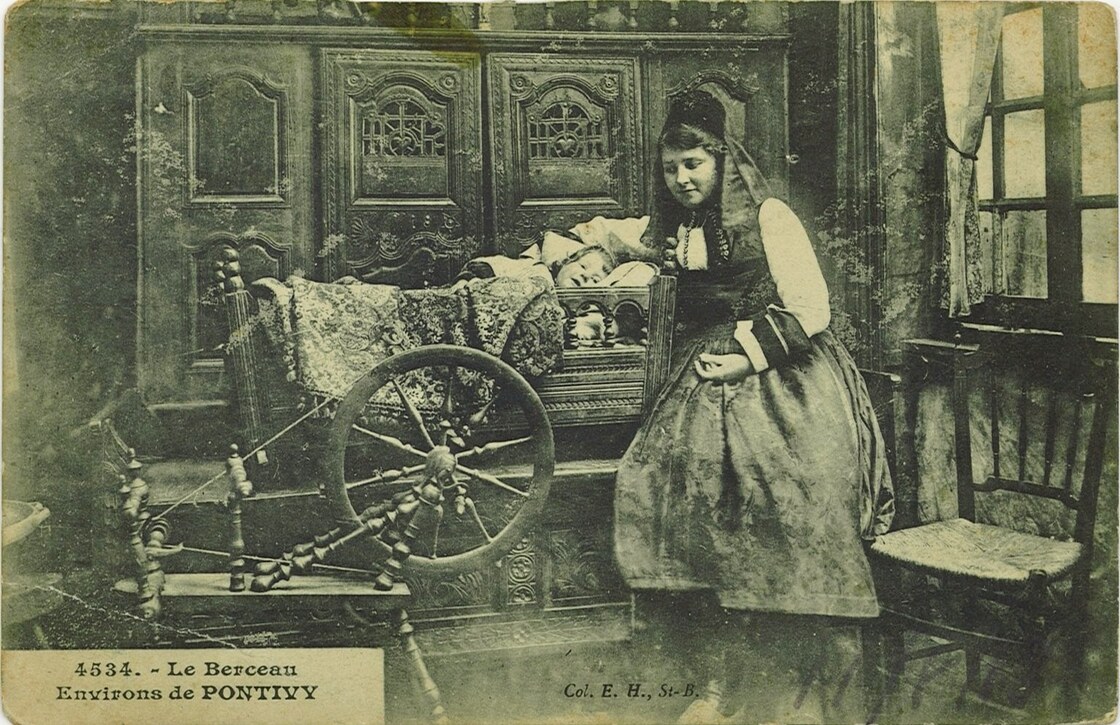
Le Scour also wrote down what the people of his district believed about the danger itself. The fées who came at night to swap a baby, it was said, always left a hunchbacked infant in its place. Tradition offered one remedy: leave the deformed infant crying outdoors for hours. The fairy mother, hearing her own child weep, was supposed to return the stolen baby. Yvonna did not know this remedy, so her first three children were never recovered. The infant left in place of her first son was still alive when Le Scour wrote, a man of about seventy, poor and infirm, whom Le Scour knew well. Villagers called him the Little Corrigan, after the dwarf spirits of Breton lore. Neighbours gave him alms out of fear. Rumour held that he roamed the night and had tried to kill his mother. The child left in place of the daughter grew up to be equally feared.
The fées themselves had no single character in Brittany. Le Scour told Evans-Wentz that in Finistère and in the Léon, the northwest of Brittany, they were remembered as good spirits who foretold events and comforted orphans, while in the Cornouaille, the southwest, they were said to be evil and were called demons. The fée who stole the Kergoff children fits the darker picture.
Cross-Cultural Connections
Evans-Wentz’s book places the Breton sprig beside other cradle protections from the Celtic countries. An Irish schoolmaster near Ben Bulben told Evans-Wentz of a different charm. Mothers placed iron tongs over the cradle before leaving a child alone, preventing fairies from swapping it. Another Irish custom he gave was to light one end of a wisp of straw and make a fiery sign of the cross over the cradle before the baby was laid in it. Iron is the protection that most accounts of the changeling belief mention first. The Kergoff advice relies on a blessed plant and says nothing about metal.
Protecting a cradle with a branch is far older than Palm Sunday. In his calendar poem Fasti, Ovid describes how the goddess Carna saved the infant prince Proca from the strix, a blood-sucking night bird. Beside other rites, she placed a sprig of whitethorn in the nursery window. Rome and Brittany are separate traditions, more than 1,800 years apart, and no source links them. What they share is the cradle as the place to defend and a green branch as the defence.
Sébillot also recorded what happened to the changeling belief in Upper Brittany. By 1886, Sébillot noted that fairy theft had become a folktale rather than a living fear. Even so, locals still remarked that any sickly child looking prematurely aged had been “changed by the fée.” The Kergoff account describes children whom Le Scour knew personally and calls “certainly hunchbacked”. Both writers, then, describe the story being told about real children with visible disabilities. How far the people who told it believed in a literal exchange of babies, the sources leave open.
Modern Survival
Evans-Wentz held the charm in his own hands. In a footnote to Le Scour’s account he wrote that a family in Carnac, a village on the south coast of Brittany, later gave him a sprig of such blessed box, and that he “was assured that its exorcizing power is still recognized by all old Breton families, most of whom seem to possess branches of it”. By exorcizing power he meant the power to drive out evil spirits.
The Palm Sunday blessing itself continues. In French parishes the day is still the one on which churchgoers bring box to be blessed, and many households still keep the blessed sprig beside a crucifix. Whether any family in Finistère still lays one beside a newborn against the fées has not been recorded. The written record of that use rests on Yvonna of Kergoff, the advice of her neighbour, and the fourth child whom the fées did not take.