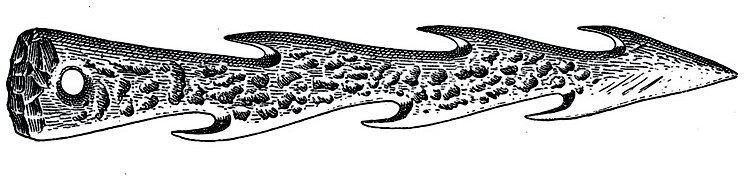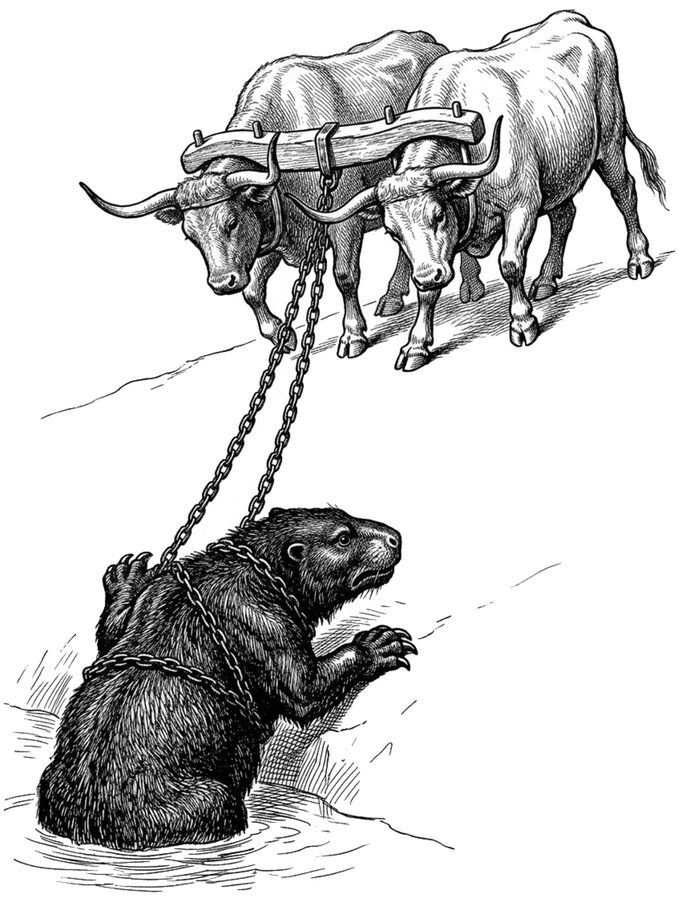
In 1693 the Welsh naturalist Edward Lhuyd wrote a letter about a pool on the river Conwy in north Wales. The country people, he said, told how a girl had lured the creature of the pool out of the water. It fell asleep with its head on her knees. While it slept, the villagers bound it in iron chains. When it woke, it rushed back into the water, tearing her breast away with its claw. The chain was long enough, so they fastened it to a pair of oxen, and the oxen pulled the creature out. The men argued about who had pulled hardest. Then the creature mocked them in Welsh verse: “Had it not been for the oxen pulling, the afanc had never left the pool.”
That creature was the afanc, the monster of Welsh lakes and river pools. Lhuyd’s letter is the oldest full account of it to survive, and it already contains the question that has followed the afanc ever since. Some locals saw the afanc as a demon with a body. Lhuyd had another idea. He noted that in Welsh, afanc simply means beaver.
The afanc of the Conwy
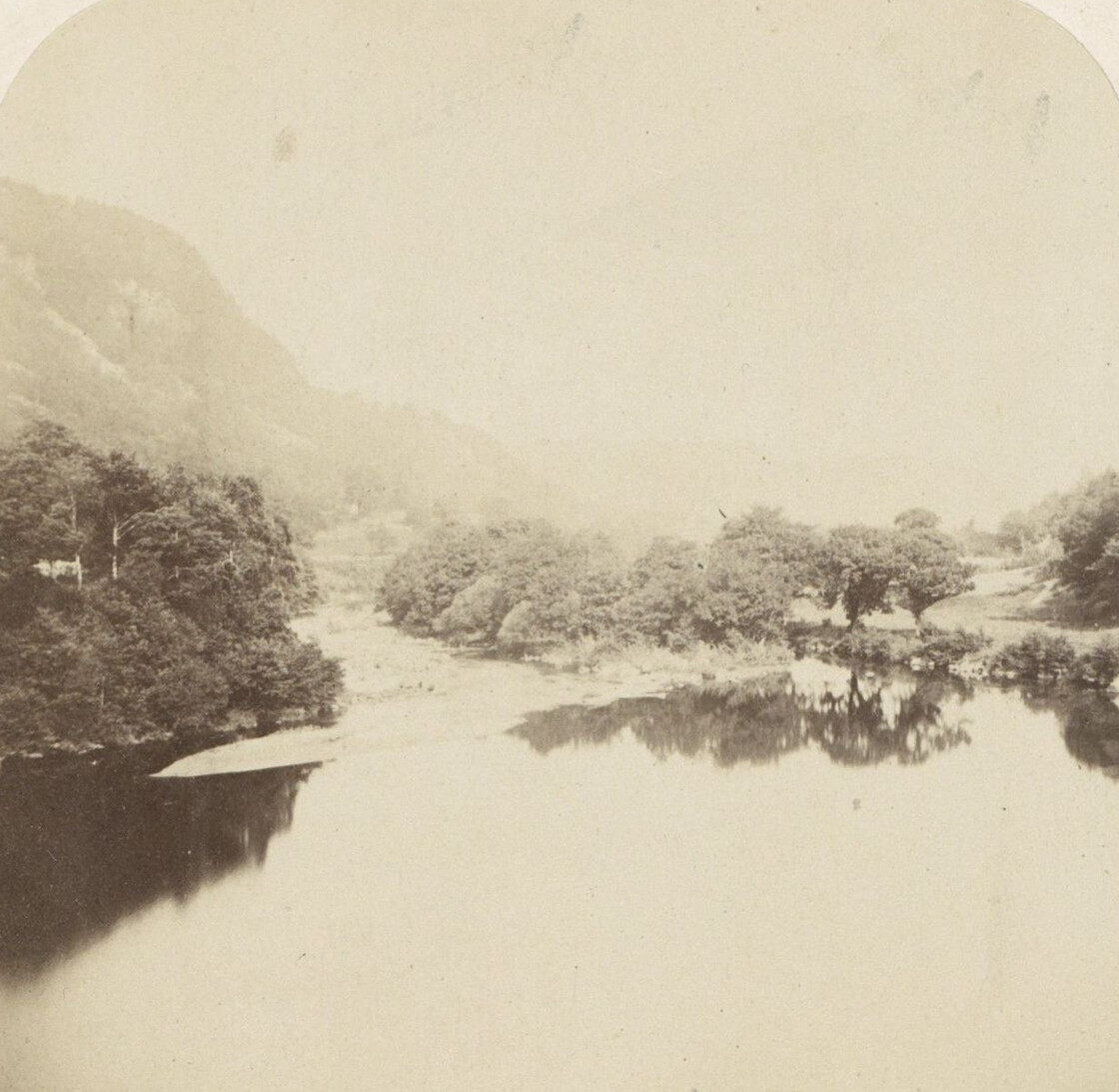
Lhuyd’s letter was printed in the Cambrian Journal in 1859. The scholar John Rhys translated it into English in 1901. The pool is Llyn yr Afanc, or “the Afanc’s Pool”, on the river Conwy above Betws-y-Coed. According to Lhuyd, the oxen that pulled the creature out were twins. Locals called them the Ychain Bannog, meaning the horned oxen.
The oxen dragged the afanc west over a mountain pass named after them. One ox strained so hard that its eye popped out. The pool that formed where the eye landed became “the Pool of the Ox’s Eye”. Lhuyd heard that it never dried out. Local harpers even played a tune said to mimic the groaning of the beasts under the monster’s weight.
The oxen left the afanc in a mountain lake under Snowdon, identified as Glaslyn. Lhuyd reported strange tales about this tarn. It never froze except in one corner, and nothing could swim across safely. A goat that fled into the water reportedly spun like a top until it drowned. Why drag the creature away instead of killing it? A nineteenth-century writer noted that no harpoon, arrow, or spear could pierce its hide. Rhys recorded another local reason: the monster caused flash floods. These surges cut off farmers on their way to market in Llanrwst. Moving the beast into a remote mountain lake ended the floods.
The story did not live only in Lhuyd’s letter. The legend stayed alive in oral tradition. An elderly local storyteller who died around 1835 told almost the same story. His version matched what Lhuyd had recorded nearly 150 years before.
Appearance
No early source draws the afanc, and the stories describe it in pieces. In Lhuyd’s letter, the creature has hands and claws. It rests its head in a maiden’s lap, yet weighs down a team of oxen. It even speaks Welsh. The medieval romance of Peredur calls it an addanc and places it in a dark cave rather than a river pool.
Later writers in English gave it an animal shape. William Probert translated a set of Welsh triads into English in 1823. Later translators turned the water monster into a reptile. In 1823, William Probert translated it as “crocodile”. A local writer in 1853 similarly called it the “crocodile of the lake”. Lhuyd’s beaver and this exotic crocodile became the two competing images of the monster in English folklore.
Function
In most versions the afanc is bound to one piece of water, and moving it is the whole difficulty. In medieval Wales, the afanc’s stubborn weight was proverbial. A fifteenth-century poet joked that he was like the afanc of Llyn Syfaddon: neither wagon nor oxen could drag him away from his host’s hearth. His poem suggests people already told stories about failed attempts to haul the monster ashore.
The romance of Peredur turns the afanc into a killer that a hero must face. Lady Charlotte Guest translated it into English in her nineteenth-century collection The Mabinogion. In the romance of Peredur, the creature is a ruthless killer. Each day, young knights ride out and return dead in their saddles. Palace women revive them with warm water and balsam, only for the addanc to slay them again the next morning. The addanc lurks behind a stone pillar inside a cave. It shoots poisoned darts at intruders while remaining unseen. A maiden gives Peredur a magic stone of invisibility. Holding the stone, Peredur creeps into the cavern, pierces the monster with his lance, and cuts off its head.
The most famous afanc, the one that floods the whole of Britain, comes from a later and more doubtful book. In 1801, a printed collection of Welsh lore included a new set of triads. They came from the papers of Iolo Morganwg, a stonemason and poet who forged many medieval texts. His tales expanded the afanc from a local river nuisance into a cosmic threat. In Iolo’s triads, the bursting of the Lake of Llion drowns all of Britain. Only two survivors escape in an open boat. To prevent another catastrophe, the legendary leader Hu Gadarn brings his giant horned oxen. They haul the afanc out of the lake onto dry land, so the waters never burst again.
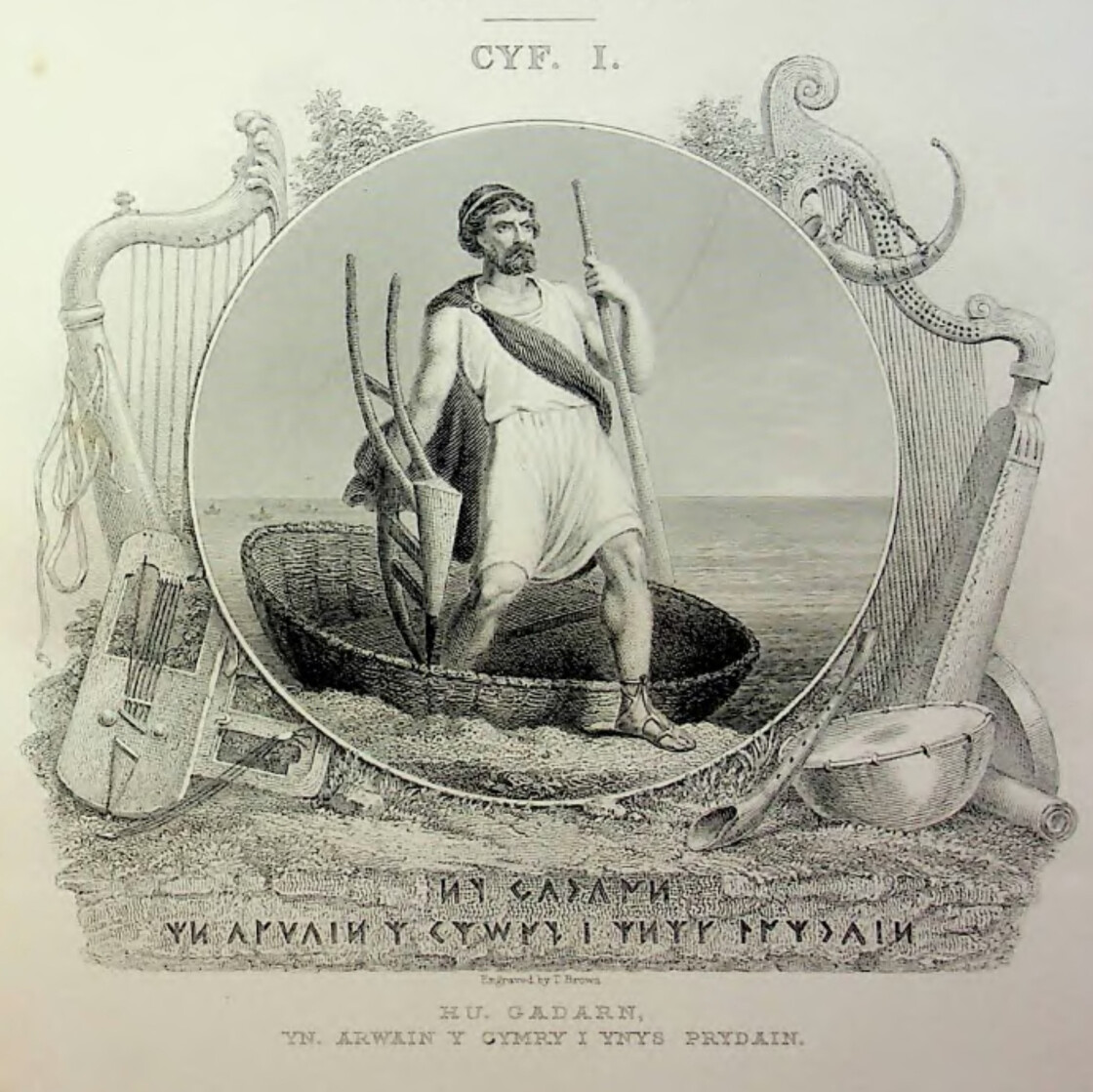
Modern scholars confirm that these flood triads were Iolo’s invention. John Rhys had already suspected this. He argued that Iolo took a local river legend and blew it up into a national flood myth. Other lakes claimed the legend. At Llyn Barfog, King Arthur and his warhorse replace Hu Gadarn. Locals even pointed out an imprint in a rock as the hoofmark of Arthur’s steed. Disturbing the water was said to bring doom. When the lake was once drained to turn a mill wheel during a drought, torrential rains lashed the valley.
Cross-Cultural Connections
Rhys looked to related Celtic traditions to explain the monster. He linked the word afanc to the Irish abhac, meaning dwarf. In his view, the name originally described water sprites. Once that meaning faded, storytellers imagined a gigantic beast, creating legends of oxen to explain ancient place-names. The Conwy tale also echoes Scottish lore about the water-horse. In one Highland story, a man rests his head on a girl’s lap by a loch. When she notices water weeds tangled in his hair, she slips away. The creature awakens and pursues her as a stallion. Both legends share the motif of a dangerous water spirit soothed by a maiden.
Behind these stories lies a deep fear of the water. Disturbing the deep pool brings ruin. In Melanesian myth, offending the lake eel Abaia triggers an instant deluge that swallows a village. In Wales, lake monsters personified real river dangers. Similar flood legends surround the sunken realm of Cantre’r Gwaelod, explored in Geology and Medieval Maps Offer Clues to Legendary Welsh Kingdom and The Drowned Country.
Modern Survival
Lhuyd’s beaver theory proved enduring. He based it on an herbalist term for beaver scent glands, once sold as medicine. Medieval Welsh law books confirm that beavers once lived in Wales, referring to them as llostlydan (“broad tail”) and valuing a pelt at 120 pence. Writing in 1191, the chronicler Gerald of Wales noted that only one river in Wales still held them. Later writers toyed with alligators or giant otters. Rhys dismissed both ideas. A beaver seemed far too small to require a team of oxen, while a crocodile did not fit tales where the beast speaks human verse.
In modern Welsh, afanc is the standard word for beaver. Though long extinct across Britain, beavers gained official native status under Welsh law in 2026. Long before modern rewilding, nineteenth-century landscape photography had already made its choice. Under Roger Fenton’s 1859 view of the Conwy, the printed caption simply reads: “Llyn-yr-Afranc, or Beaver Pool.”